
In this article
- What Is Rhinoplasty? Cosmetic, Functional, and Structural Approaches
- Rhinoplasty vs. Pure Septoplasty: Key Differences in Goals and Anatomy
- Septorhinoplasty: Combining Breathing Correction with Aesthetic Reshaping
- Primary vs. Revision Rhinoplasty: Complexities and Cartilage Grafting
- Correction of Post-Traumatic Nasal Deformities and Fractures
- Open vs. Closed Rhinoplasty: Surgical Techniques and Incision Approaches
- The Surgical Process: Anaesthesia, Duration, and In-Hospital Experience
- Rhinoplasty Recovery Timeline: From Day One to Final Shape at One Year
- Rhinoplasty Cost in Chennai and Factors Influencing Pricing
- Facial Plastic Surgery and Rhinoplasty Care at THANC Hospital, Chennai
- Frequently Asked Questions
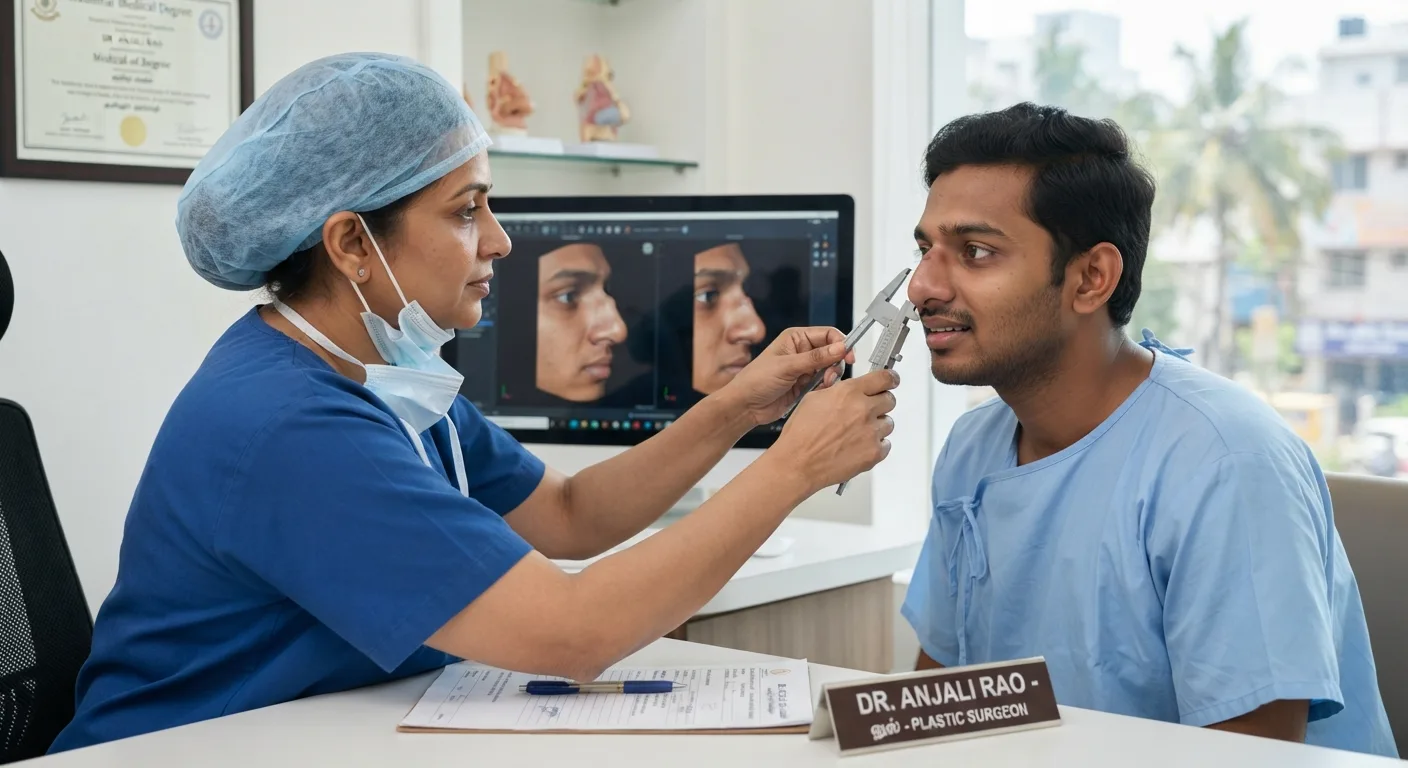
Whether you are seeking to refine your facial profile, correct a birth defect, or resolve chronic breathing obstruction, choosing rhinoplasty in Chennai requires a clear understanding of surgical techniques, recovery timelines, and realistic clinical outcomes. As the central feature of the human face, the nose plays an irreplaceable role in both overall facial symmetry and respiratory physiology. Achieving an ideal surgical result requires balancing aesthetic proportion with internal structural integrity.
What Is Rhinoplasty? Cosmetic, Functional, and Structural Approaches
Rhinoplasty is a specialized surgical procedure designed to reshape, reconstruct, or re-engineer the osteocartilaginous framework of the nose. The nose is a complex three-dimensional structure composed of bone in the upper third, rigid cartilage in the middle third (the upper lateral cartilages), flexible alar cartilages in the lower third (the nasal tip and nostrils), and a central dividing partition known as the nasal septum. Modifying any single element inevitably influences adjacent structures, making rhinoplasty one of the most intricate procedures in facial plastic and reconstructive surgery.
Cosmetic vs. Functional vs. Structural Rhinoplasty
- Cosmetic Rhinoplasty: Focuses primarily on the visual parameters of the nose in relation to other facial features, such as the chin, forehead, and cheekbones. Common cosmetic adjustments include reducing a prominent dorsal hump, refining a bulbous or drooping nasal tip, narrowing wide nasal bones, shortening or lengthening the overall nasal projection, and correcting nostril asymmetry. Many individuals combine nasal refinement with broader profile balancing, such as facial contouring and jaw reshaping, to achieve complete facial harmony.
- Functional Rhinoplasty: Prioritizes restoring an unobstructed nasal airway. Breathing difficulties frequently stem from internal or external nasal valve collapse, severe septal deviations, enlarged inferior turbinates, or congenital structural anomalies. Functional rhinoplasty uses targeted surgical techniques—such as batten grafts or spreader grafts—to widen narrow internal angles, ensuring laminar airflow through the nasal passages without altering the external appearance unless necessary.
- Structural Rhinoplasty: Focuses on building a resilient architectural foundation. Rather than aggressively resecting or removing tissue—a historical technique that often caused long-term nasal collapse or pinched tips years later—modern structural rhinoplasty reinforces the native cartilaginous framework with precisely placed cartilage grafts. This approach ensures the newly sculpted nose resists the forces of post-operative scar contracture and retains both its aesthetic lines and structural stability over decades.
Rhinoplasty vs. Pure Septoplasty: Key Differences in Goals and Anatomy
Patients frequently confuse septoplasty with rhinoplasty. While both operations involve nasal anatomy and can be performed concurrently, their surgical targets, anatomical planes, and clinical objectives differ fundamentally.
| Feature | Pure Septoplasty | Rhinoplasty |
|---|---|---|
| Primary Goal | Relieve internal nasal obstruction | Reshape external nasal profile / correct structural framework |
| Anatomical Scope | Internal septum (mucoperichondrial plane only) | Nasal bones, upper/lower lateral cartilages, external nasal vault |
| External Appearance | Unchanged | Modified (dorsum, tip, width, projection) |
| Incision Location | Completely internal | Internal (closed) or with small trans-columellar cut (open) |
| Post-Op Splinting | Internal silicone splints only | External thermoplastic cast + optional internal splints |
| Bruising / Periorbital Ecchymosis | Rare / minimal | Common (resolves within 7–14 days) |
A pure septoplasty is an entirely internal procedure. The surgeon makes an incision inside the nostril through the mucosal lining, elevates the mucoperichondrial and mucoperiosteal flaps, and selectively straightens, resects, or repositions the deviated portions of the quadrangular cartilage, the perpendicular plate of the ethmoid bone, or the vomer bone. Pure septoplasty does not alter the dorsal profile, refine the nasal tip, or reposition the nasal bones.
Comparing Surgical Scope and Patient Outcomes
When nasal obstruction is caused entirely by an internal septal crest or spur without external deviation or nasal valve compromise, pure septoplasty is the ideal, targeted solution. Recovery is rapid, external swelling is nonexistent, and the procedure carries no visible bruising. Patients whose obstruction is purely internal can read more in our guide to the deviated septum and septoplasty, or view the dedicated procedure page for septoplasty in Chennai.
However, if a patient's nasal obstruction is caused by a deviated cartilaginous dorsum, a crooked external bony pyramid, or weak, collapsing lateral nasal walls, pure septoplasty will fail to restore unobstructed breathing. In such cases, modifying the external osteocartilaginous framework via rhinoplasty or septorhinoplasty is required to achieve both functional airway patency and structural alignment.
Septorhinoplasty: Combining Breathing Correction with Aesthetic Reshaping
Septorhinoplasty is the comprehensive surgical fusion of septoplasty and rhinoplasty within a single operative session. In clinical practice, functional airway obstruction and external cosmetic irregularities rarely exist in isolation. A severely deviated nasal septum often acts as a bent central tent-pole, pulling the external dorsal ridge to one side and creating a visibly crooked "C-shaped" or "S-shaped" nose.
During a septorhinoplasty, the surgical team simultaneously:
- Accesses the internal septum to correct deviations, resect obstructive bone spurs, and restore normal midline airflow.
- Carefully harvests and preserves straight sections of the patient's native septal cartilage.
- Repositions and realigns the external nasal bones through controlled, micro-osteotomies.
- Uses the harvested septal cartilage to create structural grafts that support and refine the external nasal profile.
Spreader grafts are placed longitudinally between the upper lateral cartilages and the septum to reconstruct the middle nasal vault, widen a compromised internal nasal valve angle (the narrowest point of human airway resistance), and straighten a crooked dorsum. Simultaneously, a columellar strut graft or caudal septal extension graft is anchored between the medial crura of the alar cartilages to provide tip projection, control nasal rotation, and prevent tip drooping during dynamic facial animation.
Performing both interventions simultaneously provides the surgeon with an immediate supply of pristine autologous (the patient's own) septal cartilage, eliminating the need for a secondary donor site while addressing cosmetic goals and functional airway health under one anaesthetic.
Primary vs. Revision Rhinoplasty: Complexities and Cartilage Grafting
Primary rhinoplasty refers to a patient's first, unoperated nasal surgery. In primary cases, the underlying anatomical tissue planes remain undisturbed, native septal cartilage is intact and readily available for grafting, and the vascular supply to the overlying skin envelope is completely healthy.
Revision (secondary or tertiary) rhinoplasty, by contrast, is among the most demanding procedures in reconstructive surgery. It addresses persistent aesthetic flaws, progressive structural collapse, asymmetrical healing, or aggravated breathing compromise resulting from prior nasal operations elsewhere.
Why Revision Rhinoplasty Requires Advanced Surgical Precision
The challenges of secondary nasal surgery stem from several critical anatomical factors:
- Dense Fibrotic Scarring: Previous surgical dissection replaces pliable subcutaneous tissue planes with rigid, unpredictable scar tissue. Dissecting through scar tissue without injuring the thin overlying skin requires meticulous micro-dissection under high magnification.
- Depleted Septal Cartilage: In most revision candidates, previous surgical teams have already resected the central septal cartilage. Without this primary source of grafting material, the reconstructive surgeon must harvest donor cartilage from secondary anatomical sites:
- Auricular (Ear) Cartilage: Harvested via an incision hidden in the post-auricular crease of the ear. Conchal cartilage is curved and soft, making it suitable for contouring delicate nasal tip defects, alar batten grafts, and rim reinforcements.
- Costal (Rib) Cartilage: Harvested from the patient's sixth or seventh rib via a small sub-mammary incision. Costal cartilage provides abundant, straight, and rigid structural support required for rebuilding collapsed bridges, major saddle nose deformities, and complex structural foundations.
- Compromised Vascularity: Repeated surgeries alter the sub-dermal blood supply, increasing the healing timeline and requiring careful tissue handling to prevent skin necrosis or delayed wound healing.
Correction of Post-Traumatic Nasal Deformities and Fractures
Because the nose is the most prominent feature of the human facial skeleton, it is the most commonly fractured bone in the head and neck. High-velocity sports collisions, road traffic accidents, personal assaults, and domestic falls frequently result in severe, comminuted nasal bone fractures, displaced septal segments, and internal mucosal tearing.
- Acute Management (Closed Reduction within 7 to 14 Days): In the immediate aftermath of nasal trauma, before the fractured bony fragments begin initial fibrous union (knitting), a surgeon can perform a closed reduction. Under local or general anaesthesia, instruments such as Asch or Walsham forceps elevate and reposition the displaced nasal bones and septum back to their pre-injury baseline without external skin incisions. This window closes rapidly as bone fragments consolidate within 10 to 14 days.
- Delayed Comprehensive Reconstruction (Post-Traumatic Septorhinoplasty): If a nasal fracture goes untreated, heals improperly (malunion), or involves extensive bone comminution and cartilage crushing, delayed formal septorhinoplasty is required 3 to 6 months later. Post-traumatic deformities frequently manifest as "saddle nose" depressions, severe crooked deviations, and crushed alar cartilages. Reconstruction requires formal osteotomies to free and realign fixed bones, complete septal reconstruction, and structural grafting to re-elevate depressed areas and restore an open airway.
Severe facial trauma often accompanies other injuries of the facial skeleton; our guide to facial fractures of the cheekbone, orbit and jaw explains how these are assessed. Rare high-impact injuries can also compromise the cranial base, such as a CSF leak from the nose, which must be ruled out before planning reconstructive nasal procedures.
Open vs. Closed Rhinoplasty: Surgical Techniques and Incision Approaches
The choice of surgical approach determines the degree of anatomical exposure, the precision of graft placement, and the location of surgical incisions.
1. Open (External) Rhinoplasty
In an open rhinoplasty, the surgeon creates a small, inverted-V or stepped incision across the columella (the narrow strip of skin separating the nostrils), which connects to internal incisions inside the nostril rim (marginal incisions).
- Advantages: The skin and soft tissue envelope are gently elevated off the underlying cartilage and bone, providing comprehensive, binocular visualization of the entire nasal framework in its natural, undistorted anatomical position. This approach allows for millimeter-precise graft fixation, complex tip suturing techniques, and the direct correction of severe asymmetries.
- Incision Visibility: When closed with micro-sutures, the trans-columellar scar heals into an inconspicuous, nearly invisible fine line nestled within the natural contour shadows of the columella.
- Indications: Complex tip refinement, structural septorhinoplasty, revision surgery, cleft-lip nasal deformities (such as those detailed in our guide to cleft rhinoplasty), and significant post-traumatic reconstructions.
2. Closed (Endonasal) Rhinoplasty
In a closed rhinoplasty, all surgical incisions are placed entirely within the mucosal lining inside the nostrils (intercartilaginous, intracartilaginous, or transfixion incisions). No cut is made across the columellar skin.
- Advantages: Zero visible external scarring, reduced operative dissection, shorter operative duration, and slightly faster resolution of initial tip edema.
- Limitations: Surgical exposure is limited. The surgeon operates through narrow internal apertures, relying on tactile feedback and partial visualization, making precise tip reshaping, complex grafting, and revision work far more challenging.
- Indications: Selected primary rhinoplasty patients requiring isolated dorsal hump reduction or minor bridge adjustments without complex tip reshaping.
The Surgical Process: Anaesthesia, Duration, and In-Hospital Experience
A successful rhinoplasty relies on a systematic, patient-focused surgical pathway that begins well before the day of surgery.
- Pre-Operative Planning and Digital Analysis: During initial consultations, high-resolution standardized clinical photographs are captured from multiple angles (frontal, profile, oblique, and basal views). Advanced digital imaging helps patients visualize potential changes, aligns expectations, and provides the surgical team with anatomical landmarks to design an individualized surgical blueprint. Pre-operative nasal endoscopy evaluates the internal airway, assessing turbinate hypertrophy, mucosal health, and high septal deviations.
- Anaesthesia Administration: Rhinoplasty is routinely performed under general anaesthesia administered by a dedicated head and neck anaesthesiologist. Modern total intravenous anaesthesia (TIVA) with controlled hypotensive techniques minimizes intraoperative bleeding, prevents tissue bruising, and provides a clear surgical field for microscopic grafting and osteotomy work.
- Operative Duration: A standard primary cosmetic or functional rhinoplasty typically requires 2 to 3 hours. Complex revision surgeries, post-traumatic reconstructions, or cases requiring the harvest of costal (rib) cartilage can take between 3.5 and 5 hours.
- Immediate Post-Operative Management: Once the surgical adjustments are complete, the incisions are closed with fine absorbable and non-absorbable sutures. Internal silicone airway splints (Doyle splints) are placed along the nasal septum if septal work was performed, maintaining mucosal stability while allowing the patient to breathe through integrated internal hollow airways. An external custom-molded thermoplastic splint is applied over the nasal bridge to protect the realigned bones and control tissue edema. Patients recover in the post-anaesthesia care unit and are typically discharged the same day or following an overnight observation stay.
Rhinoplasty Recovery Timeline: From Day One to Final Shape at One Year
Nasal tissues heal through distinct, predictable physiological stages. Understanding this progression helps patients manage expectations and navigate the post-operative recovery period comfortably.
- Week 1 (Initial Healing Phase): The patient rests with their head elevated at 30 to 45 degrees to facilitate lymphatic drainage. Cold compresses applied to the cheeks reduce periorbital bruising. At the day 7 post-op appointment, the surgical team removes the external cast, cleanses the nasal skin, and extracts any internal silicone splints—an easy, painless process that instantly improves nasal airflow.
- Weeks 2 to 3 (Return to Daily Life): Residual skin bruising fades entirely. Most individuals comfortably return to work, academic studies, and social commitments within 10 to 14 days. The nose will still feel somewhat stiff, and the nasal tip will be slightly numb to the touch due to transient sensory nerve stretching, which gradually resolves over several months.
- Weeks 4 to 6 (Sub-Acute Recovery): The upper bony bridge settles rapidly into its new contour. Patients can resume aerobic exercise and non-contact fitness routines. Avoiding pressure on the nasal bridge (such as heavy eyeglasses or resting sunglasses directly on the osteotomy lines) is recommended for at least 6 weeks post-surgery.
- Months 3 to 12+ (Final Definition): The lower third of the nose—specifically the nasal tip, which features thicker skin and sebaceous tissue—takes the longest to shed sub-dermal swelling. Over the course of 12 full months (and up to 18–24 months in thick-skinned or revision cases), the skin envelope contracts and adapts around the sculpted cartilage framework, revealing final structural lines, tip definition, and aesthetic refinement. Maintaining optimal health during this period is essential; lifestyle habits such as tobacco use can compromise microvascular healing, as detailed in our guide on the effects of smoking on the ear, nose and throat.
Rhinoplasty Cost in Chennai and Factors Influencing Pricing
The cost of rhinoplasty in Chennai is determined by the specific anatomical requirements of the case, the surgical approach needed, and the hospital's clinical infrastructure. Chennai is widely recognized as a premier destination for advanced medical and reconstructive care, offering world-class surgical facilities at pricing that remains competitive both nationally and globally.
In Chennai, the total financial investment for a rhinoplasty typically ranges between ₹85,000 and ₹2,75,000+ depending on the surgical category:
| Surgical Category | Estimated Cost Range (INR) |
|---|---|
| Primary Cosmetic Rhinoplasty | ₹85,000 – ₹1,60,000 |
| Functional Septorhinoplasty | ₹1,10,000 – ₹1,85,000 |
| Revision / Costal Cartilage Case | ₹1,75,000 – ₹2,75,000+ |
| Complex Post-Traumatic Rebuild | ₹1,40,000 – ₹2,25,000 |
Costs are indicative estimates and vary with clinical evaluation and hospital infrastructure.
Key Cost Drivers for Nasal Surgery in Chennai
- Complexity and Case Classification: A primary dorsal reduction requires less operative time and surgical resource allocation than a tertiary revision requiring an autologous rib cartilage harvest, complex structural grafting, and extensive scar release.
- Surgical Leadership and Specialist Expertise: Rhinoplasty requires dual mastery of internal otolaryngology and aesthetic facial plastic surgery. Operations performed by board-certified head and neck / facial plastic surgeons involve advanced structural techniques that minimize revision risks.
- Operating Theatre and Anaesthesia Technology: High-grade super-speciality hospitals utilize modern laminar-flow operating theatres, advanced high-definition endoscopic visualization towers, piezoelectric (ultrasonic) bone-cutting instrumentation, and dedicated anaesthesia monitoring teams.
- Inpatient Accommodations and Post-Operative Support: Total costs reflect the choice of room category, surgical consumables, customized thermoplastic splints, and ongoing post-operative clinical follow-ups.
- Insurance Nuances (Functional vs. Cosmetic): In India, health insurance policies typically do not cover purely elective aesthetic procedures. However, when nasal surgery is clinically documented to correct functional airway obstruction (such as a severe septal deviation, collapsed nasal valves, or post-traumatic airway compromise), the functional portion of the operation is often eligible for partial or full insurance reimbursement. Our hospital insurance desk assists patients with pre-authorization and cashless claim processing.
Facial Plastic Surgery and Rhinoplasty Care at THANC Hospital, Chennai
THANC Hospital is an established super-speciality medical centre located in the central healthcare hub of Kilpauk, Chennai, delivering multidisciplinary clinical care across all facets of head, neck, and facial plastic surgery.
Nasal Reshaping Under the Care of Dr. Vidhyadharan S
Rhinoplasty at THANC Hospital is performed by the dedicated Facial Plastic Surgery team of Dr. Vidhyadharan S, Clinical Director at THANC Hospital, with every patient admitted under his care. The team's approach bridges internal airway precision with natural aesthetic facial balance.
Key clinical advantages at THANC Hospital include:
- Airway-First Structural Philosophy: We believe no nose should look refined at the expense of compromised breathing. Every rhinoplasty performed at THANC Hospital is designed to protect or enhance the patient's internal respiratory pathways while achieving their aesthetic goals.
- Expertise in Complex and Revision Reconstructions: Patients with failed previous surgeries, severe trauma-induced structural collapse, or congenital nasal asymmetries receive comprehensive evaluations using advanced grafting techniques (including auricular and costal cartilage reconstructive options).
- State-of-the-Art Surgical Infrastructure: Our Kilpauk facility is equipped with modern operating suites, dedicated head and neck anaesthesiology teams, and high-resolution diagnostic endoscopy towers, ensuring safety throughout every surgical phase.
- Personalized, Patient-Centric Care: Every patient receives an individualized surgical plan tailored to their unique facial proportions, ethnic features, and personal goals, supported by post-operative monitoring for up to a full year.
Frequently Asked Questions
Is rhinoplasty a painful surgery?
Most patients are surprised to find that rhinoplasty recovery involves minimal actual pain. You will experience a sensation of nasal congestion, fullness, and sinus-like pressure during the first 3 to 5 days, similar to a head cold. Post-operative discomfort is easily managed with routine oral analgesics prescribed by your surgical team.
How long does swelling last after rhinoplasty?
Approximately 60% to 70% of major surgical swelling subsides within the first 2 to 3 weeks, allowing you to return to work and public life comfortably. By the 3-month mark, roughly 80% to 85% of swelling has cleared. The remaining 15%—principally localized to the fine tissue of the nasal tip—gradually resolves over 12 full months.
Will there be visible scars on my nose?
In closed rhinoplasty, all incisions remain inside the nostrils, leaving zero visible external marks. In open rhinoplasty, a small (3 to 4 mm) incision is placed across the columella. When closed with fine micro-sutures and properly cared for during the healing phase, this incision heals into an inconspicuous, nearly imperceptible line concealed within the natural contour under the nose.
Can rhinoplasty fix both my breathing and my appearance simultaneously?
Yes. This combined procedure is called a septorhinoplasty, and it is one of the most common approaches performed at THANC Hospital. The surgeon straightens the internal septum and stabilizes collapsed nasal valves to restore unobstructed breathing while simultaneously reshaping the external bridge, profile, and nasal tip.
When can I resume exercise and sports after nose surgery?
Light walking can be resumed within 48 to 72 hours to promote circulation. Light cardiovascular exercise (such as stationary cycling) is generally safe at 3 to 4 weeks. Strenuous weightlifting, high-intensity workouts, and running can be resumed at 6 weeks. Full-contact sports must be avoided for at least 3 months to protect the healing nasal bones from accidental impact.
Learn more about Facial Plastic Surgery
View treatments, doctors & FAQs
Concerned about this condition?
Our specialists can help. Book a consultation today.
Book Consultation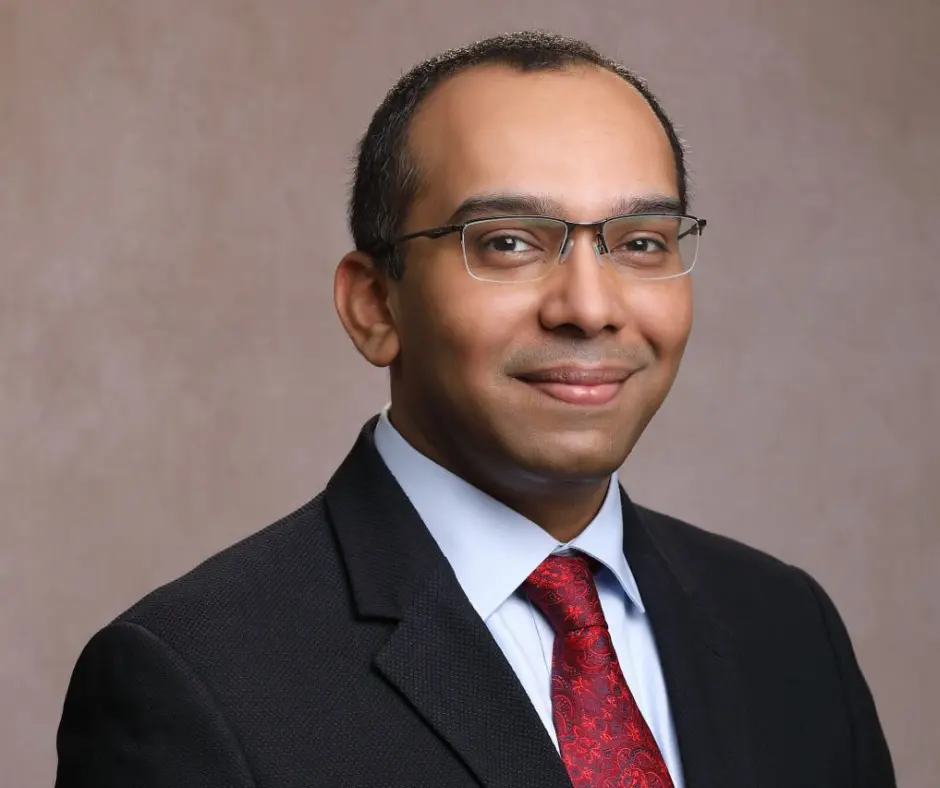
MBBS, MS (ENT), DNB (ENT), MCh (Head & Neck), FICRS, FEB – ORL HNS, ASOHNS
Clinical Director & Senior Consultant Surgeon