
In this article
- What is a Deviated Septum?
- Causes and Risk Factors
- Types of Septal Deviation
- Signs and Symptoms
- How is a Deviated Septum Diagnosed?
- Treatment Options
- Living with a Deviated Septum / Recovery and Outlook
- What Septoplasty Costs in Chennai
- Why Choose THANC Hospital for Deviated Septum Treatment?
- Frequently Asked Questions

What is a Deviated Septum?
Your nose is much more than just a simple passageway for air. It is a highly complex organ designed to filter out dust, warm up cold air, and add moisture to dry air before it reaches your lungs. To do this job effectively, the inside of your nose relies on a specific structural layout. The nasal septum is the central dividing wall that splits your nasal cavity into a right and left passage. This important wall consists of firm, flexible cartilage in the front and solid bone in the back. A perfectly healthy septum sits exactly in the middle, creating two equal airway passages for smooth breathing.
However, a large number of people do not have a perfectly straight nasal wall. When this dividing wall bends, shifts, or crooks to one side, medical professionals call it a deviated nasal septum. This structural shift makes one nasal passage significantly narrower than the other. In severe cases, the bend can completely block the airflow on one side of your nose, making normal breathing very difficult.
You might wonder how common this condition actually is. Medical studies show that a deviated septum is incredibly common across the globe. In India, research indicates that up to 80% of the adult population has some degree of septal deviation. However, most of these deviations are very minor and never cause any noticeable problems. The condition only becomes a medical concern when the bend restricts your breathing or leads to recurrent sinus issues.
Interestingly, this condition affects people of all ages, right from birth. Studies from Indian medical journals reveal that nearly 20% of newborns in India are born with a neonatal deviated septum. This early deviation often results from the physical pressures of the birthing process. For adults, the condition affects both men and women equally. However, some regional studies in India show a slightly higher prevalence in men, often due to a higher rate of occupational hazards and sports-related injuries.
Living with a severely bent septum can deeply impact your daily life and overall well-being. You might struggle to breathe comfortably during exercise, or you might wake up with a severely dry mouth every morning because you are forced to breathe through your mouth at night. Understanding the anatomy of your nose and the true nature of this condition is the first important step toward finding lasting relief.
Causes and Risk Factors
A deviated septum does not happen without a reason. The structural bend in your nasal wall usually stems from specific developmental factors or physical events. Understanding the root cause helps your doctor plan the most effective treatment for your breathing problems.
Here are the primary causes of a deviated septum:
- Congenital Development: Some people are simply born with a crooked septum. The deviation develops naturally while the baby grows in the womb, without any outside influence.
- Birth Trauma: The journey through the birth canal puts immense pressure on a baby's delicate face. Difficult deliveries, prolonged labor, or the use of forceps can shift the soft nasal cartilage, leading to a deviation right from birth.
- Childhood Injuries: Children frequently fall while learning to walk, running, or playing. A minor bump to the nose during early childhood can alter the growth pattern of the nasal cartilage, causing it to bend as the child grows into an adult.
- Adult Facial Trauma: A direct hit to the face can fracture or displace the nasal bone and cartilage. This type of injury often results in a sharp, irregular bend in the nasal wall that immediately affects breathing.
- Aging Process: As you get older, the cartilage in your nose naturally loses its elasticity and strength. This normal aging process can cause a previously straight septum to sag or cause a mildly deviated septum to worsen over time.
In India, several specific risk factors increase the likelihood of developing a deviated septum. The local environment, lifestyle, and daily activities play a significant role in your nasal health.
India-specific risk factors include:
- Road Traffic Accidents: India has a very high volume of two-wheeler traffic. Riding without a full-face helmet leaves the nose highly vulnerable to severe impact during a crash, which is a leading cause of traumatic septal deviation in adults.
- Contact Sports: Popular Indian sports like cricket, kabaddi, and wrestling carry a high risk of facial trauma. A cricket ball striking the face or a direct face-to-face collision during a kabaddi match can easily displace the nasal structures.
- Environmental Irritants: Many Indian cities struggle with high levels of dust, vehicle exhaust, and industrial pollution. While pollution does not physically bend the bone, it severely inflames the inner lining of the nose. This swelling makes the symptoms of a mildly deviated septum feel much worse.
- Dietary and Lifestyle Factors: Diets lacking in essential nutrients during childhood can affect overall bone and cartilage development. Additionally, tobacco use—whether smoking or chewing—irritates the nasal passages and delays healing after any minor nasal trauma.
Types of Septal Deviation
Not every deviated septum bends in the same way, and the pattern matters — it determines which symptoms you get and what a surgeon needs to do to correct it. Your operative notes or scan report may use one of these terms.
| Type | What it looks like | Typical effect |
|---|---|---|
| Anterior dislocation | The front-most edge of the septal cartilage is displaced out of its groove, often visible at the nostril opening | Obstruction right at the nasal entrance, sometimes a visibly asymmetric nostril |
| C-shaped deformity | The septum curves in a single smooth arc to one side | Persistent blockage on the narrowed side, with compensatory swelling on the other |
| S-shaped deformity | The septum bends one way at the front and the opposite way further back | Blockage affecting both nostrils at different levels — often the most symptomatic pattern |
| Septal spur | A sharp, localised bony or cartilaginous ridge projecting from the septum | Contact-point headaches and nosebleeds; may press directly on the outer nasal wall |
The S-shaped deformity explains something patients often find confusing — how both nostrils can feel blocked when the septum has "gone to one side". The septum has simply bent twice in opposite directions.
Septal spurs are equally worth knowing about, because they produce symptoms out of proportion to their size. A small spur pressing against the sensitive lining of the outer nasal wall can trigger persistent one-sided headaches and recurrent nosebleeds while barely obstructing airflow at all.
Signs and Symptoms
Many people live with a slightly crooked septum and never realize it. The human body is excellent at adapting to minor changes in airflow. However, when the deviation is significant, it disrupts the normal function of your nose and leads to a cascade of uncomfortable symptoms.
The early warning signs are usually physical sensations that you notice during your daily routine. Patients often ignore these initial clues, mistaking them for a simple cold or a seasonal allergy that refuses to go away.
Early warning signs include:
- Nose block one side: This is the most classic and noticeable symptom. You will consistently feel that one nostril is stuffed or blocked, even when you do not have a cold or any mucus.
- Difficulty breathing: You might find it hard to pull enough air through your nose, especially when you exercise, climb stairs, or exert yourself physically.
- Noisy breathing: A narrowed airway creates turbulent airflow inside the nose. This can cause a distinct whistling sound when you inhale or exhale through your nose.
- Preference for sleeping on one side: You might subconsciously roll onto a specific side every night. Sleeping on one side often opens up the blocked nasal passage and makes breathing slightly easier.
When left untreated, a severe deviation can cause your symptoms to progress and affect other parts of your respiratory system. The restricted airflow and poor drainage create a breeding ground for bacteria and chronic inflammation.
Progressive and serious symptoms include:
- Frequent Sinus Infections: A bent septum can physically block the natural drainage pathways of your sinuses. This trapped mucus leads to painful, recurring infections. If you struggle with this, you can learn more about how chronic sinusitis keeps coming back and its treatment.
- Facial Pain and Headaches: The deviated cartilage can physically press against the sensitive tissues on the opposite side of your nose. This constant, physical pressure triggers chronic headaches and deep facial pain known as contact point headaches.
- Frequent Nosebleeds: The abnormal, fast airflow dries out the mucosal lining on the prominent side of the bend. This dry, cracked tissue bleeds very easily, leading to unexpected and frequent nosebleeds.
- Snoring and Sleep Disruption: The blocked airway forces you to breathe through your mouth while you sleep. This leads to loud snoring, a severely dry throat in the morning, and poor overall sleep quality.
See a doctor if: You should schedule a medical evaluation if you experience a persistent blocked nose that does not improve with over-the-counter medicines. You also need to see a specialist if you suffer from frequent nosebleeds, recurring sinus infections, or severe snoring that leaves you feeling tired and groggy during the day. Do not accept poor breathing as a normal part of life.
How is a Deviated Septum Diagnosed?
Diagnosing a deviated septum is a straightforward, quick, and painless process. Your doctor will focus on understanding your daily symptoms, reviewing your medical history, and physically examining the inside of your nose. The main goal is to determine the exact location, shape, and severity of the bend in your septum.
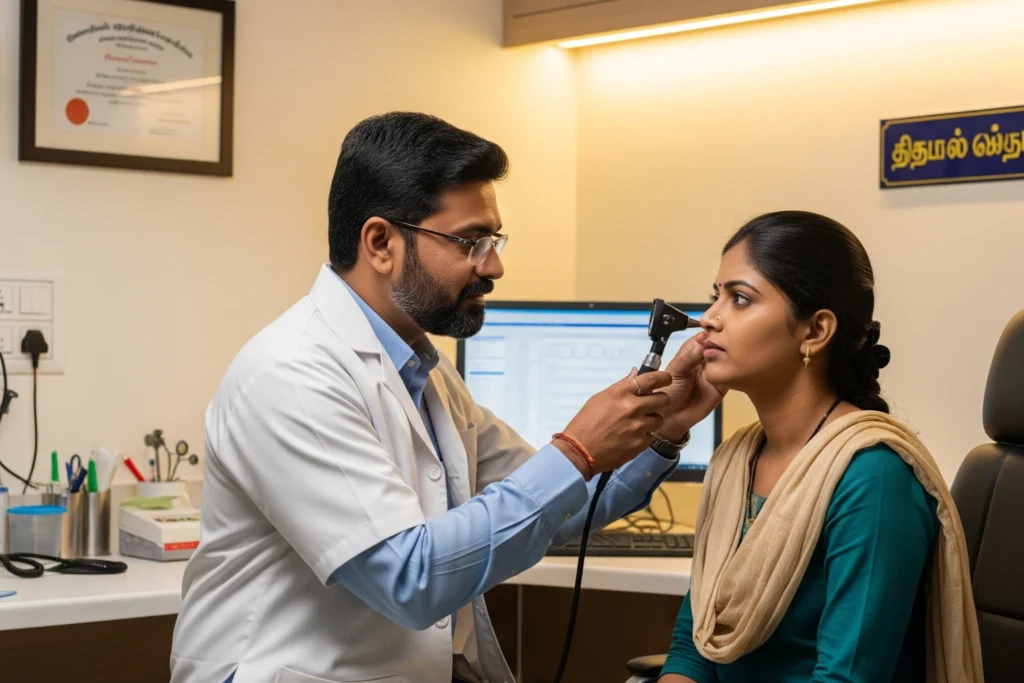
The evaluation begins with a detailed clinical examination in the consultation room. Your doctor will ask about any past injuries to your face, your history of sinus infections, and how your breathing affects your sleep quality. Next, they will perform an anterior rhinoscopy. During this simple test, the doctor uses a bright light and a small instrument called a nasal speculum to gently open your nostril. This allows them to clearly see the front portion of your nasal septum and check for obvious deviations, swelling, or crusting.
For a much more full view, the specialists at THANC Hospital use advanced diagnostic tests. These modern tools help the doctor see deep into the back of the nasal cavity and evaluate the surrounding sinus structures that a simple light cannot reach.
Tests and imaging available at THANC Hospital include:
- Nasal Endoscopy: The doctor guides a thin, flexible tube with a tiny camera (an endoscope) into your nasal passage. This provides a highly magnified, high-definition view of the entire septum, the turbinates (structures on the side wall of the nose), and the sinus openings. The procedure takes only a few minutes and is done right in the chair.
- CT Scan of the Paranasal Sinuses: If your doctor suspects that your deviated septum is causing chronic sinus issues, they will order a Computed Tomography (CT) scan. This imaging test creates detailed cross-sectional pictures of your facial bones and cartilage. It helps the surgeon map out your exact anatomy before planning any surgical correction.
- Allergy Testing: Sometimes, severe allergic swelling mimics the exact symptoms of a deviated septum. Your doctor might recommend allergy screening to rule out or treat underlying allergic rhinitis alongside your structural issues.
What to expect during your evaluation: You can expect a very comfortable and informative visit. The physical examination and endoscopy are not painful, though you might feel a slight tickling sensation or pressure in your nose. Your doctor will show you the endoscopic images on a screen, explaining exactly where the blockage is and how it affects your breathing. This transparent approach gives you fully understand your condition before discussing any treatment options.
Treatment Options
The treatment for a deviated septum depends entirely on the severity of your symptoms and how much they affect your life. If your crooked septum does not cause any breathing problems, sleep issues, or sinus infections, you do not need any treatment at all. However, if the deviation disrupts your daily activities, your doctor will guide you through a step-by-step treatment plan.
Doctors almost always start with conservative, medical management. While medicines cannot physically straighten the bent bone or cartilage, they can significantly reduce the swelling in the nasal lining. This often opens the airway just enough to provide excellent relief.
Conservative management options include:
- Saline Nasal Sprays: Regular use of sterile saltwater sprays helps keep the nasal passages moist and clean. This prevents the dry crusting that often leads to painful nosebleeds.
- Nasal Corticosteroid Sprays: These prescription sprays reduce inflammation and shrink the swollen tissues inside the nose, improving overall airflow. You must use them daily for the best results.
- Antihistamines: If environmental allergies make your nasal blockage worse, daily allergy medications can help control the swelling and reduce mucus production.
- Decongestants: These medications provide quick, short-term relief from severe stuffiness. However, you should not use nasal decongestant sprays for more than a few days, as they can cause a rebound effect and make the congestion worse.
When medical treatments fail to improve your breathing, your doctor will recommend surgical intervention. Surgery is the only permanent way to physically correct the structural bend in your nasal wall.
Surgical options when needed:
- Septoplasty: This is the primary deviated septum surgery. The surgeon works entirely through the nostrils, making a small incision in the lining of the septum. They carefully lift the lining, remove or reshape the bent cartilage and bone, and then lay the lining back down. This straightens the central wall and opens both nasal passages permanently.
- Turbinoplasty: Often, a deviated septum causes the tissues on the opposite side of the nose to swell and grow larger to fill the extra space. The surgeon can shrink or reduce these enlarged turbinates during the septoplasty to maximize your airway.
- Functional Endoscopic Sinus Surgery (FESS): If your deviated septum has led to chronic sinus infections or growths, the surgeon might perform FESS at the same time. You can read more about how this helps with conditions like nasal polyps and preventing recurrence.
Risks to be aware of: Septoplasty is a safe procedure for most people who are fit for anaesthesia, but no operation is without risk, and your surgeon will discuss these with you during consent. Possible complications include bleeding, infection, and a septal haematoma — a collection of blood between the layers of the septum, which needs prompt drainage because untreated it can damage the cartilage. Temporary numbness of the upper front teeth and gums is common and reflects stretching of the small nerves supplying them; it usually settles over several weeks to a few months. A mild change in the external shape of the nose is uncommon but possible, and persistent or recurrent obstruction occasionally requires revision surgery.
Advanced techniques available at THANC Hospital: The surgical team at THANC Hospital uses modern endoscopic techniques for septoplasty. By using high-definition cameras, the surgeon gains incredible precision during the procedure. This minimally invasive approach so that there are no external scars on your face. The targeted technique also minimizes tissue trauma, which significantly reduces post-operative swelling, lowers the risk of bleeding, and speeds up your overall recovery time.
Living with a Deviated Septum / Recovery and Outlook
Deciding to undergo deviated septum surgery is a big step toward better health and a higher quality of life. Understanding the recovery process helps you prepare mentally and physically for the days following your procedure. The outlook after a successful septoplasty is excellent, with the vast majority of patients experiencing a dramatic, life-changing improvement in their breathing and sleep quality.
What to expect after treatment: Immediately after the surgery, your nose will feel very congested, similar to having a severe head cold. This happens because of the internal swelling and the presence of soft plastic splints placed inside your nose to support the newly straightened septum. You will have to breathe through your mouth for a few days. You might experience mild pain and pressure, which your doctor will manage with oral pain relievers. You will also notice some blood-tinged drainage from your nose for the first two to three days. Once the doctor removes the splints—usually within five to seven days—you will notice a remarkable difference in your ability to breathe freely.
Follow-up care is important for a smooth and safe recovery. Your follow-up care will include:
- Attending Clinic Visits: You must visit your doctor a few days after surgery to have the splints removed and to allow the doctor to gently clean any dried blood from your nasal passages.
- Avoiding Strenuous Activity: You need to avoid heavy lifting, intense gym workouts, and bending over for at least two to three weeks. These activities raise your blood pressure and can trigger a severe nosebleed.
- Protecting Your Nose: You must avoid blowing your nose forcefully. If you need to sneeze, do so with your mouth open to release the pressure. You should also wear shirts that button down the front to avoid pulling tight clothing over your face and accidentally bumping your nose.
Lifestyle modifications for long-term nasal health: Even after your septum is straight and fully healed, you need to take care of your nasal lining to prevent future issues.
- Use Saline Washes: Continue using gentle saline drops or a sinus rinse to keep the nasal cavity clean, moist, and free of allergens.
- Elevate Your Head: Sleep with an extra pillow for the first few weeks after surgery to reduce nighttime swelling and improve drainage.
- Avoid Irritants: Stay away from cigarette smoke, strong chemical fumes, and heavy dust. If you live in a highly polluted area, consider wearing a mask when outdoors and using an air purifier in your bedroom to protect your newly healed airway.
What Septoplasty Costs in Chennai
Septoplasty is a structural correction rather than a cosmetic one, and across Chennai hospitals it typically ranges from around ₹80,000 to ₹1,50,000, rising beyond that where the septal work is combined with sinus surgery or turbinate reduction in the same sitting.
What moves a case within the range:
- Extent of the correction. A simple anterior deviation is quicker than a complex or revision septoplasty where cartilage must be reshaped and grafted back.
- Procedures combined. Many patients need turbinate reduction or functional endoscopic sinus surgery at the same time. Combining them costs more in one sitting but far less than staging separate operations.
- Endoscopic versus conventional technique. Endoscopic septoplasty gives better visualisation of posterior deviations and uses costlier equipment.
- Anaesthesia and stay. General anaesthesia is standard, with most patients discharged within 24 hours.
- Pre-operative workup. Nasal endoscopy and a CT scan of the sinuses where sinus disease is suspected alongside the deviation.
These are prevailing market bands, not a quote. An important distinction on insurance: septoplasty performed to correct breathing obstruction is a functional procedure and is generally covered by health insurance, whereas rhinoplasty done to change the shape of the nose is cosmetic and is not. Where the two are combined (septorhinoplasty), insurers typically cover only the functional portion. Bring your policy to the consultation and we will tell you exactly where you stand. We provide a written estimate after examination and endoscopy.
Why Choose THANC Hospital for Deviated Septum Treatment?
When you need expert care for complex nasal and sinus issues, THANC Hospital provides a patient-centered approach focused on long-term relief. You will be treated by Dr. A. Sudha, a highly experienced specialist in Rhinology and Sinusitis & Allergy Management. Dr. Sudha uses precise endoscopic techniques to ensure your surgery is safe, effective, and perfectly tailored to your specific anatomy. The hospital's dedicated team gives you receive full support from your very first consultation through your complete recovery. If you are struggling with a blocked nose, you can easily Book an Appointment to start your journey toward better breathing today.
Frequently Asked Questions
Can a deviated septum heal on its own without surgery?
No, a deviated septum cannot heal or straighten on its own over time. Because the deviation is a physical bend in the solid bone and cartilage, it requires surgical intervention to correct. However, if your symptoms are mild, daily medications can manage the swelling and discomfort without the need for surgery.
Is deviated septum surgery painful?
You will not feel any pain during the surgery because the doctor will give you general anesthesia, meaning you will be completely asleep. After the procedure, you will experience some mild to moderate discomfort, pressure, and congestion. Your doctor will prescribe oral pain medications to keep you very comfortable during the first few days of recovery.
Will septoplasty change the shape of my nose?
A standard septoplasty does not change the outward appearance or shape of your nose at all. The surgeon works entirely inside the nasal cavity to straighten the internal dividing wall. If you also want to change the cosmetic appearance of your nose, you would need to discuss a combined procedure called a rhinoplasty with your surgeon.
How long does it take to recover from deviated septum surgery?
Most patients feel well enough to return to a desk job or school within one week after the surgery. The initial swelling and congestion peak during the first few days and improve significantly once the doctor removes the internal splints. Full healing of the internal nasal tissues and cartilage can take anywhere from three to six months.
Can a deviated septum cause snoring and sleep apnea?
Yes, a severely bent septum restricts the airflow through your nose, forcing you to breathe heavily through your mouth while you sleep. This mouth breathing leads to loud snoring and can strongly contribute to obstructive sleep apnea. Correcting the septum often improves your sleep quality and reduces snoring significantly.
At what age can you get surgery for a deviated septum?
Doctors usually wait until a patient's facial bones have completely stopped growing before performing a septoplasty. For most people, this means waiting until they are at least 16 to 18 years old. In rare cases of severe facial trauma or extreme breathing difficulty, a surgeon might perform a carefully modified procedure on a younger child.
Learn more about Rhinology & Skull Base
View treatments, doctors & FAQs
Concerned about this condition?
Our specialists can help. Book a consultation today.
Book Consultation