
In this article

What is Difficulty Swallowing (Dysphagia)?
Dysphagia is the medical term for difficulty swallowing. If you have this condition, it takes more time and effort to move food or liquid from your mouth to your stomach. You might feel a painful sensation when you swallow, or you may find it completely impossible to swallow certain foods. While an occasional coughing fit during a meal is normal, persistent difficulty swallowing indicates an underlying medical issue that requires professional attention.
To understand this condition, it helps to know how a normal swallow works. Swallowing is a complex process that involves over fifty pairs of muscles and many nerves working together. The process happens in three distinct phases. First, the oral phase occurs when you chew your food and mix it with saliva to form a soft ball. Second, the pharyngeal phase begins as your tongue pushes the food to the back of your throat, triggering an automatic reflex that closes your airway. Finally, the esophageal phase involves rhythmic muscle contractions that squeeze the food down your food pipe and into your stomach. Dysphagia can occur if there is a breakdown in any of these three phases.
Many patients describe the primary symptom as the uncomfortable feeling of food stuck in throat or chest areas. This sensation can cause significant anxiety during meals. Over time, the fear of choking can lead to skipped meals, severe weight loss, and nutritional deficiencies. The condition ranges from mild discomfort to a complete inability to swallow anything, including your own saliva.
Difficulty swallowing is a highly common health issue, particularly as people age. In India, research indicates that approximately 34% to 36% of community-dwelling older adults experience self-reported swallowing problems. Furthermore, the condition is exceptionally prevalent among stroke survivors. Studies show that nearly 48% of stroke patients in India develop swallowing difficulties during their recovery. Because India has a rapidly aging population and a high burden of neurological diseases, dysphagia represents a major, yet often overlooked, public health challenge.

Causes and Risk Factors
Doctors generally classify difficulty swallowing into two main categories based on where the problem occurs. Oropharyngeal dysphagia originates in the mouth or throat, while esophageal dysphagia originates further down in the food pipe. Each type has its own distinct set of causes and risk factors.
Causes of Oropharyngeal Dysphagia
When the muscles and nerves in your mouth and throat do not work properly, you may struggle to start a swallow. This often causes food or liquid to spill into your windpipe, leading to coughing and choking. Common causes include:
- Neurological disorders: Conditions like Parkinson's disease, multiple sclerosis, and muscular dystrophy can slowly damage the nerves that control your swallowing muscles.
- Neurological damage: Sudden brain injuries, such as a stroke or severe head trauma, can instantly disrupt the brain signals required for a safe swallow.
- Head and neck cancers: Tumors growing in the mouth, throat, or voice box can physically block the passage of food. India accounts for roughly 30% of all head and neck cancers globally, making this a leading cause of swallowing issues in the country.
- Cancer treatments: Radiation therapy and chemotherapy used to treat head and neck cancers can cause severe inflammation, scarring, and dryness in the throat.
Causes of Esophageal Dysphagia
This type of difficulty swallowing feels like food is hanging up or stopping in the base of your throat or in your chest after you have already started to swallow. Common causes include:
- Gastroesophageal Reflux Disease (GERD): Chronic acid reflux causes stomach acid to wash up into your esophagus. Over time, this acid damages the lining and causes scar tissue to form, which narrows the food pipe.
- Esophageal strictures: Any narrowing of the esophagus can trap large pieces of food. Strictures often result from GERD, but they can also form after swallowing harsh chemicals or pills that get stuck.
- Esophageal tumors: Cancerous or non-cancerous growths in the esophagus can progressively block the tube. As the tumor grows, patients usually notice difficulty swallowing solid foods first, followed by liquids.
- Achalasia: This is a rare condition where the lower esophageal muscle ring fails to relax when you swallow. This prevents food from entering your stomach and causes it to back up into your throat.
- Eosinophilic esophagitis: This is an immune system condition where certain white blood cells build up in the lining of your esophagus. This buildup causes inflammation and makes the tissue stiff, leading to food impaction.
India-Specific Risk Factors
Certain lifestyle habits and environmental factors in India significantly increase the risk of developing conditions that cause difficulty swallowing.
- Tobacco and betel nut use: The widespread consumption of chewing tobacco, gutkha, pan masala, and betel nut in India is a massive risk factor for oral and esophageal cancers. These cancers frequently present with swallowing difficulties as their first symptom.
- Dietary habits: Traditional Indian diets often feature highly spiced, oily, and acidic foods. Consuming these foods regularly, especially late at night, strongly contributes to severe GERD and acid reflux.
- Delayed medical care: In many parts of India, patients delay seeking treatment for early warning signs like chronic heartburn or minor strokes. This delay allows strictures to worsen or neurological damage to become permanent.
- High rates of stroke: India has a high incidence of stroke due to rising rates of uncontrolled hypertension and diabetes. Consequently, post-stroke swallowing complications are incredibly common.
Signs and Symptoms
The symptoms of difficulty swallowing can vary widely depending on the exact location of the problem and the underlying cause. Some people experience only mild discomfort, while others face life-threatening complications. Recognizing the early warning signs can help you get treatment before the condition worsens.
Early Warning Signs
Patients often notice subtle changes in their eating habits before they realize they have a medical problem. You might find yourself chewing food much longer than usual or needing to drink copious amounts of water to wash your meals down. The earliest signs include:
- A persistent sensation of food stuck in throat or chest areas.
- Pain while swallowing, a condition medically known as odynophagia.
- Drooling or an inability to control saliva in your mouth.
- A hoarse, gurgling, or "wet" sounding voice immediately after eating or drinking.
- Frequent throat clearing during or right after meals.
- Food or stomach acid backing up into your throat or nasal passages.
Progressive and Serious Symptoms
If left untreated, difficulty swallowing can lead to severe health crises. When food or liquid enters your airway instead of your stomach, it carries harmful bacteria into your lungs. This can cause a dangerous infection. You can learn more about this specific complication by reading our guide on aspiration pneumonia causes and prevention.
As the condition progresses, you may experience:
- Severe coughing or gagging every time you attempt to swallow.
- Unexplained and rapid weight loss due to an inability to consume enough calories.
- Dehydration from avoiding liquids.
- Recurrent chest infections or frequent bouts of pneumonia.
- Complete inability to swallow, requiring emergency medical intervention.
See a Doctor If...
You should never ignore persistent swallowing problems. Schedule an appointment with a specialist if your difficulty swallowing lasts for more than a few days, occurs regularly, or is accompanied by weight loss. Seek emergency medical care immediately if food feels completely stuck and you cannot breathe, or if you are vomiting blood.

How is Difficulty Swallowing Diagnosed?
Proper treatment requires an accurate diagnosis of exactly where and why the swallowing process is failing. When you visit a specialist, they will start by taking a detailed medical history. They will ask you to describe exactly what it feels like when you swallow, what types of foods cause the most trouble, and whether you have a history of acid reflux, neurological issues, or tobacco use.
Following the clinical interview, your doctor will perform a physical examination. They will check your mouth, throat, and neck for any visible abnormalities, lumps, or muscle weakness. To get a clear picture of your swallowing mechanics, they will likely order one or more specialized diagnostic tests.
Tests and Imaging Available
At THANC Hospital, we use advanced diagnostic tools to pinpoint the exact cause of your symptoms. The most common evaluations include:
- Flexible Endoscopic Evaluation of Swallowing (FEES): During this test, a doctor passes a very thin, flexible tube with a tiny camera through your nose and into the back of your throat. You will then eat and drink small amounts of food dyed with food coloring. The camera allows the doctor to watch your throat muscles in real-time and see if any food is entering your airway.
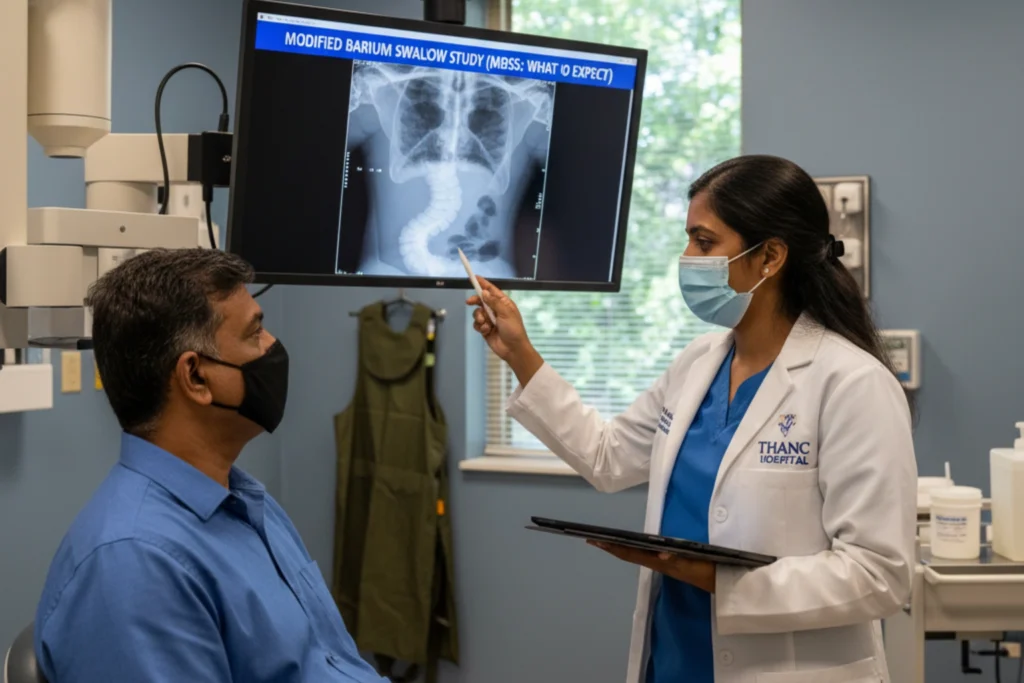
- Modified Barium Swallow Study (MBSS): Also known as a videofluoroscopic swallowing study, this test involves eating and drinking foods coated in barium. Barium is a safe, chalky substance that shows up brightly on X-rays. A speech-language pathologist and a radiologist will record an X-ray video of your swallow to see exactly how the food travels from your mouth to your stomach.
- High-Resolution Esophageal Manometry: If your doctor suspects a muscle coordination problem in your esophagus, they may perform this test. A small tube containing pressure sensors is passed through your nose and into your stomach. As you swallow water, the sensors measure the strength and rhythm of your esophageal muscle contractions.
- Upper Endoscopy (EGD): A gastroenterologist or surgeon passes a flexible camera down your throat to visually inspect your esophagus, stomach, and the upper part of your small intestine. This test is important for identifying strictures, tumors, or inflammation caused by acid reflux. During the procedure, the doctor can also take small tissue samples (biopsies) for laboratory testing.
What to Expect During Evaluation
Diagnostic tests for swallowing disorders are generally safe, quick, and performed on an outpatient basis. You may need to fast for a few hours before certain procedures like an endoscopy or a barium swallow. Your medical team will explain every step of the process, ensure your comfort, and discuss the results with you shortly after the tests are completed.
Treatment Options
The treatment for difficulty swallowing depends entirely on the underlying cause, the severity of your symptoms, and your overall health. Doctors usually begin with the least invasive options before recommending surgical interventions. A multidisciplinary team, including laryngologists, speech-language pathologists, and dietitians, will work together to create your care plan.
Conservative and Medical Management
For many patients, especially those recovering from a stroke or dealing with mild nerve damage, conservative therapies can significantly improve swallowing function.
- Swallowing Therapy: A speech-language pathologist will teach you specific exercises to strengthen your jaw, tongue, and throat muscles. They will also teach you compensatory strategies, such as tucking your chin to your chest while swallowing, to help protect your airway. You can explore more about this rehabilitation process in our article on swallowing problems after stroke.
- Dietary Modifications: Your care team may recommend changing the texture of your food and liquids. Thickening liquids with special powders can make them move more slowly, giving your throat muscles time to react and preventing choking. You may also need to switch to a soft or pureed diet to avoid the sensation of food stuck in throat.
- Medications: If your dysphagia is caused by GERD, your doctor will prescribe strong antacids or proton pump inhibitors to reduce stomach acid and allow your esophagus to heal. If you have eosinophilic esophagitis, you may need oral corticosteroids to reduce inflammation.
Surgical and Advanced Interventions
When medical management is not enough, or if there is a physical blockage in your throat or esophagus, surgical intervention becomes necessary.
- Esophageal Dilation: If you have a stricture or a narrowed esophagus, your doctor can gently stretch it open. During an endoscopy, they will insert a special balloon or a series of flexible tubes to widen the narrowed area, allowing food to pass easily.
- Stent Placement: For patients with esophageal cancer or severe strictures that cannot be dilated, a doctor may insert a metal or plastic tube called a stent. The stent props the esophagus open and provides a clear pathway for food and liquids.
- Botulinum Toxin (Botox) Injections: If your esophageal sphincter muscles are too tight and refuse to relax (as seen in achalasia), your doctor can inject Botox directly into the muscle. This temporarily paralyzes the muscle, allowing it to relax and let food pass into the stomach.
- Tumor Removal Surgery: If a cancerous growth is causing your swallowing difficulties, surgical removal is often required. At THANC Hospital, we use advanced, minimally invasive techniques like Transoral Robotic Surgery (TORS) and Transoral Laser Microsurgery (TLM). These approaches allow surgeons to remove tumors through the mouth without making large incisions on the neck, which helps preserve swallowing function.
- Feeding Tubes: In severe cases where swallowing remains unsafe despite all treatments, a temporary or permanent feeding tube may be necessary. A Percutaneous Endoscopic Gastrostomy (PEG) tube delivers liquid nutrition directly into your stomach, so you receive adequate calories and hydration while bypassing the throat entirely.
Living with Dysphagia / Recovery and Outlook
Learning to live with difficulty swallowing requires patience, adaptation, and a commitment to your rehabilitation plan. The outlook varies greatly depending on the cause. Patients with acid reflux or minor strictures often experience a complete resolution of their symptoms after treatment. Those recovering from a stroke may see gradual improvement over several months of dedicated swallowing therapy. However, patients with progressive neurological diseases may need to continuously adapt their diet as their condition changes.
What to Expect After Treatment
Following your treatment, you will likely need a period of adjustment. If you underwent surgery or dilation, your throat may feel sore for a few days. You will usually start with a liquid diet and slowly reintroduce soft, solid foods as your healing progresses. If you are participating in swallowing therapy, you must practice your exercises daily to see meaningful results. Consistency is the key to retraining your muscles and nerves.
Follow-Up Care
Regular follow-up appointments are important for managing dysphagia. Your doctor will monitor your weight, check for signs of lung infections, and ensure your treatment plan remains effective. If you have a chronic condition like GERD, you may need periodic endoscopies to ensure new strictures have not formed. Your speech-language pathologist will also periodically reassess your swallowing function to determine if you can safely upgrade your diet to more solid foods.
Lifestyle Modifications
Making specific changes to your daily routine can dramatically improve your comfort and safety while eating. Consider adopting the following habits:
- Eat smaller, frequent meals: Large meals can overwhelm your digestive system and trigger acid reflux. Eating five or six small meals a day reduces stomach pressure and makes swallowing easier to manage.
- Sit upright: Always sit at a 90-degree angle while eating and drinking. Remain upright for at least 30 to 45 minutes after your meal to allow gravity to help move the food down and prevent acid from washing back up.
- Chew thoroughly: Take your time during meals. Chew every bite of food until it is completely mashed before attempting to swallow. Avoid rushing or talking while you have food in your mouth.
- Avoid problem foods: Steer clear of foods that are notoriously difficult to swallow, such as dry breads, tough meats, sticky peanut butter, and stringy vegetables.
- Manage Indian dietary triggers: To prevent acid reflux from worsening your esophageal symptoms, limit your intake of heavily spiced curries, deep-fried snacks, and late-night meals. Opt for milder, easily digestible foods.
Eating is a deeply social and cultural activity, especially in India. Experiencing difficulty swallowing can lead to frustration, embarrassment, and social isolation. It is important to communicate openly with your family about your dietary needs. Do not hesitate to seek support from a counselor or a patient support group if you are struggling with the emotional impact of this condition.
Why Choose THANC Hospital for Difficulty Swallowing?
At THANC Hospital, we understand how profoundly swallowing disorders affect your quality of life. Our dedicated Swallowing Disorders Clinic offers patient-centered care tailored to your specific needs.
Under the expert guidance of Dr. Vidhyadharan S, our team uses advanced diagnostic tools and minimally invasive surgical techniques to treat complex throat and esophageal conditions. We focus not just on treating the disease, but on preserving your function and restoring your ability to enjoy meals safely. If you or a loved one are struggling with swallowing issues, please Book an Appointment with our specialists today.
Frequently Asked Questions
Can anxiety cause difficulty swallowing?
Yes, severe anxiety and stress can cause a condition known as globus sensation. This creates a feeling of a lump or tightness in your throat, making it feel difficult to swallow even when there is no physical blockage. However, a doctor must rule out physical causes before attributing swallowing problems solely to anxiety.
What should I do if I feel like food is stuck in my throat?
If you feel food stuck in your throat but can still breathe and talk, try drinking small sips of water or a carbonated beverage to help dislodge it. Do not try to force it down with more dry food. If you cannot breathe, or if the food remains stuck for hours and causes pain, seek emergency medical help immediately.
Is difficulty swallowing a normal part of aging?
While the swallowing muscles do naturally weaken slightly as we age, persistent difficulty swallowing is never considered normal. It is usually a symptom of an underlying medical condition, such as acid reflux, a neurological issue, or a structural blockage. Older adults experiencing these symptoms should always undergo a medical evaluation.
Can acid reflux cause permanent swallowing problems?
If left untreated for years, chronic acid reflux can cause severe damage to the esophagus. The constant acid exposure leads to the formation of thick scar tissue, which permanently narrows the food pipe. Early treatment with medication and diet changes can prevent this permanent scarring.
How long does swallowing therapy take to work?
The timeline for swallowing therapy varies widely depending on the cause and severity of the nerve or muscle damage. Some patients notice improvements within a few weeks of daily exercises. For stroke survivors or those with severe muscle weakness, rehabilitation may take several months of consistent, dedicated practice.
Can dysphagia be cured completely?
Many cases of dysphagia can be cured completely, especially if the cause is a treatable condition like an esophageal stricture or an infection. For chronic neurological conditions, the goal of treatment is often management rather than a complete cure. In these cases, therapy focuses on maximizing swallowing safety and preventing complications like pneumonia.
Learn more about Swallowing Disorders Clinic
View treatments, doctors & FAQs
Concerned about this condition?
Our specialists can help. Book a consultation today.
Book Consultation
MBBS, MS (ENT), DNB (ENT), MCh (Head & Neck), FICRS, FEB – ORL HNS, ASOHNS
Clinical Director & Senior Consultant Surgeon