
In this article

Vocal Cord Nodules & Polyps — What You Need to Know
Your voice serves as your most valuable asset, especially if you rely on it for your profession. Teachers, singers, public speakers, and call center executives use their voices extensively every single day. This heavy usage puts you at a higher risk for developing voice problems. Among the most common voice disorders are vocal cord nodules and vocal cord polyps. These non-cancerous growths form on your vocal cords and can severely impact your ability to speak or sing clearly.
This guide matters because ignoring voice problems can lead to permanent damage. Many professionals try to push through vocal fatigue, hoping the hoarseness will simply disappear. However, continuing to strain an injured voice only makes the underlying condition worse. By understanding how these growths form and learning how to protect your voice, you can prevent long-term career interruptions. Early intervention often saves patients from needing surgical procedures.
This guide is specifically for professional voice users in India. Research shows that voice disorders affect a massive portion of the teaching population. Studies conducted among school teachers in India reveal that nearly 46% experience voice disorders during their careers. Furthermore, clinical data from Indian voice clinics indicates that vocal cord nodules account for roughly 28% of all diagnosed voice pathologies, while polyps account for about 6%. Carnatic singers, classroom teachers, and religious leaders face unique vocal demands that require specialized care and attention.
Whether you are a patient currently experiencing chronic hoarseness, a caregiver helping a family member, or a professional looking to protect your livelihood, this information will help you take control of your vocal health. You will learn practical steps to manage your symptoms, understand when to seek medical help, and discover how lifestyle changes can protect your voice for years to come.
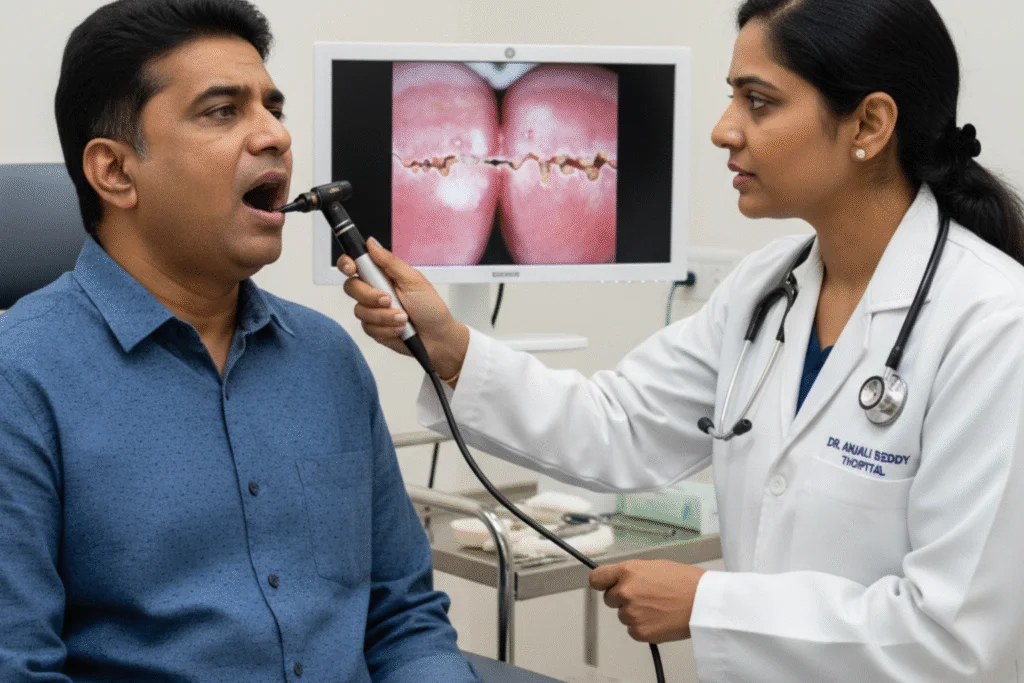
Understanding Vocal Cord Nodules & Polyps
To understand how these growths form, you first need to understand how your voice works. Your voice box (larynx) sits in your neck and contains two folds of muscle tissue covered by a delicate lining. These are your vocal cords. When you breathe, these cords open wide to let air pass into your lungs. When you speak or sing, the cords come together. Air from your lungs blows past them, causing them to vibrate rapidly and produce sound.
When you use your voice incorrectly or excessively, you force these delicate tissues to smash together with too much force. This repeated friction causes the tissues to swell. If you continue to strain your voice, this soft swelling eventually hardens into a benign (non-cancerous) growth.
Medical professionals classify these growths into two main types based on how they form and look. Vocal cord nodules act like calluses on your hands — thick calluses that form at the point of maximal contact of the vocal folds, developing specifically to protect the delicate underlying vocal tissue from repeated trauma. They usually develop over a long period of chronic vocal abuse, and almost always form bilaterally (on both sides) where the vocal cords meet and rub together. Because they frequently affect vocalists, doctors commonly refer to them as singer's nodules — you may also hear them called nodes, karaoke nodules or screamer's nodules, all describing the same thing. They make your voice sound breathy, raspy, and easily fatigued.
Beyond voice use itself, several conditions contribute to nodule formation and make recurrence more likely if they are not addressed: chronic allergies, acid reflux, smoking, and muscle tension dysphonia — improper use of the vocal muscles that causes strain and overly forceful closure of the cords.
Vocal cord polyps, on the other hand, act more like blisters. They usually form unilaterally (on one side) of the vocal cord. While chronic strain can cause polyps, they often develop after a single traumatic vocal event. For example, yelling loudly at a cricket match or singing forcefully while suffering from a cold can rupture a tiny blood vessel in the vocal cord. This injury then swells into a fluid-filled polyp. Polyps tend to be larger than nodules and can cause more severe hoarseness.
Both conditions prevent your vocal cords from closing completely during speech. This incomplete closure allows air to escape, which creates the characteristic breathy sound. If you find that your hoarseness won't go away, you must understand that your vocal cords are asking for help. Ignoring these structural changes will only force you to use more effort to speak, creating a vicious cycle of strain and injury.

Step-by-Step Guide
Managing and healing vocal cord nodules and polyps requires a dedicated approach. You cannot simply take a pill and expect the growths to vanish. Recovery demands active participation in changing how you use your voice. Follow these practical steps to support your vocal recovery and prevent future injuries.
-
Implement Strict Vocal Pacing You must treat your voice like any other muscle in your body. If you run a marathon, you rest your legs afterward. The same rule applies to your voice. Practice vocal pacing by scheduling mandatory periods of silence throughout your day. For every fifty minutes of continuous speaking or teaching, enforce ten minutes of absolute vocal rest. During this rest period, do not speak, whisper, or hum.
-
Optimize Your Systemic Hydration Your vocal cords vibrate hundreds of times per second. They need a thin layer of mucus to act as a lubricant and prevent friction. In the hot and humid Indian climate, you lose moisture rapidly through sweat and breathing. Drink at least 2.5 to 3 liters of water daily. Keep a water bottle at your desk or podium and take frequent, small sips throughout the day. Avoid relying solely on caffeinated beverages like tea or coffee, as they can dry out your throat.
-
Practice Direct Vocal Hydration Drinking water hydrates your body systemically, but the water goes down your food pipe, not your windpipe. To hydrate your vocal cords directly, you must inhale moisture. Perform steam inhalation with plain water twice a day. Do not add strong essential oils, eucalyptus, or menthol rubs to the water. These strong substances can irritate and dry out the delicate vocal cord lining. Simply breathe in the warm, moist air for five to ten minutes.
-
Modify Your Diet to Prevent Acid Reflux Stomach acid plays a massive role in vocal cord health. When acid travels up your food pipe and spills over onto your vocal cords, it causes severe irritation and swelling. Doctors call this laryngopharyngeal reflux (LPR). Many traditional Indian diets include spicy curries, tamarind, and deep-fried snacks that trigger acid production. Eat your dinner at least two to three hours before lying down to sleep. If you frequently experience a bitter taste or a lump in your throat, read our detailed guide on laryngopharyngeal reflux.
-
Engage in Professional Voice Therapy Voice therapy serves as the primary treatment for vocal cord nodules. You will work with a speech-language pathologist (SLP) who acts as a physical therapist for your voice. The therapist will teach you how to breathe correctly from your diaphragm, how to project your voice without straining your throat, and how to eliminate harmful vocal habits. Commit fully to these exercises, as they form the foundation of your recovery.
-
Use Amplification Devices Teachers in India often manage large classrooms with significant background noise from ceiling fans and street traffic. Do not try to shout over this noise. Invest in a portable microphone and speaker system. Let the technology do the heavy lifting for your voice. Using a microphone drastically reduces the physical impact on your vocal cords and prevents the formation of singer's nodules.
What to Expect
When you receive a diagnosis of vocal cord nodules or polyps, you naturally want to know how long recovery will take. Setting realistic expectations helps you manage the frustration that often accompanies voice disorders. The timeline and treatment path differ significantly depending on whether you have nodules or polyps.
If your doctor diagnoses you with vocal cord nodules, expect a conservative treatment approach. Nodules respond exceptionally well to voice therapy and lifestyle changes. You will likely need to attend therapy sessions for six to twelve weeks. During the first few weeks, you might feel frustrated because progress seems slow. However, as you learn to speak with better technique, the swelling will gradually decrease. The calluses will soften, and your voice will slowly regain its clarity and endurance.
If you have a vocal cord polyp, the expectations change slightly. While small polyps sometimes shrink with strict voice rest and therapy, many require surgical removal. If your doctor recommends surgery, they will perform a procedure called microlaryngoscopy. During this minimally invasive surgery, the doctor uses a microscope and specialized instruments to carefully remove the polyp through your mouth. There are no cuts on the outside of your neck.
Following polyp removal surgery, you must prepare for a strict recovery period. Your doctor will mandate absolute voice rest for seven to ten days. This means absolutely no speaking, whispering, coughing, or clearing your throat. You will need to communicate using a notepad or a text-to-speech app on your phone. This period of silence challenges many patients emotionally, especially those who rely on communication for their livelihood.
After the initial voice rest period, you will not immediately return to your normal speaking volume. You will undergo post-operative voice therapy to safely rehabilitate your vocal cords. It generally takes four to six weeks after surgery to safely resume professional singing or full-time teaching. You must follow this gradual timeline to prevent scar tissue from forming on the vocal cords.
One point deserves stating plainly, because patients are frequently surprised by it later: nodules recur when the behaviour that caused them recurs. Voice rest, therapy and treating contributing conditions will improve or resolve them — but if you return to the same patterns of vocal abuse and misuse afterwards, the nodules will come back. This is not a failure of treatment. It is the same reason a callus returns when you go back to the same work without gloves.
This is also why voice therapy, rather than surgery, is the gold standard for nodules. Surgery removes the growth but changes nothing about the mechanics that produced it. Surgery is not the optimal treatment for vocal cord nodules in most cases and should be reserved for longstanding nodules that have not responded to voice therapy. Most nodules can be treated with therapy alone.
Throughout this journey, you might worry that your voice will never return to normal. Some patients even fear they have a more severe condition, such as a paralyzed vocal cord. While the symptoms can feel similar, a proper medical evaluation easily distinguishes between growths and nerve issues. You can learn more about nerve-related voice loss in our guide on vocal cord paralysis. Trust the rehabilitation process and maintain open communication with your medical team.
Tips for Better Outcomes
Achieving a full recovery and preventing the return of vocal cord nodules requires permanent changes to your daily routine. As a professional voice user, you must adopt a lifestyle that prioritizes vocal hygiene. Drawing from extensive clinical experience with singers and teachers, here are practical tips to ensure better long-term outcomes.
Essential Do's for Vocal Health:
- Warm up your voice: Just as athletes stretch before a game, you must warm up your voice before a lecture or a concert. Spend five to ten minutes doing gentle lip trills, humming, and vocal sirens to increase blood flow to the vocal cords.
- Cool down your voice: After a heavy period of voice use, perform gentle, descending vocal exercises to relax the laryngeal muscles and reduce stiffness.
- Manage your environment: Indian classrooms and concert venues often have high levels of dust, chalk powder, and vehicular pollution. Wear a mask when traveling through heavy traffic to prevent inhaling irritating pollutants.
- Use visual aids: If you are a teacher, rely more on writing on the board, using presentations, or having students read aloud to give your voice a break during class.
- Maintain good posture: Slouching compresses your diaphragm and forces your throat muscles to work harder to project sound. Stand tall to support your breath naturally.
Important Don'ts for Vocal Health:
- Do not whisper: Many people mistakenly believe that whispering rests the voice. In reality, whispering squeezes the vocal cords tightly together and causes more strain than speaking at a normal, conversational volume.
- Do not clear your throat: Throat clearing violently slams the vocal cords together. If you feel mucus in your throat, take a hard swallow or sip some water instead.
- Do not push through illness: If you have an upper respiratory infection, a cold, or a sore throat, your vocal cords are already swollen. Singing or teaching loudly while sick dramatically increases your risk of developing a vocal cord polyp.
- Do not smoke: Smoking exposes your vocal cords to extreme heat and toxic chemicals. It dries out the protective mucus layer and significantly increases the risk of severe vocal cord diseases, including cancer. Avoid secondhand smoke whenever possible.
Pay close attention to your diet and sleep habits. Late-night meals, especially those rich in oils and spices, guarantee that stomach acid will irritate your throat overnight. Aim for seven to eight hours of quality sleep each night. Physical fatigue directly translates to vocal fatigue. When your body feels tired, you lose the core muscle support needed for proper breathing, forcing your throat to compensate and strain.
When to Seek Medical Help
While occasional vocal fatigue happens to everyone, certain warning signs indicate a serious problem that requires professional medical attention. You should never ignore persistent changes in your voice, as early diagnosis makes treatment much easier and more effective.
Seek an evaluation from an Ear, Nose, and Throat (ENT) specialist or a laryngologist if you experience any of the following symptoms:
- Hoarseness or a raspy voice that lasts for more than two to three weeks without improvement.
- A sudden, immediate loss of voice following a loud shout, scream, or forceful singing note.
- Pain or a tight, aching sensation in your neck or throat when speaking or swallowing.
- A noticeable loss of your vocal range, particularly the inability to hit high notes that were previously easy for you.
- Vocal fatigue that progressively worsens throughout the day, leaving you unable to speak by the evening.
- The constant feeling that a lump or foreign object is stuck in your throat.
Self-management and vocal rest serve as excellent first steps. However, if resting your voice over the weekend does not restore your normal voice by Monday morning, self-care is no longer enough. Continuing to use a damaged voice risks creating permanent scar tissue. A specialist can look directly at your vocal cords and tell you exactly what is causing the problem.
Expert Care at THANC Hospital
At THANC Hospital, we understand that your voice is your livelihood and your identity. Dr. Vidhyadharan S and our dedicated Laryngology team specialize in diagnosing and treating complex voice disorders in professional voice users. We use advanced diagnostic tools, including high-definition videostroboscopy, to accurately evaluate the vibration of your vocal cords and identify even the smallest nodules or polyps.
Our team focuses on preserving your voice through targeted therapy and, when necessary, precision microsurgery. We work closely with you to develop a your rehabilitation plan that gets you back to the classroom or the stage safely. Do not let vocal strain silence your career. Book an Appointment today to receive expert care and protect your vocal health.
Frequently Asked Questions
Can vocal cord nodules go away on their own?
Vocal cord nodules rarely disappear entirely on their own without active intervention. However, they can significantly shrink and resolve if you commit to strict vocal rest, eliminate harmful speaking habits, and undergo professional voice therapy. If you continue the same vocal behaviors that caused the nodules, they will persist and likely grow larger.
Is surgery always required for a vocal cord polyp?
No, surgery is not always the first step for a vocal cord polyp. Small, newly formed polyps sometimes resolve with a period of strict voice rest, aggressive treatment of acid reflux, and voice therapy. However, if the polyp is large, has been present for a long time, or does not respond to conservative treatment, your doctor will likely recommend minimally invasive surgery to remove it.
How does acid reflux affect singer's nodules?
Acid reflux, specifically laryngopharyngeal reflux (LPR), bathes the vocal cords in harsh stomach acid. This acid burns the delicate tissue, causing severe swelling and inflammation. When your vocal cords are already swollen from acid irritation, they become much more susceptible to the friction and trauma that cause singer's nodules to form.
Can I still teach while recovering from vocal nodules?
You can continue to teach, but you must drastically change how you deliver your lessons. You will need to use a microphone to amplify your voice, incorporate more visual aids, and enforce strict periods of vocal rest between classes. Your speech therapist will guide you on how to pace your voice so you can work without causing further damage.
What is the difference between a vocal nodule and a cyst?
A vocal nodule is a hard, callus-like growth caused by friction on the surface of the vocal cord. A vocal cord cyst is a fluid-filled sac that forms deeper within the tissue, often because a tiny mucous gland becomes blocked. While nodules usually respond well to voice therapy, cysts typically require surgical removal because therapy cannot unblock the gland.
Does whispering help heal vocal cord nodules?
No, whispering actually harms your vocal cords more than speaking normally. When you whisper, you squeeze the back of your vocal cords tightly together while forcing air through the front, creating intense muscle strain. If you need to rest your voice, you should maintain absolute silence rather than attempting to whisper.
Learn more about Laryngology
View treatments, doctors & FAQs
Concerned about this condition?
Our specialists can help. Book a consultation today.
Book Consultation
MBBS, MS (ENT), DNB (ENT), MCh (Head & Neck), FICRS, FEB – ORL HNS, ASOHNS
Clinical Director & Senior Consultant Surgeon