
In this article
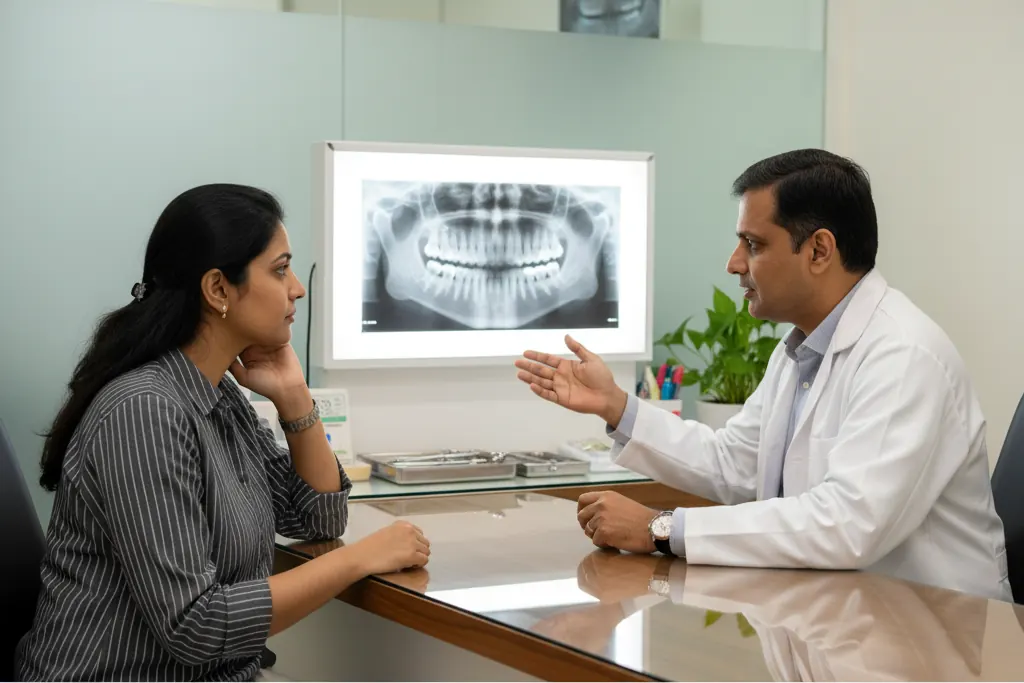
TMJ Treatment — What You Need to Know
Waking up with a stiff jaw, struggling to chew your favorite foods, or dealing with constant facial pain can make daily life incredibly difficult. Many people dismiss these symptoms as simple tension headaches or earaches. However, these issues often point to a problem with your jaw joint. When your jaw joint stops functioning smoothly, it affects your ability to talk, eat, yawn, and even sleep comfortably.
In India, studies indicate that between 20% to 60% of the general population experiences some form of jaw joint dysfunction at some point in their lives. Women are significantly more likely to develop these issues compared to men. Unique cultural and dietary habits contribute heavily to this high prevalence. For example, the frequent consumption of hard, crunchy snacks or the prolonged chewing of betel nut (supari) places immense, continuous pressure on the jaw. Furthermore, rising stress levels in modern environments lead to unconscious teeth grinding, a major trigger for chronic jaw pain.
This guide matters because ignoring jaw pain usually makes the condition worse. Early intervention can prevent permanent damage to your joints and teeth. We designed this guide for patients experiencing unexplained facial pain, individuals who hear clicking sounds when they eat, and caregivers looking for solutions for their loved ones. Whether you need simple lifestyle adjustments, targeted physical therapy, or advanced medical intervention, understanding your options is the first step toward relief.

Understanding TMJ Disorders
Your temporomandibular joint (TMJ) acts like a sliding hinge that connects your jawbone to your skull. You have one joint on each side of your face, located just in front of your ears. This complex joint consists of bones, muscles, ligaments, and a small shock-absorbing disk. This disk keeps the movement smooth when you open and close your mouth.
When this system goes out of alignment or sustains damage, you develop a temporomandibular disorder (TMD). The pain and discomfort can originate from the muscles controlling the jaw, the joint itself, or the protective disk. Because the jaw muscles connect to the neck and head, a problem in the jaw joint often triggers radiating pain throughout the entire upper body.
Several factors can cause or worsen these disorders. Understanding the root cause helps your doctor determine the most effective TMJ treatment plan. Common causes and risk factors include:
- Bruxism (teeth grinding or clenching): Often driven by stress or anxiety, this habit puts severe, prolonged pressure on the joint and wears down the teeth.
- Dietary habits: Regularly eating hard foods like raw carrots, sugarcane, or tough meats strains the masticatory (chewing) muscles.
- Betel nut chewing: The hard consistency of betel nut and the repetitive chewing motion cause severe wear on the teeth and transmit excessive force directly to the jaw joint.
- Arthritis: Conditions like osteoarthritis (wear-and-tear arthritis) or rheumatoid arthritis (an autoimmune condition) can destroy the cartilage and bone within the joint.
- Facial trauma: A heavy blow to the jaw or face during an accident or sports injury can dislocate the joint or damage the internal disk.
- Misaligned bite: Dental issues that force the jaw into an unnatural resting position create chronic muscle tension.
Patients with jaw joint issues typically experience a specific set of symptoms. You might notice a clicking, popping, or grating sound when you open your mouth or chew. While clicking alone does not always require treatment, you need medical attention if pain accompanies the sound. Other common symptoms include severe pain in the face or neck, frequent headaches, earaches without an actual ear infection, and a sudden uncomfortable bite. In severe cases, the jaw may lock in an open or closed position, requiring immediate medical help.
Step-by-Step Guide
Finding relief from jaw pain requires a structured, progressive approach. Doctors usually start with the most conservative therapies before considering invasive procedures. Here is the step-by-step journey you can expect when seeking professional care.
Step 1: Clinical Diagnosis and Imaging
Your specialist will begin by listening to your symptoms and examining your jaw. They will press on your facial muscles to identify areas of tenderness and listen to the joint as you open and close your mouth. They will also check your bite alignment and look for signs of teeth grinding. To see inside the joint, your doctor may order imaging tests. A Cone Beam Computed Tomography (CBCT) scan provides detailed 3D images of the bones, while a Magnetic Resonance Imaging (MRI) scan reveals problems with the soft tissues and the shock-absorbing disk.
Step 2: At-Home Management and Dietary Changes
Before prescribing medications or devices, your doctor will ask you to modify your daily habits. You must switch to a soft diet to give your jaw muscles a chance to rest. Choose foods like idli, khichdi, soft-cooked vegetables, and soups. You must completely avoid chewing gum, biting your nails, and eating hard or chewy foods. Applying moist heat to the sides of your face for 15 minutes can relax tight muscles, while ice packs can numb sharp joint pain.
Step 3: Targeted TMJ Exercises
Specific TMJ exercises play a important role in restoring normal function, strengthening the jaw muscles, and reducing pain. You should perform these exercises gently and consistently. Never push your jaw to the point of sharp pain.
- Relaxed Jaw Stretch: Rest your tongue gently on the roof of your mouth behind your upper front teeth. Let your lower jaw drop slightly so your teeth come apart, keeping your lips closed. Hold this relaxed position to relieve muscle tension.
- Goldfish Exercise (Partial Opening): Keep your tongue on the roof of your mouth. Place one index finger on your jaw joint and the other on your chin. Drop your lower jaw halfway down, then close it. Repeat this motion six times to improve joint mobility.
- Chin Tucks: Stand with your shoulders back and your chest up. Pull your chin straight back, creating a "double chin" effect. Hold for three seconds and release. This exercise improves your neck posture, which directly affects jaw alignment.
- Resisted Mouth Opening: Place your thumb under your chin. Open your mouth slowly while pushing gently upward with your thumb to create light resistance. Hold for a few seconds, then close your mouth slowly. This strengthens the muscles that open your jaw.
- Resisted Mouth Closing: Squeeze your chin with your index finger and thumb. Open your mouth, then apply gentle downward pressure to your chin as you try to close your mouth. This strengthens the muscles responsible for chewing.
Step 4: Oral Splints and Mouthguards
If stress-induced grinding causes your pain, your specialist will design a custom oral splint or night guard. These clear acrylic devices fit over your upper or lower teeth. A stabilization splint prevents your teeth from grinding together during sleep, protecting your enamel and reducing muscle strain. A repositioning splint helps guide your lower jaw into a more natural, relaxed position to decompress the joint.
Step 5: Medications and Physiotherapy
When exercises and splints do not provide enough relief, your doctor may prescribe medications. Muscle relaxants can stop severe jaw spasms, especially when taken before bed. Nonsteroidal anti-inflammatory drugs (NSAIDs) help reduce swelling and pain inside the joint. Your doctor might also refer you to a physiotherapist who uses ultrasound therapy, laser therapy, or deep tissue massage to break down scar tissue and improve blood flow to the facial muscles.
Step 6: Minimally Invasive Procedures
If conservative methods fail, your specialist may suggest minimally invasive treatments. Arthrocentesis is a highly effective procedure where the doctor inserts small needles into the joint space. They flush the joint with sterile fluid to wash out inflammatory chemicals and debris. During this procedure, the doctor may also inject a corticosteroid to reduce severe inflammation or a specialized lubricant to help the disk glide smoothly. In some cases, doctors use Botox injections in the jaw muscles to temporarily paralyze them and stop severe, chronic clenching.
Step 7: Advanced TMJ Surgery
When severe joint degeneration, tumors, or structural abnormalities cause the disorder, your specialist will discuss TMJ surgery. Surgery remains the last resort, but it offers permanent relief for complex cases.
- Arthroscopy: The surgeon inserts a tiny tube with a camera into the joint space. They use miniature surgical instruments to remove scar tissue, smooth the bone, or reposition the displaced disk. This procedure requires only small incisions and offers a faster recovery.
- Open Joint Surgery: Also known as an arthrotomy, this procedure requires a larger incision in front of the ear. Surgeons use this approach to remove bone spurs, repair severe tissue damage, or extract tumors.
- Total Joint Replacement: For patients with end-stage arthritis or severe trauma, the surgeon removes the damaged joint entirely. They replace it with a custom-made artificial joint.
If your jaw pain stems from a severe bite misalignment, your specialist might discuss underbite and overbite correction to reduce the strain on your joints. In cases where structural jaw abnormalities cause chronic joint issues, corrective jaw surgery may be necessary to achieve long-term relief.
What to Expect
Treating jaw joint disorders requires patience and consistency. Because you use your jaw constantly throughout the day, healing takes time. If you follow a conservative treatment plan involving a soft diet, splints, and physical therapy, you can expect to see noticeable improvement within four to six weeks. However, you must continue wearing your night guard and practicing good habits to prevent the pain from returning.
Wearing an oral splint presents a common early challenge. Many patients find the device uncomfortable or bulky during the first few nights. You might experience increased saliva production or minor difficulty falling asleep. These issues usually resolve within a week as your mouth adapts to the device. Dietary restrictions also frustrate many patients. You must resist the temptation to eat hard or chewy foods as soon as you feel slightly better, as this often triggers an immediate flare-up of pain.
If you require surgical intervention, your recovery timeline will depend on the specific procedure. Minimally invasive procedures like joint flushing allow you to return to normal activities within a few days. Open joint surgery or total joint replacement requires a longer healing period. You will need to consume a liquid or pureed diet for several weeks and undergo intensive physical therapy to regain your mouth opening. For patients undergoing complex surgical procedures, understanding the orthognathic surgery recovery timeline can help you prepare for the healing process.
Tips for Better Outcomes
Achieving a pain-free jaw requires more than just medical treatments; it requires a commitment to changing your daily habits. Based on extensive clinical experience, following these practical tips will significantly improve your recovery and prevent future flare-ups.
Do's:
- Maintain excellent posture throughout the day. Keep your head balanced over your spine rather than slumping forward. Poor neck posture pulls on the jaw muscles and increases joint strain.
- Support your lower jaw with your hand when you feel a yawn coming. This prevents you from opening your mouth too wide and overextending the joint.
- Cut your food into small, bite-sized pieces. Chew slowly and try to distribute the food evenly on both sides of your mouth to balance the muscular effort.
- Set up an ergonomic workspace. Ensure your computer monitor sits at eye level so you do not crane your neck forward while working.
- Practice active stress management. Engage in yoga, deep breathing exercises, or meditation to lower your overall stress levels and reduce unconscious teeth clenching.
Don'ts:
- Do not rest your chin on your hand while sitting at a desk or watching television. This places constant, uneven pressure on one side of your jaw.
- Do not cradle your phone between your shoulder and your ear. Use a headset or speakerphone instead.
- Do not chew on non-food items like pens, pencils, or your fingernails.
- Do not sleep on your stomach. Sleeping face down forces your jaw to the side and puts immense pressure on your facial muscles and joints. Sleep on your back to keep your spine and jaw neutrally aligned.
- Do not consume large amounts of caffeine. High caffeine intake increases muscle tension and makes you more likely to clench your teeth.
When to Seek Medical Help
While mild jaw discomfort often resolves with rest and a soft diet, certain symptoms require immediate professional evaluation. Ignoring severe warning signs can lead to permanent joint damage, chronic pain syndromes, or irreversible changes to your bite.
You should schedule an appointment with a specialist if you experience any of the following:
- Your jaw gets stuck or locked in an open or closed position, making it impossible to move.
- The pain becomes so severe that it prevents you from eating, speaking, or sleeping.
- You notice sudden, unexplained swelling on one or both sides of your face.
- Your bite suddenly feels completely wrong, as if your upper and lower teeth no longer fit together properly.
- You experience a sharp, shooting pain that radiates from your jaw down into your neck or up into your temples.
- You have diligently followed self-care measures and a soft diet for several weeks with no improvement in your symptoms.
When self-management isn't enough, a specialist can accurately diagnose the structural or muscular issues causing your pain and provide targeted medical interventions.
Expert Care at THANC Hospital
At THANC Hospital, we understand how debilitating chronic jaw pain can be. Our department of Oral & Maxillofacial Surgery provides complete care for all types of jaw joint disorders, ranging from custom splint therapy to advanced total joint replacement. Under the expert guidance of Dr. M. Veerabahu, our team uses precise diagnostic tools to create treatment plans that address the root cause of your pain. Take the first step toward a pain-free life and Book an Appointment today.
Frequently Asked Questions
Can TMJ disorders go away on their own?
Yes, minor jaw pain caused by temporary stress or a minor muscle strain often resolves on its own within a few weeks. Resting your jaw, eating soft foods, and applying warm compresses can speed up this natural healing process. However, if the pain persists for more than a month or involves joint clicking and locking, you need professional medical evaluation.
Are TMJ exercises actually effective?
When performed correctly and consistently, targeted jaw exercises are highly effective for relieving muscle tension and improving joint mobility. These exercises strengthen the muscles that support the jaw, helping to stabilize the joint and prevent abnormal movements. Your doctor or physiotherapist will show you the exact techniques suited for your specific condition.
How do I know if I need TMJ surgery?
Doctors only consider surgery when all conservative treatments, such as splints, medications, and physical therapy, fail to provide relief. You might need surgery if imaging shows severe joint degeneration, a completely displaced disk, or bone tumors. Your maxillofacial surgeon will thoroughly evaluate your scans and symptoms before discussing surgical options.
Is a night guard the same as a TMJ splint?
While people often use the terms interchangeably, they serve slightly different purposes. A standard night guard primarily protects your teeth from the wear and tear of grinding. A specialized oral splint not only protects the teeth but also actively repositions the lower jaw to decompress the joint and relax the specific muscles causing your pain.
Can chewing betel nut cause permanent jaw damage?
Yes, prolonged chewing of betel nut (supari) can cause severe and permanent damage to your jaw joint. The extreme hardness of the nut requires excessive chewing force, which wears down the joint cartilage and overworks the facial muscles. Over time, this habit can lead to chronic pain, restricted mouth opening, and severe joint degeneration.
Does stress really cause jaw pain?
Absolutely. Psychological stress is one of the leading causes of jaw joint disorders. When you feel stressed or anxious, you often unconsciously clench your jaw or grind your teeth, especially while sleeping. This constant muscle tension overworks the jaw muscles and places immense pressure on the joint, leading to chronic pain and stiffness.
Learn more about Oral & Maxillofacial Surgery
View treatments, doctors & FAQs
Concerned about this condition?
Our specialists can help. Book a consultation today.
Book Consultation