
In this article
- What are Gallstones and Why Do They Form?
- Recognising Gallstone Symptoms: When to Seek Help in Chennai
- Diagnosing Gallstones: Beyond the Ultrasound Report
- Do You Really Need Gallbladder Surgery? Understanding the Indications
- Gallbladder Surgery in Chennai: Laparoscopic Cholecystectomy at THANC Hospital
- Life After Gallbladder Surgery: Recovery, Diet, and Long-Term Outlook
- Frequently Asked Questions
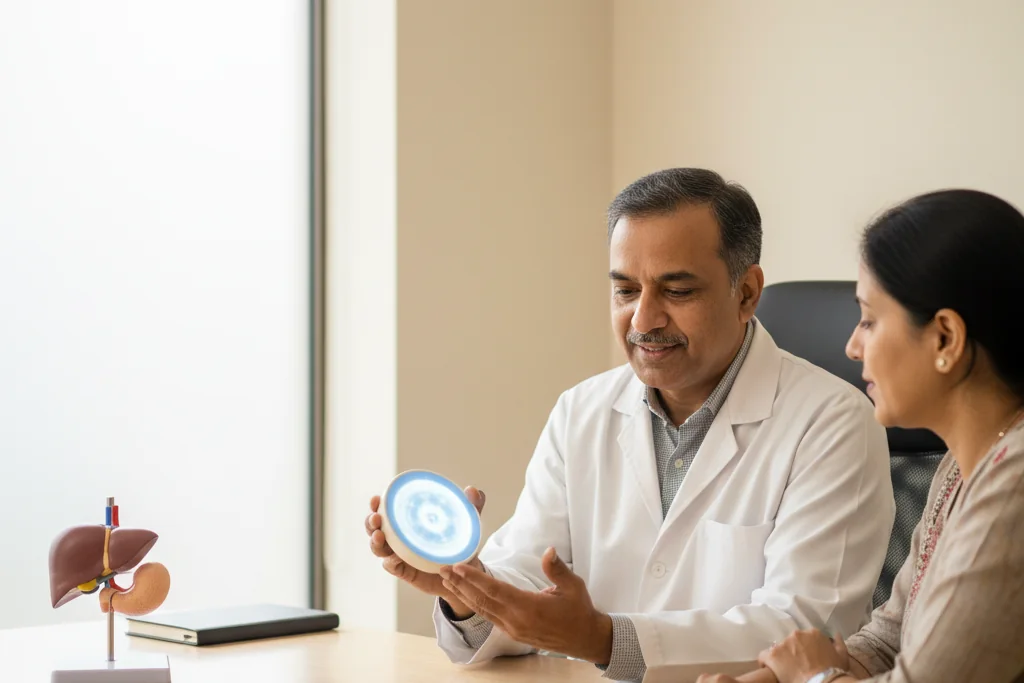
When your ultrasound report mentions "gallstones," or you've been experiencing nagging pain in your upper abdomen, it’s natural to feel concerned, especially about the prospect of surgery. Many patients in Chennai come to us at THANC Hospital with questions: Are these symptoms truly gallstones? Do I really need surgery, or are there alternatives? What will the surgery, recovery, and life after look like?
As a dedicated gastrointestinal surgery department at THANC Hospital, we understand these anxieties. This guide aims to address your concerns directly, providing clear information to help you make informed decisions about your health.
What are Gallstones and Why Do They Form?
Gallstones are hardened deposits of digestive fluid that can form in your gallbladder, a small, pear-shaped organ located just beneath your liver. Your gallbladder stores and concentrates bile, a digestive fluid produced by the liver, which helps in breaking down fats. When there's an imbalance in the chemical composition of bile, these stones can form.
There are two main types of gallstones:
- Cholesterol Gallstones: These are the most common type, often yellow-green in colour, and are primarily made of hardened cholesterol.
- Pigment Gallstones: These are smaller, darker stones composed of bilirubin, a waste product formed when red blood cells are broken down.
In India, cholesterol gallstones are highly prevalent, especially among women. Studies indicate that the prevalence of gallstones in India can range from 2% to 29%, with a higher incidence observed in the northern regions and among females.
Several factors increase your risk of developing gallstones, often summarised as the "4 Fs":
- Female: Women are two to three times more likely to develop gallstones than men, often due to hormonal fluctuations from pregnancy or oral contraceptives.
- Forty: The risk increases with age, particularly after 40.
- Fertile: Multiple pregnancies can increase the risk.
- Fat: Obesity significantly raises the risk of gallstone formation. For patients with severe obesity considering surgical weight management, our Bariatric Surgery Clinic offers detailed evaluation. Other risk factors include rapid weight loss, a diet high in fat and cholesterol, a family history of gallstones, diabetes, and certain blood disorders.
Recognising Gallstone Symptoms: When to Seek Help in Chennai
Many people with gallstones, perhaps up to 80%, may never experience symptoms – a condition known as asymptomatic cholelithiasis. These "silent" gallstones are often discovered incidentally during an ultrasound for another condition.
However, when gallstones block a bile duct, they can cause a sudden and rapidly intensifying pain in the upper right part of your abdomen. This is often referred to as a "gallbladder attack" or biliary colic.
Typical symptoms include:
- Sudden, severe pain in the upper right or centre of your abdomen.
- Pain that radiates to your right shoulder or back.
- Nausea and vomiting.
- Indigestion, bloating, and gas, especially after eating fatty or heavy meals. For non-gallbladder digestive issues, our Gut Wellness Clinic handles wider gastrointestinal evaluations.
- Clay-coloured stools or dark urine, in more severe cases.
These attacks can last from a few minutes to several hours. We see many patients at our gastrointestinal surgery department in THANC Hospital, Kilpauk presenting with these symptoms. It is important not to dismiss persistent abdominal discomfort. If you experience any of these symptoms, particularly if they are recurrent or severe, it is crucial to seek a medical evaluation.
Red Flags: When to Go to the Emergency Room Now
While many gallstone symptoms can be managed with a planned consultation, certain signs indicate a medical emergency requiring immediate attention:
- Severe abdominal pain lasting more than six hours.
- Fever and chills, possibly indicating an infection (acute cholecystitis).
- Yellowing of your skin or the whites of your eyes (jaundice), suggesting a bile duct blockage.
- Persistent vomiting, preventing you from keeping down fluids.
If you experience any of these symptoms, please proceed to the nearest emergency room immediately.
Diagnosing Gallstones: Beyond the Ultrasound Report
The diagnostic process for gallstones typically begins with a thorough physical examination and a detailed discussion of your symptoms and medical history.
The most common and effective diagnostic tool for gallstones is an abdominal ultrasound. This non-invasive imaging technique uses sound waves to create images of your abdominal organs, allowing your doctor to visualise gallstones in the gallbladder.
Other diagnostic tests may include:
- Blood Tests: These can check for signs of infection, inflammation, jaundice, pancreatitis, or other complications.
- CT Scan: While less effective than ultrasound for detecting gallstones, a CT scan can identify complications like gallbladder rupture or spread of infection.
- MRI (Magnetic Resonance Imaging): Specifically, Magnetic Resonance Cholangiopancreatography (MRCP) can provide detailed images of the bile ducts and pancreatic duct, helping to detect stones lodged in these areas.
- Endoscopic Ultrasound (EUS): This procedure combines endoscopy and ultrasound to create high-resolution images of the gallbladder and bile ducts, particularly useful for detecting small stones that might be missed by conventional ultrasound.
- HIDA Scan (Hepatobiliary Iminodiacetic Acid Scan): This nuclear medicine scan evaluates gallbladder function and can diagnose acute cholecystitis.
At THANC Hospital, our diagnostic approach is tailored to your specific symptoms and clinical picture, ensuring an accurate diagnosis before any treatment plan is considered.
Do You Really Need Gallbladder Surgery? Understanding the Indications
This is often the most pressing question for patients: is surgery truly necessary? The decision to undergo gallbladder surgery, known as cholecystectomy, depends largely on whether your gallstones are causing symptoms or complications.
When Surgery is NOT Typically Needed
For patients with asymptomatic gallstones (those not causing any symptoms), surgery is generally not recommended. The American Gastroenterological Association (AGA) Institute guidelines on asymptomatic cholelithiasis state that prophylactic cholecystectomy is not indicated for most asymptomatic patients. The risk of developing symptoms or complications in asymptomatic individuals is relatively low, estimated at 1-2% per year.
However, there are certain situations where even asymptomatic gallstones might warrant consideration for surgery, although these are often debated and evaluated on a case-by-case basis:
- Large Gallstones: Stones larger than 3 cm may carry a slightly increased risk of gallbladder cancer, though this risk remains very low.
- Porcelain Gallbladder: A rare condition where the gallbladder wall becomes calcified, which is associated with an increased risk of cancer.
- Gallstones in Patients Undergoing Bariatric Surgery: Cholecystectomy might be considered concurrently to prevent future complications.
- Patients with certain underlying conditions: Such as sickle cell anaemia or those awaiting organ transplantation.
It is important to have a detailed discussion with a specialist, such as Dr. Babu Elangovan, our senior consultant and clinical lead for gastrointestinal surgery, who can assess your individual risk factors and help you understand the nuances of watchful waiting versus intervention.
When Surgery IS Needed: Clear Indications for Cholecystectomy
Surgery becomes the primary treatment when gallstones cause significant symptoms or complications. These situations often necessitate gallbladder removal to prevent further health issues.
Key indications for surgery include:
- Symptomatic Cholelithiasis (Biliary Colic): Recurrent episodes of severe pain in the upper abdomen, especially after meals, are the most common reason for surgery.
- Acute Cholecystitis: This is an inflammation of the gallbladder, usually caused by a gallstone blocking the cystic duct. Symptoms include severe right upper quadrant pain, fever, and elevated white blood cell count. The World Society of Emergency Surgery (WSES) recommends early laparoscopic cholecystectomy for acute cholecystitis, ideally within 72 hours of symptom onset.
- Gallstone Pancreatitis: When a gallstone blocks the bile duct or pancreatic duct, it can lead to inflammation of the pancreas, a serious condition requiring urgent management and often subsequent cholecystectomy.
- Choledocholithiasis: This occurs when gallstones move out of the gallbladder and into the common bile duct, potentially causing jaundice, infection (cholangitis), or pancreatitis. These stones often need to be removed endoscopically (ERCP) before or during cholecystectomy.
- Gallbladder Polyps: While most are benign, large polyps (over 1 cm) or those with rapid growth, especially if associated with gallstones, may warrant cholecystectomy due to a potential risk of malignancy.
Here’s a comparison to help understand the typical management approaches:
| Feature | Asymptomatic Gallstones | Symptomatic Gallstones (Biliary Colic) | Acute Cholecystitis |
|---|---|---|---|
| Symptoms | None, often found incidentally | Recurrent upper abdominal pain, especially after fatty meals | Severe, persistent RUQ pain, fever, chills, nausea, vomiting |
| Primary Risk | Low risk of future symptoms or complications (1-2% annually) | Recurrence of pain, potential for complications like cholecystitis | Gallbladder perforation, sepsis, spread of infection |
| Typical Management | Watchful waiting, dietary modifications | Elective laparoscopic cholecystectomy | Urgent laparoscopic cholecystectomy (often within 72 hours) |
| Role of THANC Hospital | Expert consultation and monitoring | Pre-surgical evaluation, planned laparoscopic cholecystectomy | Emergency evaluation and surgical intervention |
Gallbladder Surgery in Chennai: Laparoscopic Cholecystectomy at THANC Hospital
When surgery is indicated, the standard of care is laparoscopic cholecystectomy, often referred to as "keyhole surgery." This minimally invasive procedure involves removing the gallbladder through several small incisions, typically 3-4, rather than a single large incision required for traditional open surgery.
At THANC Hospital, our approach to gallbladder surgery prioritises patient safety, minimal discomfort, and a swift recovery. Dr. Babu Elangovan, with his extensive experience in surgical gastroenterology, leads our team in performing these advanced laparoscopic procedures. Our dedicated gastrointestinal surgery department ensures a comprehensive and holistic approach to your care.
The Laparoscopic Advantage
Laparoscopic cholecystectomy offers several benefits over open surgery:
- Smaller Incisions: Leads to less pain and smaller, less noticeable scars.
- Reduced Blood Loss: Minimally invasive nature results in less bleeding.
- Faster Recovery: Most patients can go home the day after surgery and return to normal activities sooner.
- Lower Risk of Complications: Compared to open surgery, there's a reduced risk of wound infections and hernias.
In India, laparoscopic cholecystectomy has become the gold standard, with over 95% of cholecystectomies performed laparoscopically in specialised centres. Our team, including Dr. Naveen Alexander, a skilled surgeon with a Diploma in Minimally Invasive Surgery (Dip MIS), is adept at employing the latest laparoscopic techniques to ensure optimal outcomes.
What to Expect: Before, During, and After Surgery
Before Surgery: You will undergo a thorough pre-operative evaluation, including blood tests, ECG, and a chest X-ray, to ensure you are fit for anaesthesia and surgery. Our team will provide detailed instructions on fasting and medications. We will also discuss the procedure in detail, answer all your questions, and provide a transparent, written estimate of the cost, which is kept consistently below prevailing Chennai market rates, before any procedure is booked.
During Surgery: The procedure typically takes 30 to 60 minutes. You will be under general anaesthesia. Dr. Babu Elangovan will make small incisions (usually 0.5-1 cm) in your abdomen. A laparoscope (a thin tube with a camera) and specialised surgical instruments are inserted through these incisions. Your abdomen is gently inflated with carbon dioxide gas to provide a clear view. The gallbladder is carefully dissected from the liver and bile ducts, clipped, and then removed through one of the small incisions.
After Surgery: Most patients experience mild to moderate pain, which is well-managed with medication. You will be encouraged to walk a few hours after surgery. The majority of our patients are discharged the very next day. You will receive instructions on wound care, diet, and activity restrictions.
Potential for Conversion to Open Surgery
While most laparoscopic cholecystectomies are successful, in a small percentage of cases (around 1-5%), the surgeon may need to convert to an open procedure. This decision is made during the operation if there are unexpected complications, severe inflammation, extensive scarring, or anatomical difficulties that make laparoscopic removal unsafe. Our surgeons are fully prepared for such eventualities, prioritising your safety above all else.
Life After Gallbladder Surgery: Recovery, Diet, and Long-Term Outlook
The prospect of living without a gallbladder can raise many questions. Rest assured, the human body adapts remarkably well to its absence.
Recovery Timeline
- Hospital Stay: Typically 1 day.
- Pain Management: Mild discomfort for a few days, managed with oral painkillers.
- Return to Light Activities: Most patients can resume light daily activities within 2-3 days.
- Return to Work: Depending on the nature of your job, you can usually return to work within 1-2 weeks.
- Full Recovery: Complete recovery, including strenuous activities, usually takes about 2-4 weeks.
You may experience some shoulder pain for a day or two after surgery due to the carbon dioxide gas used during the laparoscopic procedure. This is normal and resolves quickly.
Diet After Gallbladder Removal
In the immediate days following surgery, a light, low-fat diet is recommended. Gradually, you can reintroduce a normal diet. Most people can eat normally after gallbladder removal without significant issues. The liver continues to produce bile, but it flows directly into the small intestine rather than being stored in the gallbladder.
Some individuals might experience temporary digestive changes, such as loose stools or diarrhoea, especially after consuming fatty foods. This is usually mild and improves over time as your body adjusts. It is advisable to:
- Eat smaller, more frequent meals.
- Limit high-fat, greasy, and spicy foods, at least initially.
- Increase your fibre intake gradually.
Fertility and Pregnancy Considerations
If you are planning a pregnancy or are pregnant and diagnosed with gallstones, the management approach is carefully considered. Symptomatic gallstones can occur during pregnancy, and if surgery is necessary, laparoscopic cholecystectomy is generally considered safe during the second trimester. Our team will work closely with your obstetrician to ensure the best possible care for both you and your baby.
Long-Term Outlook
The long-term outlook after gallbladder removal is excellent. Most patients experience complete relief from gallstone symptoms and lead a normal, healthy life. The absence of the gallbladder typically does not lead to significant long-term health problems.
For expert evaluation and personalised care, book an appointment at THANC Hospital. Our gastrointestinal surgery team supports you from first consultation through full recovery. You can book an appointment at THANC Hospital online or call our reception for a slot with Dr. Babu Elangovan.
Frequently Asked Questions
What is the typical cost of gallbladder stone surgery in Chennai?
The cost of laparoscopic gallbladder surgery in Chennai can vary based on the hospital, surgeon's fees, room category, and duration of stay. At THANC Hospital, we provide a transparent, written estimate of the entire cost before any procedure is booked, ensuring it remains competitive and below prevailing market rates. This estimate covers all aspects from admission to discharge.
How painful is gallbladder surgery recovery?
Laparoscopic gallbladder surgery is minimally invasive, so the pain during recovery is generally mild to moderate. Most patients describe it as discomfort rather than severe pain. Pain is typically managed effectively with oral painkillers, and it subsides significantly within a few days, allowing most individuals to resume light activities quickly.
Can gallstones be treated without surgery in Chennai?
For truly asymptomatic gallstones, watchful waiting and dietary modifications are often recommended. However, once gallstones cause symptoms or complications like acute cholecystitis, pancreatitis, or bile duct blockage, surgery (laparoscopic cholecystectomy) is usually the definitive treatment. Non-surgical options like oral dissolution therapy are rarely effective, take a long time, and have high recurrence rates, making them unsuitable for most patients.
What foods should I avoid if I have gallstones?
If you have symptomatic gallstones, it's advisable to avoid foods high in saturated and unhealthy fats, such as fried foods, greasy snacks, rich desserts, and fatty cuts of meat. These can trigger gallbladder attacks. Opt for a diet rich in fruits, vegetables, whole grains, and lean proteins. After surgery, most patients can gradually return to a normal diet, but some may find it helpful to limit very fatty meals.
How long does it take to recover after laparoscopic cholecystectomy?
Most patients are discharged from THANC Hospital the day after their laparoscopic cholecystectomy. You can typically resume light daily activities within 2-3 days and return to a desk job within 1-2 weeks. Full recovery, including engaging in strenuous exercise or heavy lifting, usually takes about 2-4 weeks. Individual recovery times can vary.
Is gallbladder removal a major surgery?
While it involves removing an organ, laparoscopic cholecystectomy is considered a routine and safe surgical procedure. It is minimally invasive, with small incisions, leading to less pain and a quicker recovery compared to traditional open surgery. The risks are generally low, and the success rate is very high, making it a common and effective treatment for symptomatic gallstones.
What are the long-term effects of not having a gallbladder?
Most people experience no significant long-term negative effects after gallbladder removal. Your liver still produces bile, which now flows directly into your small intestine. Some individuals may experience temporary digestive changes, such as loose stools or diarrhoea, especially after fatty meals, but this usually improves as the body adapts. Your quality of life is typically much improved without the recurring pain and complications of gallstones.
Learn more about Gastrointestinal Surgery
View treatments, doctors & FAQs
Concerned about this condition?
Our specialists can help. Book a consultation today.
Book Consultation
MBBS, MS (General Surgery), MCh (Surgical Gastroenterology), FMAS
Visiting Consultant
Related Articles
Laparoscopic Inguinal Hernia Surgery in Chennai: A Patient’s Guide to Treatment and Recovery
11 May 2026 · 13 min read
Appendicectomy Chennai: Emergency Surgery & Recovery Guide
11 May 2026 · 11 min read
Piles Treatment in Chennai: A Comprehensive Guide to Haemorrhoids Management
11 May 2026 · 15 min read