
In this article
- What is CPAP Therapy? The Pneumatic Splint Explained
- CPAP vs. APAP vs. BiPAP: Understanding Your Device Options
- Types of CPAP Masks: How to Choose the Right Fit
- The Titration Process: Setting Your Optimal Airway Pressure
- Your First Two Weeks: What is Normal and What to Expect
- Troubleshooting Common CPAP Problems and Side Effects
- What Good Adherence Looks Like and Why It Matters
- Cleaning and Maintenance: Keeping Your CPAP Hygienic
- Traveling with Your CPAP: Tips for Seamless Transit
- When CPAP is Not the Answer: Alternative Sleep Apnea Treatments
- Comprehensive Sleep Apnea Care in Chennai
- Related Reading
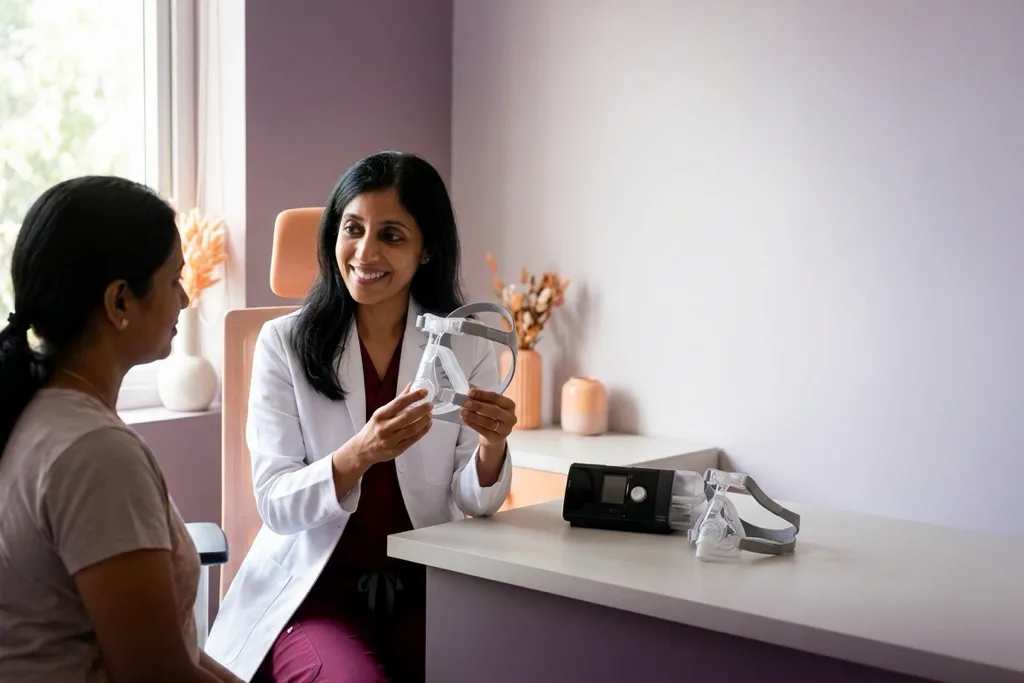
Starting CPAP therapy can feel like a major life adjustment, but understanding how to navigate the early stages of treatment is the key to reclaiming your sleep, energy, and long-term health. This comprehensive guide is designed to demystify CPAP therapy, offering practical, patient-centric troubleshooting advice, mask selection tips, and clinical insights to help you successfully adapt to and thrive with your device.
What is CPAP Therapy? The Pneumatic Splint Explained
Continuous Positive Airway Pressure, or CPAP therapy, is the gold standard clinical treatment for Obstructive Sleep Apnea (OSA). At its core, a CPAP machine does not breathe for you, nor does it deliver oxygen. Instead, it draws in room air, filters it, and delivers a gentle, continuous stream of pressurized air through a flexible tube to a mask worn over your nose or mouth.
To understand why this is effective, it helps to understand what happens during obstructive sleep apnea. When you fall asleep, the muscles in your upper airway—including your tongue, soft palate, and throat—naturally relax. In individuals with OSA, this relaxation causes the soft tissues to collapse backward, completely or partially blocking the flow of oxygen. This leads to frequent awakenings, gasping, and severe drops in blood oxygen levels throughout the night.
CPAP therapy works by acting as a "pneumatic splint." Just as a physical wooden or plaster splint holds a broken bone in its proper alignment, the continuous column of pressurized air holds the soft, collapsible tissues of your upper airway in place. This gentle physical force prevents the airway from collapsing, ensuring an uninterrupted flow of oxygen throughout your sleep cycle.
Because CPAP therapy is entirely non-invasive, it carries none of the risks associated with surgical airway modifications or systemic medications. It is a highly effective, mechanical solution to a mechanical problem. Our goal is to help you approach this therapy with a positive, proactive mindset, focusing on the profound health benefits that come with successful adaptation.
How a Pneumatic Splint Keeps the Airway Open
The pneumatic splint relies on precise physics. The air pressure delivered by the machine is measured in centimeters of water (cm H2O). A sleep specialist determines the exact pressure level required to overcome the physical resistance of your collapsing airway.
The chain is simple: the machine draws in and filters room air → gentle pressure is delivered down the tubing → the mask carries it to your nose or mouth → the airway is splinted open from the inside.
When the pressurized air enters your airway, it creates a positive pressure environment. This slight pressure difference keeps the diameter of your upper airway consistent, preventing the tissue vibration that causes snoring and eliminating the physical blockages that lead to obstructive apneas.
CPAP vs. APAP vs. BiPAP: Understanding Your Device Options
While "CPAP" is often used as a generic term for all positive airway pressure therapies, there are actually three distinct types of devices used to treat sleep-disordered breathing. The specific device prescribed for you is determined by a sleep specialist based on your diagnostic sleep study results, your comfort level, and your specific respiratory needs.
CPAP (Continuous Positive Airway Pressure)
A standard CPAP machine delivers a single, fixed pressure setting throughout the entire night. For example, if your therapeutic pressure is determined to be 10 cm H2O, the machine will blow air at exactly 10 cm H2O from the moment you turn it on until you turn it off in the morning. This is highly effective for patients with stable airway dynamics who do not experience significant pressure variations during different sleep stages.
APAP (Automatic Positive Airway Pressure)
An APAP machine features advanced built-in algorithms that continuously monitor your breathing on a breath-by-breath basis. Instead of a single fixed pressure, the machine operates within a prescribed range (for example, 4 to 15 cm H2O). If the device detects a subtle collapse in your airway, a snore, or an apnea event, it automatically increases the pressure. Conversely, when your breathing is stable—such as when you are in a lighter stage of sleep or sleeping on your side—the machine lowers the pressure, making the therapy much more comfortable.
BiPAP (Bilevel Positive Airway Pressure)
A BiPAP machine utilizes two distinct pressure settings:
- IPAP (Inspiratory Positive Airway Pressure): A higher pressure setting that assists you when you breathe in.
- EPAP (Expiratory Positive Airway Pressure): A lower pressure setting that makes it significantly easier to breathe out against the machine's resistance.
When is BiPAP or APAP Preferred Over Standard CPAP?
BiPAP is frequently prescribed for patients who require exceptionally high pressure settings (typically above 15 cm H2O), as exhaling against high continuous pressure can feel exhausting or uncomfortable. It is also the treatment of choice for patients with complex sleep apnea, central sleep apnea, or underlying respiratory conditions such as chronic obstructive pulmonary disease (COPD). APAP, on the other hand, is highly favored for patients who move frequently during sleep or whose airway resistance changes drastically depending on their sleeping position.
Types of CPAP Masks: How to Choose the Right Fit
The mask is your physical connection to your therapy. Finding the right style and fit is the single most critical factor in determining whether you will successfully adapt to CPAP therapy over the long term. There is no "one-size-fits-all" mask; the best mask is the one that seals perfectly, feels comfortable, and matches your natural breathing style.
| Mask Type | Best Suited For | Key Advantages | Potential Drawbacks |
|---|---|---|---|
| Nasal Pillows | Active sleepers, side sleepers, patients with facial hair or glasses | Minimal skin contact, clear field of vision, lightweight | Can cause nasal dryness or irritation at high pressures |
| Nasal Masks | Patients requiring moderate-to-high pressures, quiet sleepers | Highly stable seal, natural breathing sensation | Not suitable for persistent mouth-breathers |
| Full Face Masks | Mouth-breathers, patients with frequent nasal congestion or allergies | Prevents air leaks from the mouth, reliable delivery | Bulkier design, higher risk of dry eyes from top-edge leaks |
Nasal Pillows vs. Nasal Masks vs. Full Face Masks
Nasal pillows feature small, soft silicone inserts that rest directly at the entrance of your nostrils. Because they have the smallest physical footprint of any mask type, they are highly recommended for patients who experience claustrophobia or enjoy reading or watching television in bed. However, because the pressurized air is directed straight into the nasal passages, they may feel uncomfortable at very high pressure settings.
Nasal masks cover your entire nose from the bridge down to your upper lip. They distribute the air pressure over a wider surface area than nasal pillows, making them highly comfortable for moderate-to-high pressure prescriptions. They offer a highly stable seal, but they require you to breathe exclusively through your nose; if your mouth drops open during sleep, the pressurized air will escape, rendering the therapy ineffective.
Full face masks cover both your nose and your mouth. This is the gold standard option for mouth-breathers, individuals with chronic sinus congestion, or those with anatomical blockages like a severely deviated septum. By enclosing both airways, the mask ensures that even if you breathe through your mouth, you still receive the full therapeutic pressure required to keep your airway open.
The Titration Process: Setting Your Optimal Airway Pressure
Once you are diagnosed with obstructive sleep apnea, you cannot simply buy a CPAP machine and turn it on. Your device must be calibrated to your body’s unique physiological requirements. This process of finding your exact therapeutic pressure range is known as CPAP titration.
Historically, titration was performed during an overnight sleep study in a specialized clinic. Today, while in-lab titration remains the gold standard for complex cases, sleep specialists may also utilize auto-titrating home devices (APAP) to gather data over several nights to establish your baseline pressure settings.
It is absolutely crucial to understand that you should never attempt to self-adjust your device's pressure settings without clinical supervision. Lowering the pressure too much will cause your sleep apnea to go untreated, while raising it too high can lead to central apneas (where the brain temporarily "forgets" to signal the muscles to breathe), severe aerophagia (swallowing air), and extreme discomfort.
What Happens During a Sleep Titration Study?
During an overnight titration study in a dedicated sleep laboratory, you will sleep with a CPAP machine while connected to advanced monitoring equipment. A trained sleep technologist will monitor your brain waves (EEG), heart rate, blood oxygen saturation, chest movements, and airflow in real-time from a monitoring room.
As you transition through different sleep stages (particularly REM sleep, when muscles relax the most) and alter your sleeping positions, the technologist will remotely adjust the air pressure on your CPAP machine. They will gradually increase the pressure in small increments until they find the absolute lowest setting that completely eliminates obstructive apneas, hypopneas, snoring, and micro-arousals. This precise number becomes your prescribed therapeutic pressure.
Your First Two Weeks: What is Normal and What to Expect
Adapting to CPAP therapy is a journey of physical and neurological desensitization. It is completely normal to feel awkward, frustrated, or slightly claustrophobic during the first 14 days of treatment. Your brain is not used to sleeping with a device attached to your face, and it takes time to train your nervous system to accept this new sensation.
A realistic first fortnight looks like this:
| Days | What to aim for |
|---|---|
| 1–3 | Desensitisation — wear the mask while awake, then for part of the night |
| 4–7 | Reach the four-hour mark most nights |
| 8–14 | Build towards wearing it the whole night, consistently |
During your first few nights, you might wake up in the middle of the night feeling the urge to rip the mask off, or you might find yourself waking up with the mask already lying on the floor. Do not view this as a failure. This is a standard part of the adaptation process. The key is consistency; even if you can only tolerate the mask for two or three hours a night initially, put it back on every single time you lay down to sleep.
Desensitization Tips for the First Few Nights
To speed up your adaptation, try these simple, highly effective desensitization exercises during the day:
- Hold the Mask: Hold the mask (without the tubing or machine turned on) up to your face while sitting upright and breathing normally for 5-10 minutes.
- Wear the Mask While Awake: Secure the mask with its headgear and wear it while watching television, reading a book, or browsing your phone. This helps your brain associate the mask with relaxation rather than sleep anxiety.
- Turn the Machine On: Connect the tubing and turn the CPAP machine on while you are awake. Practice breathing slowly and rhythmically through your nose with the pressurized air flowing.
- Aim for the 4-Hour Milestone: Set a realistic initial goal. Try to wear the CPAP for at least four continuous hours per night. Once you can comfortably hit this mark, gradually extend the time until you are wearing it for your entire sleep cycle.
Troubleshooting Common CPAP Problems and Side Effects
Even with the perfect mask and pressure settings, you may encounter minor side effects as your body adjusts to CPAP therapy. Fortunately, almost every common CPAP obstacle can be easily resolved with a few simple adjustments.
How to Prevent Air Leaks and Claustrophobia
Air leaks occur when the mask cushion does not seal properly against your skin, allowing pressurized air to escape. This can cause annoying hissing sounds, dry eyes (if the air blows upward), and a drop in therapeutic pressure.
- The Solution: Never overtighten your mask straps to fix a leak. Overtightening causes skin irritation, red marks, and can actually warp the silicone cushion, making the leak worse. Instead, pull the mask slightly away from your face while the machine is running, let the silicone cushion inflate with air, and gently lay it back down on your skin. Adjust the straps so they are snug but comfortable—you should be able to slide two fingers easily under the headgear.
- Addressing Claustrophobia: If you feel claustrophobic, switch to a lower-profile mask like nasal pillows. You can also utilize the "Ramp" feature on your machine, which starts the air pressure at a very low, barely noticeable level and slowly increases it over 20 to 45 minutes as you drift off to sleep.
Managing Dry Mouth and Nasal Congestion with Humidification
Breathing in dry, pressurized air can quickly deplete the natural moisture in your nasal passages and throat, leading to severe dry mouth, sore throat, or nasal congestion.
- The Solution: Modern CPAP machines feature integrated heated humidifiers and heated tubing. If you experience dry mouth, increase the humidity setting on your machine. Using heated tubing is essential here, as it warms the air inside the tube, preventing "rainout" (condensation forming inside the tube and splashing onto your face). If you are using a nasal mask and still wake up with a dry mouth, it is highly likely that your mouth is falling open at night, allowing the humidified air to escape. In this case, adding a chin strap or switching to a full face mask will resolve the issue.
Managing Aerophagia (Swallowing Air)
If you wake up feeling bloated, gassy, or experiencing mild abdominal discomfort, you may be experiencing aerophagia, which simply means you are swallowing air. This typically happens when the CPAP pressure is set slightly higher than your body needs, or when you are struggling to breathe out against the incoming air.
- The Solution: Consult your sleep specialist. They may enable pressure relief features (such as EPR or C-Flex) which temporarily drop the pressure when you exhale, or they may recommend transitioning you from a standard CPAP to an APAP or BiPAP machine.
What Good Adherence Looks Like and Why It Matters
In the field of sleep medicine, clinical adherence (or compliance) is strictly defined. To achieve clinical compliance, you must use your CPAP machine for at least 4 hours per night on 70% of nights within a consecutive 30-day period.
While this is the minimum standard required by medical insurances and clinical guidelines, your personal goal should be to use your CPAP for the entire duration of your sleep, every single night. The benefits of CPAP therapy are cumulative; the more consistent you are, the more profound the improvements in your health will be.
Consistent CPAP therapy restores your natural sleep architecture. It allows your brain to spend adequate time in deep sleep (slow-wave sleep) and REM (Rapid Eye Movement) sleep, which are critical for memory consolidation, cellular repair, and hormone regulation.
The Health Risks of Untreated Sleep Apnea
Leaving obstructive sleep apnea untreated is not just a matter of feeling tired; it carries severe, long-term health consequences. Every time your airway collapses, your body enters a state of fight-or-flight, releasing stress hormones like cortisol and adrenaline. Over time, this chronic cardiovascular stress leads to:
- A significantly increased risk of high blood pressure (hypertension), coronary artery disease, heart attacks, and stroke.
- Insulin resistance, which dramatically elevates the risk of developing Type 2 diabetes.
- Severe daytime fatigue, leading to cognitive decline, memory impairment, mood disorders (like depression and anxiety), and a vastly increased risk of motor vehicle accidents.
By committing to consistent CPAP therapy, you actively mitigate these risks, protect your cardiovascular system, and restore your cognitive clarity and daily vitality.
Cleaning and Maintenance: Keeping Your CPAP Hygienic
Because your CPAP machine circulates air directly into your respiratory system and uses water to humidify that air, keeping the equipment clean is essential. A neglected CPAP machine can become a breeding ground for bacteria, mold, and allergens, leading to respiratory infections, skin breakouts, and premature wear of your equipment.
Daily vs. Weekly CPAP Cleaning Schedules
To keep your therapy hygienic and safe, establish a consistent cleaning routine using mild, unscented dish soap and warm water. Never use harsh chemicals, bleach, alcohol, or commercial cleaning solutions, as these can degrade the medical-grade silicone of your mask and leave harmful chemical residues.
| How often | What to do |
|---|---|
| Daily | Wipe the mask cushion; empty and rinse the water chamber |
| Weekly | Wash mask, headgear, tubing and chamber in warm soapy water |
| Monthly | Inspect and replace the ultra-fine filter |
Daily Maintenance
- Wipe the Mask Cushion: Use a damp, lint-free cloth or specialized CPAP wipes to gently clean the silicone mask cushion. This removes facial oils, sweat, and dead skin cells that accumulate overnight and prevent a proper seal.
- Empty the Water Chamber: Empty any remaining water from the humidifier chamber. Rinse it thoroughly with clean water and allow it to air-dry completely out of direct sunlight. This prevents mineral buildup and bacterial growth.
Weekly Maintenance
- Deep Clean the Components: Submerge your mask, headgear, flexible tubing, and empty water chamber in a tub of warm water mixed with a few drops of mild, unscented soap.
- Scrub and Rinse: Gently wash the inside of the tubing and the crevices of the mask. Rinse all parts thoroughly with clean water to remove any soap residue.
- Air Dry: Hang the tubing over a towel rack or door to drain, and lay the mask and chamber flat to dry completely before your next use.
Replacing Consumables and Filters
Your CPAP machine uses filters to keep dust, pollen, and pet dander out of your airway. Most machines feature two types of filters:
- Reusable Foam Filters: These should be rinsed weekly and replaced every six months.
- Disposable Ultra-Fine Filters: These paper-like filters cannot be washed. They must be inspected weekly and replaced monthly (or sooner if they appear grey or discolored).
Additionally, CPAP cushions, headgear, and tubing degrade over time due to exposure to facial oils and cleaning. Plan to replace your mask cushion every 3 to 6 months, and your headgear and tubing once a year to maintain an optimal seal and prevent air leaks.
Traveling with Your CPAP: Tips for Seamless Transit
Having sleep apnea does not mean you have to stay close to home. Traveling with your CPAP machine is highly manageable once you know the rules and prepare your travel kit in advance.
First and foremost, always carry your CPAP machine as carry-on luggage when flying. Because a CPAP is classified as an essential medical device under international aviation guidelines (including the Americans with Disabilities Act and global equivalents), it does not count against your standard carry-on baggage limit. Never check your CPAP machine; checked luggage is subject to extreme temperature fluctuations, rough handling, and the risk of being lost.
Flying with Medical Equipment: Essential Checklist
Before you head to the airport, make sure you have checked off the following items to ensure a seamless security screening and travel experience:
- Pack a Copy of Your Prescription: Keep a physical copy of your CPAP prescription or a letter of medical necessity from your doctor inside your CPAP carrying case.
- Prepare for Security Screening: At airport security, you will need to remove the main CPAP blower unit from its carrying case (similar to a laptop) and place it in a separate bin for X-ray screening. You can leave the mask, tubing, and power cords inside the bag.
- Pack a Universal Travel Adapter: If traveling internationally, ensure you have the correct plug adapter for your destination. Most modern CPAP machines have dual-voltage capabilities (100-240V), meaning you will not need a voltage converter, but checking the label on your power supply brick is always recommended.
- Bring an Extension Cord: Hotel rooms do not always have electrical outlets conveniently located right next to the bed. Carrying a 6-to-10-foot extension cord ensures you can set up your machine safely.
- Acquire Distilled Water: Always empty your humidifier chamber completely before packing the machine to prevent water from spilling into the internal motor. Once you arrive at your destination, purchase distilled water for your humidifier. If distilled water is absolutely unavailable, you can use bottled water as a temporary alternative, but avoid tap water, as its mineral content will damage the humidifier chamber over time.
When CPAP is Not the Answer: Alternative Sleep Apnea Treatments
While CPAP therapy is highly effective, some patients find it incredibly difficult to tolerate due to severe claustrophobia, skin sensitivities, or specific anatomical obstructions in the upper airway. If you have spent several months working closely with a sleep specialist, troubleshooting your mask, and adjusting your pressure settings, yet still find yourself unable to tolerate the device, you are not out of options.
It is important to recognize that a lack of success with CPAP does not mean your sleep apnea cannot be treated. If you find yourself struggling, you should explore structural and surgical alternatives. You can read more about navigating these challenges in our guide on CPAP Not Working? Surgical Alternatives for Sleep Apnea.
Surgical and Non-Surgical Alternatives to CPAP
For patients with mild-to-moderate obstructive sleep apnea, a highly effective non-surgical alternative is a custom-fit mandibular advancement device (MAD). These oral appliances are custom-made by specialized dental professionals. Worn during sleep, they gently hold your lower jaw (mandible) and tongue slightly forward, physically preventing the tongue from falling backward and blocking the throat.
For patients with moderate-to-severe sleep apnea who cannot tolerate CPAP, or those with clear anatomical obstructions, surgical interventions offer a permanent, structural solution. These options include:
- Nasal Surgery: Correcting a severely deviated septum or reducing enlarged turbinates to restore natural nasal breathing, which can also make CPAP therapy significantly easier to tolerate.
- Soft Palate and Tonsil Surgery: Procedures like Uvulopalatopharyngoplasty (UPPP) or tonsillectomy to remove excess tissue from the back of the throat, widening the airway.
- Maxillomandibular Advancement (MMA): A highly successful surgical procedure that permanently advances both the upper and lower jaws forward, significantly expanding the entire skeletal airway. This treatment is detailed extensively in our article on MMA Surgery for Sleep Apnea — Jaw Advancement as CPAP.
Comprehensive Sleep Apnea Care in Chennai
At THANC Hospital, located in Kilpauk, Chennai, India, we understand that sleep-disordered breathing requires a highly personalized, multidisciplinary approach. Our state-of-the-art facility is fully equipped to guide you through every stage of your sleep health journey—from diagnostic sleep studies to custom CPAP titration and long-term compliance support.
Our dedicated sleep medicine and ENT specialists, led by Dr. Mahalakshmi Rangabashyam Shetty, work closely with each patient to identify the root cause of their sleep issues. Whether you need a comprehensive diagnostic polysomnography (sleep study), help finding the perfect CPAP mask, or expert evaluation for surgical airway reconstruction, our team is committed to delivering exceptional, compassionate care.
As a premier multi-speciality medical center, we also integrate specialized services across disciplines, including advanced diagnostics, surgical interventions, and rehabilitative care. If you are experiencing sleep disruptions or related head and neck concerns, you can learn more about our broader therapeutic and diagnostic services, such as our advanced work in Audiology, Hearing Aid & Speech Therapy, Chennai | THANC and specialized surgical interventions like Cochlear Implant — Who Needs It & How It Works | Chennai.
Consult Our Sleep Specialists at THANC Hospital
If you or a loved one is struggling with chronic snoring, daytime exhaustion, or difficulty adapting to CPAP therapy, do not let poor sleep compromise your health and quality of life. Our specialists are here to provide the clinical expertise and personalized guidance you need to achieve restful, restorative sleep.
To schedule a diagnostic sleep study, a CPAP consultation, or an airway evaluation at our Chennai facility, please reach out to us directly.
- Hospital Location: No.747, Poonamallee High Road, Alagappa Nagar, Kilpauk, Chennai – 600 010, Tamil Nadu, India (Opposite Pachaiyappa's College)
- Primary Appointments Phone: +91 73977 68795
- Hospital Main Line: 044 4074 2000
- Online Booking: Book an appointment with THANC Hospital
Related Reading
- Sleep study & sleep lab — what to expect — how your pressure is set
- Oral appliance vs CPAP vs surgery — comparing all three routes
- Tongue base reduction and sleep apnoea surgery
- Sleep & snoring service at THANC, led by Dr. Mahalakshmi Rangabashyam Shetty
Learn more about Sleep & Snoring Clinic
View treatments, doctors & FAQs
Concerned about this condition?
Our specialists can help. Book a consultation today.
Book Consultation
MBBS, DipNB (ENT), MRCS (ENT) Edinburgh
Senior Consultant & Sleep Lead, Department of Sleep Health