
In this article

What is Nasal Polyps?
Nasal polyps are soft, painless, and non-cancerous growths that develop on the lining of your nasal passages or paranasal sinuses. They hang down like teardrops or small grapes inside your nose. These growths result from chronic inflammation in the mucous membrane, which is the moist tissue that lines your airway. When this lining stays inflamed for a long time, it swells, fills with fluid, and eventually forms these polyp structures.
Many patients worry when they hear the word "growth," but nasal polyps are entirely benign (non-cancerous). They do not spread to other parts of the body like tumors do. However, because they take up physical space inside your nasal cavity, they can cause significant breathing problems and disrupt your daily life. Small polyps might not cause any noticeable issues, but larger ones or multiple polyps can completely block your nasal passages.
Nasal polyps are a common condition worldwide. Global medical studies estimate that they affect between 1% and 4% of the general population. In India, the prevalence is notably higher among individuals who already suffer from respiratory issues. Indian clinical studies show that polyps frequently develop in patients who have a history of recurrent nasal infections, non-allergic rhinitis, and asthma.
The condition can affect anyone, but it most commonly appears in young and middle-aged adults between the ages of 30 and 50. Research also indicates a strong male predominance, with men developing nasal polyps almost twice as often as women. Understanding what these growths are is the first step toward finding the right medical care and restoring your ability to breathe freely.
Causes and Risk Factors
The exact reason why some people develop nasal polyps while others do not remains a subject of medical research. However, doctors know that the root cause is chronic inflammation. Your immune system overreacts to a trigger, causing the blood vessels in your nasal lining to become highly permeable. This allows fluid to leak into the surrounding tissues, creating waterlogged, swollen sacs that eventually become polyps.
Several underlying medical conditions keep the nasal lining in this constant state of inflammation. The most common causes and associated conditions include:
- Chronic rhinosinusitis: This is a long-term inflammation of the sinuses that lasts for more than 12 weeks. It is the most common condition associated with polyp formation.
- Asthma: This chronic lung disease inflames and narrows the airways. Patients with non-allergic asthma have a particularly high risk of developing polyps.
- Aspirin sensitivity: Some people experience a severe respiratory reaction when they take aspirin or other non-steroidal anti-inflammatory drugs (NSAIDs) like ibuprofen. This condition, often called Samter's Triad, involves asthma, aspirin sensitivity, and nasal polyps.
- Allergic fungal sinusitis: This is an intense immune system response to airborne fungi and mold spores that enter the nose.
- Cystic fibrosis: This genetic disorder causes the body to produce abnormally thick, sticky mucus, which leads to chronic sinus infections and polyp growth.
In India, several specific environmental and lifestyle factors significantly increase your risk of developing chronic nasal inflammation. The unique climate and urban conditions play a major role in respiratory health. Indian patients face the following specific risk factors:
- High pollution levels: Major Indian cities have high levels of particulate matter (PM 2.5) and vehicular emissions. Breathing this polluted air daily constantly irritates the nasal mucosa.
- Indoor irritants: The frequent indoor use of mosquito repellent coils, incense sticks (agarbattis), and strong cooking fumes can act as chronic irritants for sensitive nasal passages.
- Occupational exposure: Workers in construction, agriculture, and textile industries face heavy exposure to dust and chemical fumes, which triggers chronic sinus issues.
- Climate and humidity: The Indian monsoon season brings high humidity, which promotes the rapid growth of indoor mold and fungal spores.
- Delayed medical treatment: Many patients rely on temporary home remedies for recurrent colds and sinus infections. Leaving these infections untreated allows chronic inflammation to set in, which is a major driver of polyp formation.
If you struggle with allergic rhinitis, managing it properly is important. Uncontrolled allergies keep your nasal passages inflamed, creating the perfect environment for polyps to grow.

Signs and Symptoms
Because nasal polyps lack nerve endings, they are completely painless. If you have very small polyps, you might not even know they exist. However, as these growths multiply or become larger, they begin to obstruct your nasal passages and block the natural drainage pathways of your sinuses.
Patients usually notice the early warning signs when their typical cold symptoms refuse to go away. The earliest symptoms you might experience include:
- A persistent stuffy or blocked nose that lasts for months.
- A continuous runny nose that does not respond to standard cold medicines.
- Postnasal drip, which feels like mucus constantly running down the back of your throat.
- A significantly reduced sense of smell (anosmia) and a decreased sense of taste.
When symptoms progress and the polyps grow larger, the blockage becomes more severe. The trapped mucus inside your sinuses can easily become infected by bacteria. At this stage, you will likely experience more serious and uncomfortable symptoms:
- Constant facial pressure or a feeling of fullness, especially around your eyes, cheeks, and forehead.
- Frequent, dull headaches that affect your daily concentration.
- Pain in your upper teeth, which happens because the inflamed maxillary sinuses sit directly above your dental roots.
- Loud snoring and sleep disturbances, including obstructive sleep apnea where you briefly stop breathing during sleep.
Sometimes, a deviated septum can make your symptoms feel much worse. If your nasal septum is already crooked, even a small polyp can completely block the narrower side of your nose.
See a doctor immediately if you experience any of the following severe symptoms:
- Sudden worsening of your vision or double vision.
- Severe swelling or redness around one or both of your eyes.
- A worsening stiff neck accompanied by a high fever.
- Extreme difficulty breathing or a severe asthma attack. These warning signs indicate that a sinus infection has spread beyond the nasal cavity and requires emergency medical attention.
How is Nasal Polyps Diagnosed?
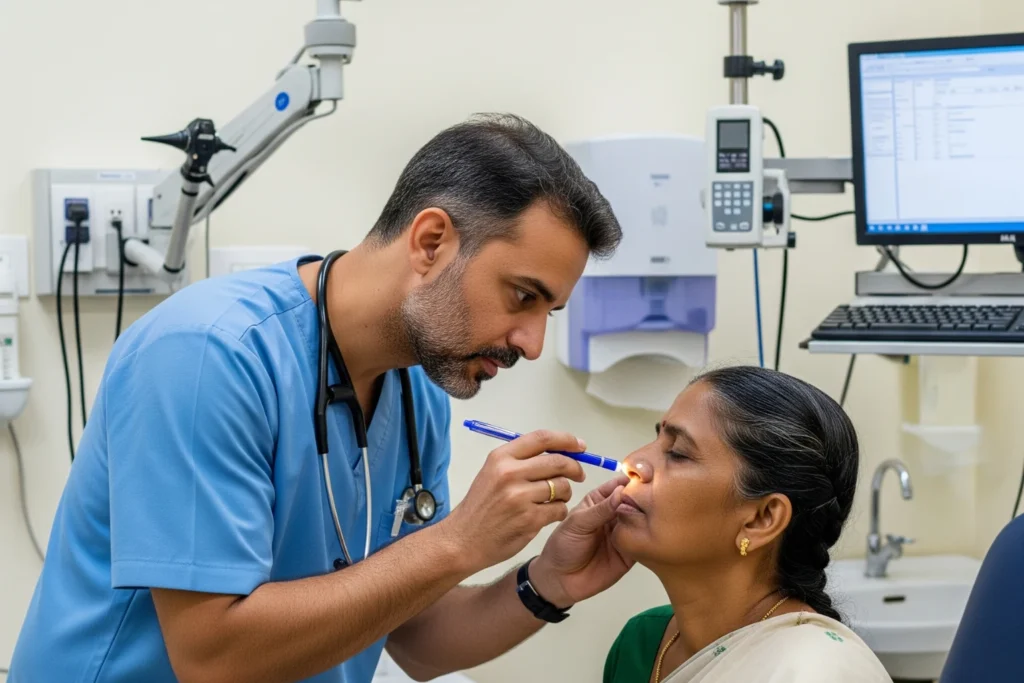
Diagnosing nasal polyps requires a thorough evaluation by an Ear, Nose, and Throat (ENT) specialist. The process begins with a detailed clinical consultation. Your doctor will ask you about your medical history, the duration of your symptoms, and whether you have a history of asthma, allergies, or aspirin sensitivity.
After taking your history, the doctor will perform a physical examination. They will use a lighted instrument called a nasal speculum to look inside your nostrils. While large polyps are visible this way, polyps located deeper in the sinuses require specialized equipment to detect.
To get a clear view, the doctor will perform a nasal endoscopy. During this quick outpatient procedure, the doctor inserts a thin, flexible tube with a tiny camera and light at the tip into your nostril. This endoscope allows the doctor to examine the deepest parts of your nasal cavity and sinus openings. The procedure is generally painless, though the doctor may use a numbing spray to ensure your comfort.
If the endoscopy reveals polyps, your doctor will likely order a computed tomography (CT) scan. A CT scan takes detailed, cross-sectional images of your head and paranasal sinuses. This imaging is important because it shows the exact size, location, and extent of the polyps. It also helps the doctor see if the polyps have eroded any surrounding bone or if there are other structural issues blocking your airway.
Finally, your doctor might recommend allergy testing. Since allergies frequently drive the inflammation that causes polyps, identifying your specific triggers is vital for long-term management. The doctor may perform skin prick tests or order specific blood tests to see how your immune system reacts to common Indian allergens like dust mites, pollen, and mold.
Treatment Options
The primary goal of any nasal polyps treatment is to reduce the size of the growths, eliminate them completely, and relieve your symptoms. Doctors always prefer to start with conservative, medical management before considering surgery. The treatment plan depends heavily on the size of your polyps and the severity of your symptoms.
Medical management usually serves as the first line of defense. Your doctor may prescribe several types of medications to control the underlying inflammation:
- Corticosteroids (Nasal Sprays): Prescription steroid sprays are the most common initial treatment. They reduce swelling and can shrink small polyps over time. You must use them consistently for them to work effectively.
- Oral Corticosteroids: If nasal sprays do not provide relief, your doctor might prescribe a short course of oral steroid pills, such as prednisone. Because oral steroids can cause significant side effects, doctors only use them for brief periods to quickly reduce severe inflammation.
- Biologics: For patients with severe polyps and asthma, doctors now use injectable biologic medications. These advanced drugs target specific proteins in the immune system that cause inflammation, helping to shrink polyps and improve breathing.
- Antibiotics and Antihistamines: While these do not shrink polyps, antibiotics treat any accompanying bacterial sinus infections. Antihistamines help control the allergic reactions that contribute to nasal swelling.
When medical treatments fail to provide relief, or if the polyps are too large, surgical intervention becomes necessary. The standard surgical procedure is called functional endoscopic sinus surgery (FESS). This is a minimally invasive procedure performed entirely through your nostrils, meaning there are no cuts or scars on the outside of your face.
During FESS, the surgeon uses an endoscope to see inside your nasal passages. They use specialized, tiny instruments, such as a microdebrider, to carefully cut and remove the polyp tissue. The surgeon also widens the natural openings of your sinuses to ensure proper drainage and ventilation in the future.
Patients whose chronic sinusitis does not respond to basic care often find immense relief through this surgical approach. At advanced centers, surgeons use computer-assisted navigation systems during the operation. This technology acts like a GPS for the sinuses, allowing the surgeon to safely remove polyps while protecting critical nearby structures like the eyes and the brain.
Living with Nasal Polyps / Recovery and Outlook
Recovering from endoscopic sinus surgery is generally a smooth process. Most patients go home the same day and require about one to two weeks of rest before returning to normal activities. During the first few days, you will experience some mild bleeding, nasal congestion, and fatigue. Your doctor will prescribe pain medication and provide specific instructions on how to care for your healing nasal passages.
The most challenging aspect of this condition is preventing polyps coming back. Nasal polyps have a notoriously high recurrence rate because surgery removes the growths but does not cure the underlying immune system inflammation. To maintain your surgical results and keep your airway open, you must commit to a long-term maintenance routine.
To prevent recurrence and manage your nasal health, you should follow these daily practices:
- Perform daily saline irrigations: Use a squeeze bottle or neti pot filled with sterile saline solution to wash out your nasal passages. This physically flushes away mucus, allergens, and inflammatory particles.
- Use your steroid sprays: Continue using your prescribed nasal corticosteroid sprays exactly as directed, even when you feel completely fine. This keeps the microscopic inflammation under control.
- Manage your environment: Avoid breathing in known irritants. Stay away from cigarette smoke, strong chemical fumes, and heavy dust. Wear a mask if you must be in a polluted or dusty area.
- Humidify your home: Use a humidifier in your bedroom, especially during dry weather or if you use air conditioning frequently. Moist air helps improve mucus flow and prevents your nasal lining from drying out and cracking.
- Control your asthma and allergies: Work closely with your healthcare team to keep your underlying respiratory conditions strictly managed.
Regular follow-up appointments are absolutely essential. Your ENT specialist will periodically examine your nasal passages with an endoscope to monitor your healing. Catching any early signs of regrowth allows your doctor to adjust your medications promptly, often preventing the need for a second surgery.
Why Choose THANC Hospital for Nasal Polyps?
When dealing with complex sinus conditions, choosing the right medical team makes a significant difference in your long-term outcome. The Rhinology department at THANC Hospital in Kilpauk, Chennai, offers patient-centered care for all nasal and sinus disorders. Our approach focuses not just on removing the polyps, but on treating the root cause of your inflammation.
Our specialist, Dr. A. Sudha, leads the rhinology team with extensive expertise in managing severe sinusitis, allergies, and recurrent nasal polyps. We use advanced endoscopic equipment and navigation-guided surgical techniques to ensure precise, safe, and effective procedures. Our multidisciplinary team works together to provide a complete care plan, from accurate diagnosis to long-term allergy management. You can easily Book an Appointment to start your journey toward better breathing and a healthier life.
Frequently Asked Questions
Can nasal polyps turn into cancer?
No, nasal polyps are entirely benign and do not turn into cancer. They are simply swollen, fluid-filled sacs caused by chronic inflammation. However, because some rare nasal tumors can look similar to polyps, a doctor should always evaluate any new growths in your nose.
Do nasal polyps always require surgery?
Not always. Small polyps often respond very well to medical treatments like prescription steroid nasal sprays or short courses of oral steroids. Surgery is only recommended when the polyps are large, cause severe blockages, or fail to shrink after a full course of medical therapy.
How can I stop polyps coming back after surgery?
Preventing recurrence requires strict, long-term management of your nasal inflammation. You must consistently use your prescribed steroid nasal sprays, perform daily saline rinses, and carefully manage any underlying conditions like asthma or allergies. Regular check-ups with your ENT doctor are also important to catch any early regrowth.
Are nasal polyps contagious?
No, nasal polyps are not contagious. You cannot catch them from someone else, and you cannot pass them to another person. They are the result of your own immune system's inflammatory response to triggers like allergies, asthma, or chronic infections.
Can dietary changes help shrink nasal polyps?
While food does not directly cause or cure nasal polyps, a healthy diet can support your immune system. Some patients find that avoiding foods that trigger their specific allergies or acid reflux helps reduce overall nasal inflammation. However, dietary changes alone cannot shrink existing polyps.
Is it safe to use nasal steroid sprays every day?
Yes, prescription nasal corticosteroid sprays are generally very safe for long-term, daily use. Unlike over-the-counter decongestant sprays, which can cause rebound congestion, steroid sprays deliver a tiny dose of medication directly to the nasal lining with minimal absorption into the rest of the body.
Learn more about Rhinology & Skull Base
View treatments, doctors & FAQs
Concerned about this condition?
Our specialists can help. Book a consultation today.
Book Consultation