
In this article

What is Cleft Rhinoplasty?
Cleft rhinoplasty is a specialized surgical procedure designed to reshape and reconstruct the nose in patients born with a cleft lip or cleft palate. When a baby develops a cleft lip in the womb, the separation often extends upward into the base of the nose. This structural gap causes the nasal cartilage and bones to develop unevenly. As a result, the nose may look asymmetrical (uneven) and function poorly.
Many people refer to this procedure simply as nose surgery after cleft. It serves a dual purpose: improving how the nose looks and fixing how the nose works. Aesthetically, the surgery lifts a flattened nasal tip, straightens a crooked bridge, and creates equal-sized nostrils. Functionally, it opens up blocked airways so the patient can breathe comfortably through their nose.
In India, approximately 27,000 to 35,000 babies are born with a cleft lip and palate every year. Surgeons usually repair the cleft lip during the baby's first few months of life. During this initial lip repair, the surgeon may perform a primary cleft rhinoplasty to guide the early growth of the nose. However, as the child grows into a teenager, the nasal deformities often become more noticeable. The cartilage stretches, and the nasal septum (the wall dividing the nostrils) often bends to one side.
This is why most patients require a definitive or secondary cleft rhinoplasty once they reach young adulthood. By this time, the facial bones have finished growing. The surgeon can permanently rebuild the nasal framework. This final surgery addresses complex issues like collapsed nostrils, severe septal deviation (crooked middle wall of the nose), and chronic breathing problems.
The procedure requires a deep understanding of facial anatomy. The surgeon must work with scarred tissue from previous childhood surgeries. They must also reconstruct missing or weak cartilage to give the nose proper structural support. Ultimately, this surgery helps patients achieve facial harmony, breathe easier, and live with greater confidence.
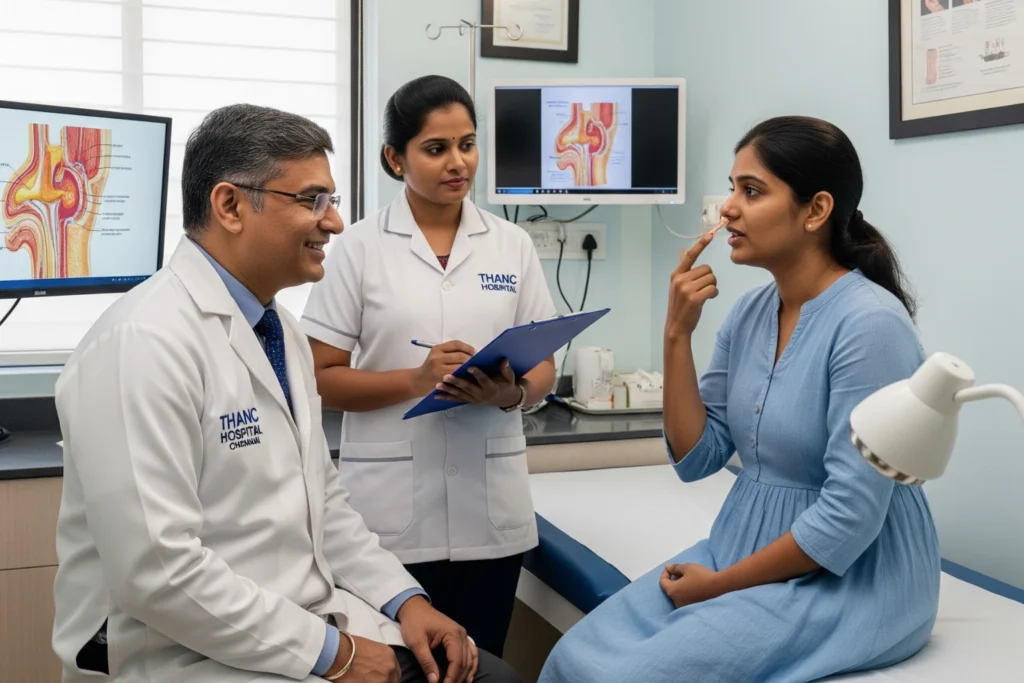
Who Needs Cleft Rhinoplasty?
Patients born with a unilateral (one-sided) or bilateral (two-sided) cleft lip are the primary candidates for this procedure. Even after a successful lip repair in infancy, the underlying nasal structure often remains distorted. As the child grows, these structural issues can cause significant physical and emotional challenges.
You or your child may need this procedure if you experience chronic breathing difficulties. A severely deviated septum can block airflow on one or both sides of the nose. This blockage forces the patient to breathe through their mouth constantly. Chronic mouth breathing can lead to dry mouth, frequent throat infections, and poor sleep quality. In severe cases, it can even contribute to sleep apnea.
Aesthetic concerns also drive the need for this surgery. The specific conditions include:
- Unilateral cleft lip causing one nostril to slump and flatten across the face.
- A nasal tip that points sharply away from the center of the face.
- Bilateral cleft lip resulting in a very wide, flat nasal tip.
- A noticeably short columella (the strip of skin separating the nostrils).
Conservative treatments, such as nasal stents used during infancy, only provide temporary guidance for growing tissues. They cannot fix severe cartilage deformities or bone blockages in an adult nose. When breathing strips, allergy medications, and nasal sprays fail to improve airflow, surgery becomes the only effective solution. The surgeon must physically rebuild the internal nasal framework to restore normal function.
Ideal candidates for definitive cleft rhinoplasty are teenagers or young adults whose facial growth is complete. Girls usually reach this stage around 16 to 18 years of age, while boys reach it around 18 to 21 years of age. Operating too early on the nasal septum can stunt the growth of the midface. This stunted growth can lead to an underbite, which might later require Underbite and Overbite Correction.
Candidates must be in good overall health and have realistic expectations. Sometimes, patients have underlying jaw discrepancies along with their nasal deformity. In these cases, the surgeon may recommend Corrective Jaw Surgery before performing the final nose reshaping. Fixing the jaw first provides a stable, symmetrical foundation for the new nose.
How Cleft Rhinoplasty is Performed
Cleft rhinoplasty is a highly complex reconstructive surgery. The surgeon must carefully navigate altered anatomy and scar tissue from previous operations. The surgical team plans every step meticulously to ensure the best possible cosmetic and functional outcome.
The procedure takes place in a hospital operating room under general anaesthesia. The anaesthesiologist will give you medication through an IV line to put you completely to sleep. You will not feel any pain, and you will not remember the surgery. A breathing tube will keep your airway safe and secure throughout the operation.
Most surgeons use an "open" approach for nose surgery after cleft. The surgeon makes a small, precise incision across the columella. They extend this incision upward inside the nostrils. This open approach allows the surgeon to gently lift the skin of the nose. Lifting the skin provides a clear, direct view of the distorted cartilage and bone underneath.
Because cleft noses often lack strong structural support, the surgeon usually needs to perform cartilage grafting. They will harvest (collect) a small piece of healthy cartilage from another part of your body. The most common donor sites are the nasal septum, the bowl of the ear, or a rib. The surgeon carves this harvested cartilage into precise shapes to build a new, strong framework for the nose.
Next, the surgeon reshapes the internal structures. They straighten the deviated septum to open up the blocked airway. They use the carved cartilage grafts to lift the flattened nasal tip and project it forward. They also reposition the lower lateral cartilages to make the nostrils as symmetrical as possible. If the nasal bones are crooked, the surgeon may perform osteotomies (carefully breaking and resetting the bones) to narrow and straighten the nasal bridge.
Once the new framework is secure, the surgeon gently drapes the skin back over the nose. They close the incisions with very fine stitches. To protect the new shape, the surgeon places soft splints inside the nostrils and a hard splint on the outside of the nose. The entire surgery typically takes between two to four hours, depending on the complexity of the reconstruction. Patients usually stay in the hospital for one to two days for monitoring and pain management.
Preparing for Nose Surgery After Cleft
Proper preparation is essential for a safe surgery and a smooth recovery. Your surgical team will guide you through a detailed pre-operative process to ensure your body is ready for the procedure.
During your initial consultations, the surgeon will examine the inside and outside of your nose. They will use an endoscope (a thin tube with a camera) to check for internal blockages. The team will also take standardized medical photographs of your face from multiple angles. These photos help the surgeon plan the exact changes needed to improve your facial balance.
You will need to complete several pre-operative medical tests, including:
- Routine blood tests to check your overall health, blood counts, and clotting ability.
- An electrocardiogram (ECG) to confirm your heart is healthy enough for general anaesthesia.
- A 3D CT scan of your face to provide a detailed map of your bone structure and hidden septal deformities.
Your doctor will give you strict instructions on what to stop and start before the surgery. You must stop taking blood-thinning medications, aspirin, and certain herbal supplements at least two weeks before your date. These substances can increase bleeding during and after the operation. If you use tobacco products, including cigarettes, gutkha, or paan, you must stop completely at least four weeks before surgery. Nicotine shrinks blood vessels and severely reduces blood flow to the skin, which can cause the skin on your nose to heal poorly or even die.
You should start focusing on your nutrition in the weeks leading up to the surgery. Eat a balanced diet rich in protein, vitamins, and iron to build up your body's healing reserves. Staying well-hydrated is also important for healthy skin and tissue recovery.
On the day of your surgery, bring comfortable, loose-fitting clothes that button down the front. You will not want to pull a tight t-shirt over your newly operated nose. Bring your identification, all medical reports, and any required hospital admission paperwork. You must fast (consume absolutely no food or water) for 8 to 10 hours before your scheduled surgery time to prevent complications with the anaesthesia.
Recovery After Cleft Rhinoplasty
Recovering from cleft rhinoplasty requires patience and careful attention to your doctor's instructions. The healing process happens in stages, and it takes time for the final results to fully emerge.
During the first 24 to 48 hours, you will rest in the hospital. You will wake up with a hard splint on the outside of your nose and possibly soft packing or silicone splints inside your nostrils. Because your nose will be blocked, you will have to breathe entirely through your mouth. This mouth breathing will make your throat feel very dry, so sip water frequently once the nurses allow it. Swelling and mild bruising around your eyes and cheeks are completely normal. The nursing staff will provide pain medication to keep you comfortable. You must sleep with your head elevated on two or three pillows to help reduce the facial swelling.
Your week-by-week recovery timeline will look something like this:
- Week 1: You will return to the clinic to have the external splint and any non-dissolvable stitches removed. The initial swelling will be very noticeable, and your nose may look slightly upturned. You can usually return to light, daily routines around the house.
- Weeks 2 to 4: The bruising around your eyes will fade and turn yellow before disappearing. The major swelling will start to go down significantly. You will begin to see the new, improved shape of your nose, though the tip will still feel stiff and puffy.
- Months 3 to 6: The finer details of the nasal tip will slowly emerge as the deep tissue swelling resolves. Your internal swelling will also decrease, and your breathing will noticeably improve.
- 1 Year: The healing process is fully complete. The cartilage grafts have settled permanently into their new positions, and all residual swelling has disappeared.
You must follow specific diet and activity restrictions to protect your healing nose. Stick to a soft diet for the first few days. In India, foods like soft idli, khichdi, upma, and mashed dal are excellent choices because they require very little chewing. Avoid very spicy foods initially, as they can cause a runny nose, which irritates your incisions.
Do not blow your nose for at least three weeks. If you feel the urge to sneeze, you must sneeze with your mouth wide open to release the pressure. Avoid strenuous exercises, heavy lifting, and bending over for at least four weeks, as these activities increase blood pressure in your face and can trigger bleeding. You must also avoid all contact sports (like cricket, football, or kabaddi) for at least six months to protect your nose from accidental bumps.
Most patients can return to school, college, or a desk job within 10 to 14 days. If your work involves physical labor, you may need to take three to four weeks off. If you are also recovering from combined jaw procedures, you can read more about the timeline in our guide to Orthognathic Surgery Recovery.
Risks and Complications
Like any major surgical procedure, cleft rhinoplasty carries some risks. Because the surgeon is working with previously scarred tissue and altered anatomy, this surgery is more complex than a standard cosmetic nose job. However, careful planning and expert surgical techniques keep these risks to a minimum.
Common, minor risks include:
- Temporary swelling and bruising around the eyes, which resolve on their own within a few weeks.
- Mild bleeding or blood-tinged discharge from your nose during the first few days.
- Temporary numbness in the nasal tip or upper lip, which usually fades over several months as sensory nerves heal.
- Minor asymmetry, because achieving 100% perfect symmetry is nearly impossible when starting with a severe tissue deficiency.
Rare but serious risks require prompt medical attention. There is a small risk of infection at the surgical site or at the location where the surgeon harvested the cartilage graft. Poor wound healing or noticeable scarring can occur, especially if blood flow to the skin is compromised. Sometimes, patients develop a septal perforation (a small hole in the dividing wall of the nose), which can cause a whistling sound when breathing. If the internal nasal valves become too narrow during healing, you might experience new breathing difficulties. In some cases, the cartilage grafts can warp or shift as they heal, which might require a minor revision surgery later on.
THANC Hospital minimizes these risks through rigorous safety protocols and advanced technology. The surgical team uses 3D imaging to plan the exact structural changes before making any incisions. Operating in a highly sterile environment prevents infections. Furthermore, the team provides detailed post-operative care instructions and close follow-up monitoring to ensure your healing stays on track.
Results and Success Rate
Cleft rhinoplasty has a very high success rate for delivering both functional and cosmetic improvements. While the goal is improvement rather than absolute perfection, the changes are usually life-altering for the patient.
You can expect a nose that looks much more balanced and proportional to the rest of your face. The surgery will lift the drooping nasal tip, straighten the bridge, and create nostrils that are much closer in size and shape. Functionally, you will experience a massive improvement in airflow. Many patients report sleeping better, snoring less, and feeling more energetic because they can finally breathe clearly through their nose.
The psychological benefits are equally profound. Teenagers and young adults often experience a significant boost in self-confidence. They feel more comfortable in social situations, taking photographs, and participating in daily life without feeling self-conscious about their facial appearance.
The results of a definitive cleft rhinoplasty are permanent. Because the surgeon performs this procedure after your facial bones have stopped growing, the new structural framework will last a lifetime. Your nose will naturally age along with the rest of your face, and the skin may thin over the decades, but the core corrections remain stable.
Why Choose THANC Hospital for Cleft Rhinoplasty?
Choosing the right hospital and surgeon is critical for complex reconstructive procedures like nose surgery after cleft. THANC Hospital in Kilpauk, Chennai, offers dedicated, compassionate care for patients with facial deformities. The hospital features a dedicated department for Oral & Maxillofacial Surgery, equipped with advanced diagnostic and surgical technology.
Dr. M. Veerabahu has decades of hands-on experience in managing complex craniofacial anomalies, cleft lip and palate repairs, and secondary facial reconstructions. His team-based approach so that your breathing, facial harmony, and overall well-being receive expert attention under one roof. If you or your child are ready to explore surgical options for nose correction, you can easily Book an Appointment to schedule a detailed consultation.
Frequently Asked Questions
Is cleft rhinoplasty covered by health insurance in India?
Yes, in many cases, health insurance covers cleft rhinoplasty because it is a reconstructive procedure designed to fix a congenital birth defect and improve breathing function. However, insurance policies vary widely across different providers. You should check with your specific insurance company to understand your coverage details and gather any required medical documentation from your surgeon.
Can I get my jaw and nose corrected at the same time?
Sometimes, patients require both corrective jaw surgery and nose reshaping to achieve proper facial balance and function. Usually, surgeons perform the jaw surgery first to establish a stable, symmetrical bone foundation, followed by the nose surgery a few months later. Your surgeon will evaluate your specific facial structure to determine the safest and most effective treatment timeline.
Will the surgery leave a visible scar on my nose?
The surgeon typically uses an open approach, making a tiny incision across the columella (the small strip of tissue between your nostrils). This incision heals exceptionally well and usually fades into a barely noticeable fine line over time. All other surgical incisions are hidden completely inside the nostrils, leaving no other visible scars on your face.
Is the cartilage removal from my ear or rib painful?
You will be under general anaesthesia during the surgery, so you will not feel the cartilage being removed from your ear or rib. During your recovery at home, the donor site may feel sore, stiff, or tender for a few days. Your doctor will prescribe effective pain medication to manage this discomfort easily while you heal.
How long do I have to wait to wear glasses after surgery?
You should avoid resting prescription glasses or heavy sunglasses on your nasal bridge for at least four to six weeks after the procedure. The weight of the frames can press on the healing bones and cartilage grafts, potentially altering the final shape of your nose. If you need prescription lenses to see, consider taping the glasses to your forehead or wearing contact lenses during the initial recovery phase.
Will my voice change after cleft rhinoplasty?
Your voice will not change permanently, but you might sound slightly congested or "nasal" for the first few weeks due to internal swelling and splints. Once the swelling subsides and your nasal airways open up completely, your normal voice will return. In fact, many patients find that their speech clarity improves slightly once they can breathe properly through their nose instead of their mouth.
Learn more about Oral & Maxillofacial Surgery
View treatments, doctors & FAQs
Concerned about this condition?
Our specialists can help. Book a consultation today.
Book Consultation