
In this article
What is a Broken Jaw (Mandible Fracture)?
The mandible (lower jawbone) is the largest and strongest bone in your face. It forms the lower part of your facial structure and connects to your skull at the temporomandibular joints (TMJ) located just in front of your ears. A broken jaw, medically known as a mandible fracture, occurs when excessive force causes this bone to crack, splinter, or break completely. Because your lower jaw projects outward from the rest of your face, it is highly vulnerable to impact during accidents or falls.
A broken jaw is a serious medical condition that significantly impacts your ability to eat, speak, breathe, and swallow. The fracture can occur in just one location, or the bone can break in multiple places simultaneously. Depending on the severity of the impact, the break might be a simple hairline crack, or the bone could shatter into several pieces.
In India, mandible fractures are incredibly common. Medical studies and trauma registries indicate that the lower jaw is the second most frequently fractured facial bone, right after the nasal bone (nose). This type of injury predominantly affects young adults. Data from Indian trauma centers shows that the highest incidence of jaw fractures occurs in men between the ages of 21 and 30. This high prevalence is closely linked to daily commuting habits, occupational hazards, and lifestyle factors specific to the region.
Understanding the anatomy of your jaw helps in understanding the injury. The mandible is shaped like a horseshoe. It consists of the symphysis (the chin area), the body (the horizontal sides holding your teeth), the angle (the back corner near your wisdom teeth), and the condyle (the rounded knob that forms the jaw joint). A fracture can happen in any of these zones, and the specific location of the break will determine the type of broken jaw treatment you receive.
Causes and Risk Factors
Jaw fractures occur when the physical force applied to the lower face exceeds the strength of the bone. The causes range from high-speed impacts to simple trips and falls. Understanding these causes helps in both prevention and determining the right approach for jaw fracture surgery.
The most common causes of a broken jaw include:
- Road Traffic Accidents (RTAs): In India, road traffic accidents are the leading cause of facial trauma, accounting for nearly 70% of all mandible fractures. High-speed collisions, sudden braking, and impacts with steering wheels or dashboards frequently result in severe jaw injuries.
- Two-Wheeler Accidents: A massive percentage of jaw fractures in India involve motorcycles and scooters. Riders who do not wear helmets, or who wear half-face helmets that leave the jaw exposed, bear the brunt of the impact directly on their chin or the side of their face during a crash.
- Falls: Accidental falls are the second most common cause of jaw fractures. This includes falling from a height, slipping on wet surfaces, or elderly individuals fainting and striking their chin on the ground. The force of the chin hitting the floor often pushes the jawbone backward, fracturing the jaw joints near the ears.
- Interpersonal Violence and Assaults: Physical altercations, punches to the face, or being struck with a blunt object frequently cause fractures, particularly at the angle of the jaw.
- Sports Injuries: High-contact sports like boxing, martial arts, kabaddi, and cricket (especially when a fast-moving ball strikes the face) can lead to sudden jaw fractures.
- Industrial and Occupational Accidents: Workers in construction, manufacturing, and heavy industries face risks from falling objects, machinery accidents, or scaffolding collapses.
Several risk factors increase the likelihood of sustaining a jaw fracture or experiencing a more severe break:
- Lack of Protective Gear: Riding two-wheelers without a full-face crash helmet is the single biggest risk factor for severe facial fractures in India. A jaw fracture often occurs alongside other injuries — see facial fractures of the cheekbone, orbit and jaw for how these are assessed together.
- Driving Under the Influence: Alcohol consumption significantly impairs reaction times and balance, leading to a higher rate of severe road accidents and falls.
- Poor Bone Health: Conditions like osteoporosis, severe vitamin D deficiency, or calcium deficiency weaken the bones. In older adults, even a minor fall can result in a complex fracture.
- Existing Dental Issues: Impacted wisdom teeth or large cysts in the jawbone create natural weak points. A blow to the face is much more likely to break the jaw at these hollow or weakened areas.
Signs and Symptoms
Recognizing the symptoms of a broken jaw early is important for receiving prompt medical care. Because the jaw is intimately connected to your teeth, muscles, and facial nerves, a fracture produces immediate and distinct warning signs.
The early warning signs that patients notice first include:
- Severe Facial Pain: Intense, throbbing pain in the lower face that worsens significantly when you try to open your mouth, speak, or swallow.
- Bite Misalignment: Medically known as malocclusion, this is often the most obvious sign. Your upper and lower teeth will suddenly feel like they do not fit together correctly. You may feel that your bite is shifted to one side or that certain teeth are hitting before others. If you are experiencing bite issues without trauma, you can read more about underbite and overbite correction.
- Swelling and Bruising: Rapid swelling along the jawline, chin, or under the tongue. Bruising may appear on the face or inside the mouth along the gums.
- Inability to Open the Mouth: A condition called trismus or lockjaw occurs when the muscles spasm around the broken bone, preventing you from opening your mouth more than a few millimeters.
- Bleeding Inside the Mouth: Cuts on the gums or bleeding from the sockets of loosened teeth are common when the fracture line runs through the tooth-bearing areas of the jaw.
As the hours pass, or if the fracture is particularly severe, symptoms can progress and become more serious:
- Facial Deformity: The jaw may look visibly crooked, sunken, or pushed to one side.
- Numbness or Tingling: You may lose sensation in your lower lip, chin, or lower gums. This happens because the inferior alveolar nerve, which runs through the center of the jawbone, gets stretched, compressed, or torn when the bone breaks.
- Loose or Missing Teeth: Teeth located directly in the line of the fracture may become extremely loose, break, or fall out entirely.
- Difficulty Swallowing and Drooling: Because it hurts to move the jaw, swallowing saliva becomes difficult, leading to noticeable drooling.
See a doctor immediately if you experience: Any facial trauma followed by difficulty breathing, heavy uncontrolled bleeding from the mouth, a feeling that your tongue is falling backward and blocking your throat, or clear fluid leaking from your ears. These are medical emergencies that require immediate intervention before any broken jaw treatment can begin.
How is a Broken Jaw Diagnosed?
When you arrive at the hospital with a suspected jaw fracture, the medical team will first ensure that your airway is clear, your breathing is stable, and any active bleeding is controlled. Once you are stabilized, a specialist in Oral & Maxillofacial Surgery will conduct a thorough evaluation.
The diagnostic process involves a combination of a physical examination and advanced imaging tests.
During the clinical examination, the doctor will gently press along your jawline to feel for any step-like deformities or unnatural movement in the bone. They will ask you to bite down to check your dental alignment and assess whether you have any numbness in your lips or chin. The doctor will also examine the inside of your mouth to look for tears in the gums, bleeding, or loose teeth that indicate where the bone has cracked.
To confirm the diagnosis and plan the exact approach for jaw fracture surgery, imaging tests are absolutely necessary. At THANC Hospital, we use modern diagnostic imaging to get a precise view of the injury:
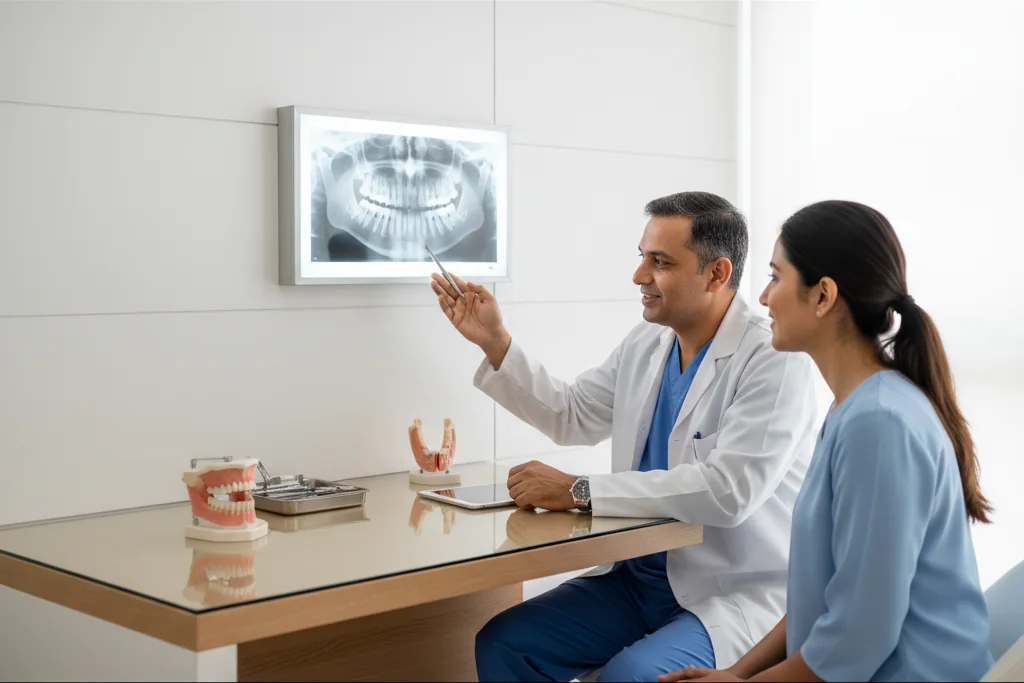
- Orthopantomogram (OPG): This is a panoramic dental X-ray that provides a wide, flat view of your entire upper and lower jaw, including your teeth and jaw joints. It is usually the first imaging test performed and is excellent for identifying the location and number of fractures.
- Computed Tomography (CT) Scan: For complex injuries, a CT scan is required. It provides detailed, cross-sectional images of your facial bones. This helps the surgeon see if the bone fragments have shifted out of place or if the fracture extends into the jaw joint.
- Cone Beam Computed Tomography (CBCT): This specialized 3D imaging technology provides highly accurate, three-dimensional views of the jawbone and teeth with less radiation than a traditional medical CT scan. It allows the surgical team to map out the exact placement of plates and screws before the surgery begins.
Knowing what to expect during the evaluation can help reduce anxiety. The process is straightforward, and the medical team will provide pain relief medications to keep you comfortable while the imaging tests are completed.
Treatment Options
The primary goal of broken jaw treatment is to realign the fractured bone segments and hold them securely in place so they can heal correctly. This so that your normal bite is restored and that you regain full function of your mouth. The treatment approach depends entirely on the location of the break, how many breaks there are, and whether the bone pieces have shifted out of alignment.
Conservative / Medical Management
Not all jaw fractures require an operation. If you have a simple, clean break where the bone has not shifted out of place (a non-displaced fracture), conservative management may be sufficient.
- Soft Diet and Rest: For very minor cracks, especially in the jaw joint (condyle), the doctor may simply recommend a strict liquid or soft diet for several weeks, along with pain management and close monitoring.
- Maxillomandibular Fixation (MMF): Also known as wiring the jaw shut. In this procedure, the surgeon places metal braces or arch bars on your upper and lower teeth. Small wires or tight elastic bands are then used to tie the upper and lower jaws together. This acts like a cast for your jaw, keeping the bones completely still while they heal. MMF is typically maintained for 4 to 6 weeks.
Surgical Options
When the bone fragments have shifted out of place, or if there are multiple fractures, jaw fracture surgery is required. The standard surgical procedure is called Open Reduction and Internal Fixation (ORIF).
- Open Reduction: The surgeon makes an incision to access the broken bone directly and physically realign the pieces into their proper anatomical position. To avoid visible scars on your face, these incisions are almost always made inside the mouth, hidden behind your lips or cheeks.
- Internal Fixation: Once the bone is realigned, the surgeon secures the pieces together using small, biocompatible titanium plates and screws. These plates act as an internal cast, holding the jaw rigidly in place.
One of the major benefits of modern ORIF surgery is that it often eliminates the need to wire the jaw shut. Because the titanium plates hold the bone securely, patients can usually open and close their mouths shortly after surgery, making eating, speaking, and maintaining oral hygiene much easier. The titanium plates are designed to be permanent and usually do not need to be removed unless they cause irritation later in life.
If a tooth is located directly in the line of the fracture and is severely damaged or infected, it may need to be extracted during the surgery to prevent bone infections from developing.
Advanced Techniques Available at THANC
At THANC Hospital, our surgical team uses advanced techniques for facial trauma repair. We focus on minimally invasive approaches whenever possible, using 3D surgical planning to ensure precise anatomical reduction. This careful planning helps restore your exact pre-injury bite and facial symmetry. If your injury requires extensive reconstruction, you can learn more about the surgical process by reading about corrective jaw surgery types and recovery.
Living with a Broken Jaw / Recovery and Outlook
Recovering from a broken jaw requires patience, careful attention to your diet, and strict adherence to your doctor's instructions. The initial healing of the bone takes about 6 to 8 weeks, but complete recovery of the surrounding tissues and muscles can take a few months.
What to Expect After Treatment
Immediately after broken jaw treatment, you will experience facial swelling, bruising, and mild to moderate pain. The swelling usually peaks on the third day after surgery and then gradually subsides over the next two weeks. Your doctor will prescribe pain relievers, anti-inflammatory medications, and antibiotics to prevent infection.
If you had incisions made inside your mouth, maintaining impeccable oral hygiene is critical. Since you may not be able to brush normally, you will be instructed to use a prescribed antibacterial mouthwash (like chlorhexidine) and gently rinse your mouth with warm salt water after every meal to keep the surgical sites clean.
Dietary Modifications
Your diet is the most important part of your recovery. Because your jaw cannot handle the force of chewing, you will need to modify what you eat significantly.
- The Liquid Diet Phase (Weeks 1-2): Initially, you will be on a strict liquid diet. For Indian patients, this includes nutrient-rich fluids like strained dal water, thin rice kanji (gruel), ragi malt, fresh fruit juices, milkshakes, and buttermilk (chaas). You may need to use a syringe or a soft tube to drink if your jaw is wired or if opening your mouth is difficult.
- The Soft Diet Phase (Weeks 3-6): As healing progresses, you will transition to a non-chew soft diet. Foods must be soft enough to swallow without biting down. Excellent options include mashed idli soaked in sambar, soft pongal, well-cooked upma, blended khichdi, mashed potatoes, and soft-cooked vegetables.
- Foods to Avoid: You must strictly avoid hard, crunchy, or chewy foods for at least two months. Do not eat tough meats, raw carrots, nuts, sugarcane, or hard snacks like murukku, chikki, or hard toasts, as the force required to bite them can bend the surgical plates or re-break the healing bone.
Follow-Up Care and Physical Therapy
You will have regular follow-up appointments so your surgeon can take X-rays and monitor the bone healing. If your jaw was wired shut, the wires will be removed in the clinic once the bone is stable.
After a period of immobilization, your jaw muscles will feel tight and stiff. Your doctor will guide you through specific jaw stretching exercises and physical therapy to help you gradually regain your normal mouth opening. For a detailed timeline of what to expect during the healing process, you can review our guide on orthognathic surgery recovery week by week.
With proper surgical care and adherence to dietary restrictions, the long-term outlook for a mandible fracture is excellent. Most patients regain full function of their jaw, a normal bite, and complete facial symmetry.
Why Choose THANC Hospital for Jaw Fracture Surgery?
When facing a complex facial injury, choosing the right surgical team is vital for restoring your appearance and function. At THANC Hospital, your care is led by Dr. M. Veerabahu, a highly experienced specialist in Oral & Maxillofacial Surgery with extensive expertise in facial trauma and reconstruction.
Our hospital is equipped with advanced 3D imaging technology and dedicated surgical suites designed specifically for maxillofacial procedures. We prioritize patient safety, precise anatomical repair, and compassionate post-operative care to ensure you achieve the best possible functional and aesthetic outcome. If you or a loved one has suffered a facial injury, you can easily Book an Appointment for an expert evaluation.
Frequently Asked Questions
How long does a broken jaw take to heal?
The bone itself typically takes about 6 to 8 weeks to heal sufficiently. However, full recovery, including the resolution of all swelling, nerve healing, and regaining normal jaw muscle flexibility, can take up to three to six months. Strict adherence to a soft diet during the first two months is essential for proper healing.
Will I need my jaw wired shut?
Not always. While wiring the jaw shut (maxillomandibular fixation) was the standard treatment in the past, modern jaw fracture surgery using titanium plates and screws (ORIF) often eliminates the need for wiring. Your surgeon will determine the best method based on the specific location and severity of your fracture.
Can I brush my teeth with a broken jaw?
Oral hygiene is important, but you must be very gentle. You can usually use a small, soft-bristled baby toothbrush to clean the outside of your teeth, being careful to avoid the surgical incisions. Your doctor will also prescribe an antibacterial mouthwash to help keep the inside of your mouth clean without vigorous brushing.
Is jaw fracture surgery painful?
The surgery itself is performed under general anesthesia, so you will not feel any pain during the procedure. After the surgery, you will experience some pain and swelling, but this is effectively managed with prescribed pain medications and anti-inflammatory drugs provided by your medical team.
What happens if I leave a broken jaw untreated?
Leaving a fractured jaw untreated can lead to severe complications. The bones may heal in the wrong position, resulting in a permanent facial deformity, chronic pain, and an inability to chew food properly. Furthermore, open fractures inside the mouth can lead to deep bone infections if not medically cleaned and stabilized.
Will I have a visible scar after the surgery?
In most cases, you will not have a visible scar on your face. Maxillofacial surgeons typically make the necessary incisions inside the mouth, along the gum line, to access and repair the broken bone. If an external incision is absolutely necessary for a complex fracture, it is usually placed carefully within the natural creases of your neck or face to minimize visibility.
Learn more about Oral & Maxillofacial Surgery
View treatments, doctors & FAQs
Concerned about this condition?
Our specialists can help. Book a consultation today.
Book Consultation