
In this article
- What Is Facial Fat Grafting (Autologous Lipofilling)?
- Common Areas Treated with Facial Fat Transfer
- Soft-Tissue Volumization vs. Bone Contouring: Key Differences
- The Facial Fat Grafting Procedure: Step-by-Step
- Facial Fat Grafting in Reconstruction and Facelift Synergy
- Fat Graft Survival Rates and Long-Term Longevity
- Recovery Timeline and Post-Operative Care
- Cost of Facial Fat Grafting in Chennai
- Expert Facial Plastic Surgery at THANC Hospital, Chennai
- Frequently Asked Questions
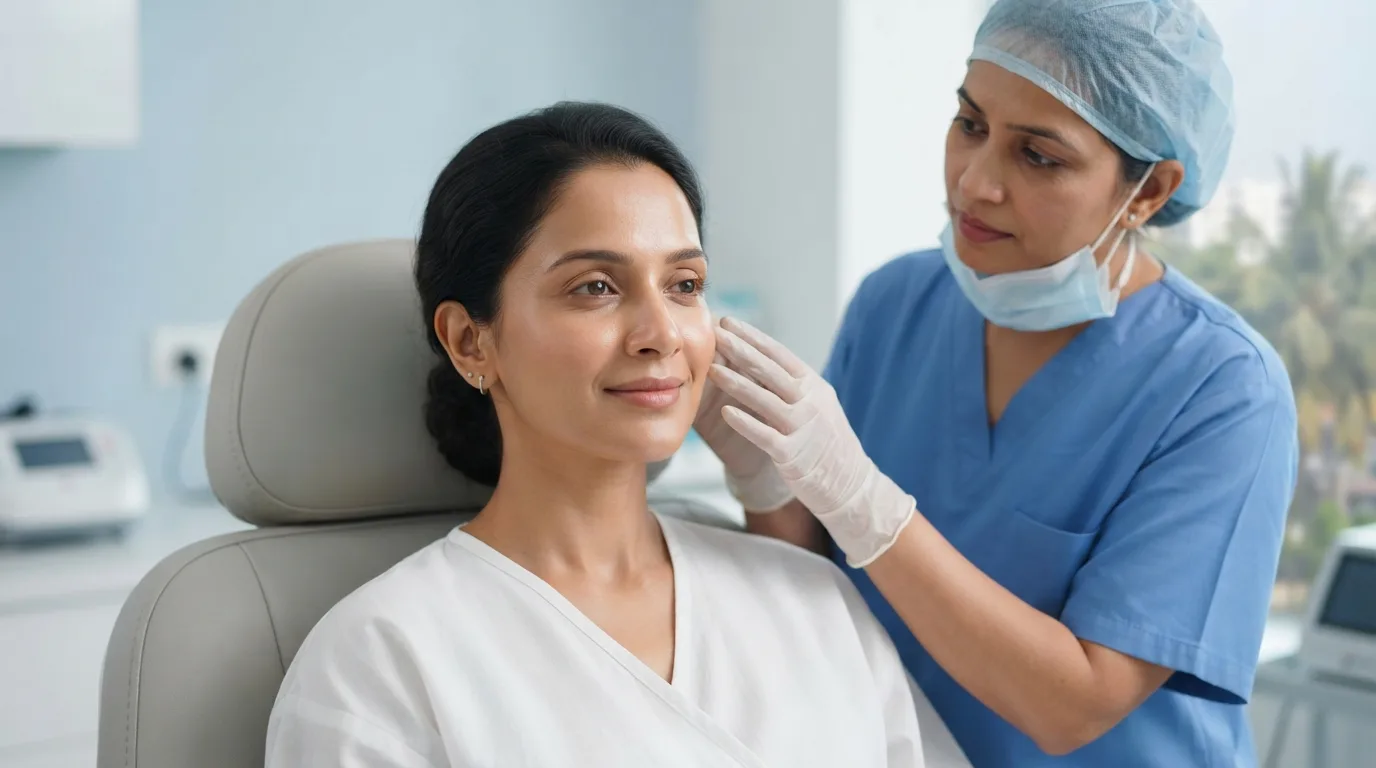
Facial aging and structural asymmetry often stem from the progressive loss of subcutaneous volume rather than superficial skin laxity alone. For patients seeking a natural, permanent solution to midface deflation, hollow temples, or post-surgical irregularities, facial fat grafting in Chennai offers an autologous approach to restoring youthful contour and tissue vitality. By harvesting and transferring your body's own living fat cells, this advanced micro-lipoinjection technique harmonizes facial proportions with long-lasting structural support.
What Is Facial Fat Grafting (Autologous Lipofilling)?
Facial fat grafting, medically termed autologous lipofilling or structural fat transfer, is a minimally invasive surgical procedure that relocates healthy, living fat cells from donor zones (such as the abdomen, flanks, or inner thighs) into areas of the face exhibiting volume depletion, deep creasing, or structural hollows. As humans age, the deep and superficial facial fat pads naturally atrophy and descend, leading to sunken orbital sockets, flattened cheekbones, hollowed temples, and deepening folds around the mouth.
Unlike foreign materials or prosthetic implants, autologous fat tissue is completely biocompatible. Because the graft originates from the patient's own tissue, there is zero risk of allergic rejection or long-term immune-mediated reactions. The transferred fat is not merely an inert filler; it integrates organically into the recipient site's vascular network, behaving like native facial tissue.
Beyond simple volume replacement, autologous fat transfer possesses substantial regenerative potential. Adipose tissue is one of the richest biological reservoirs of adipose-derived stem cells and growth factors. When micro-injected beneath the facial dermis, these regenerative cells stimulate local new capillary formation, boost fibroblast proliferation, and accelerate collagen synthesis. Patients routinely observe structural rejuvenation along with visible improvements in skin elasticity, pore refinement, and reduction of superficial dermal discoloration over the treated zones.
Fat Transfer vs. Synthetic Dermal Fillers
While synthetic hyaluronic acid (HA) fillers are widely used in aesthetic medicine, they present fundamental differences when compared to autologous lipofilling:
| Metric | Autologous Fat Grafting | Synthetic Dermal Fillers (HA) |
|---|---|---|
| Origin | Patient's own living fat cells | Synthetically cross-linked products |
| Biocompatibility | 100% autologous, zero rejection risk | Low-to-moderate foreign-body reaction risk |
| Longevity | Permanent (for surviving, vascularized fat) | Temporary (typically 6 to 18 months) |
| Regenerative Impact | High concentration of stem cells and growth factors | Purely mechanical space-filling |
| Procedural Nature | Surgical (minor liposuction + injection) | Non-surgical, in-clinic injection |
| Economics | Higher initial cost; cost-effective over 5–10 years | Lower initial fee; higher cumulative cost |
Synthetic fillers remain useful for minor, transient corrections or for patients who cannot undergo minor donor harvesting. However, when substantial structural volumization is required across multiple facial tiers, autologous lipofilling provides a unified, permanent, and regenerative solution without the recurring burden of repeat injection.
Common Areas Treated with Facial Fat Transfer
Facial fat transfer is highly customizable. The face is composed of distinct fat compartments—both deep compartments that support facial architecture, and superficial compartments that soften cutaneous contours. Surgeons address volume depletion across several key aesthetic units:
- Tear Troughs and Infraorbital Rims: The transition between the lower eyelid and the upper cheek frequently thins, exposing the underlying orbital rim and creating dark shadows. Micro-fat grafting smooths this lid-cheek junction, eliminating hollows.
- Malar and Submalar Zones (Cheeks): Midface deflation causes the cheek apex to drop, accentuating nasolabial creases. Structural grafting restores forward projection and midface contour.
- Temporal Fossae: Age-related absorption of the temporal fat pad creates a skeletal, hollow appearance at the lateral brow. Soft-tissue grafting fills these concavities to restore an oval facial silhouette.
- Nasolabial Folds: Deep lines running from the nasal alae to the mouth corners are lifted from the base with deep structural grafting.
- Marionette Lines and Pre-Jowl Sulci: Infiltrating micro-fat into the pre-jowl sulcus straightens the mandibular border and restores lower-third harmony.
- Lips and Perioral Radiance: Fine vertical lip lines and thinning vermilion borders can be softened using micro-aliquots of specialized nano-fat.
Under-Eye Hollows and Midface Deflation
The infraorbital and malar complexes represent the focal point of facial aging. Thinning skin combined with descent of the sub-orbicularis oculi fat leads to significant tear-trough deformities. By layering fat micro-droplets directly along the supra-periosteal plane beneath the orbicularis oculi muscle, surgeons avoid visible lumpiness and achieve an even lower eyelid transition. This midface support mechanically elevates adjacent tissues, reducing the perceived depth of adjacent hollows and refreshing tired eyes. For patients whose primary concern is redundant eyelid skin or fat bags rather than volume loss, blepharoplasty may be more appropriate or complementary.
Temple and Lower Facial Contouring
Sunken temples disrupt the gentle convex curves of a youthful upper face. Because the temporal region contains complex neurovascular structures, fat grafting here demands precise anatomical placement into the deep sub-fascial planes. In the lower third of the face, fat transfer addresses deep marionette lines and fills pre-jowl depressions, augmenting the soft-tissue mantle to create a clean, continuous jawline without synthetic implants.
Soft-Tissue Volumization vs. Bone Contouring: Key Differences
To achieve optimal facial balance, clinicians distinguish between soft-tissue deficiencies and underlying skeletal imbalances. While autologous lipofilling is an exceptional tool for restoring subcutaneous volume, it cannot alter underlying bone structure.
When a patient presents with severe microgenia (an underdeveloped chin), significant maxillary retrusion, or pronounced mandibular asymmetries, bony restructuring is often the primary corrective step. Advanced surgical interventions such as genioplasty or comprehensive facial contouring surgery alter the skeletal frame to correct underlying functional and structural discrepancies.
Similarly, complex foundational corrections—such as reconstructing jaw architecture using specialized bone grafting techniques—establish the hard-tissue platform. Fat grafting acts as an ideal complementary overlay in these scenarios. Once structural bones are aligned, autologous lipofilling softens hard transitions, replenishes compromised subcutaneous fat pads, and adds natural symmetry.
The Facial Fat Grafting Procedure: Step-by-Step
Facial fat grafting follows a meticulous, multi-phase surgical protocol designed to maximize fat-cell viability, preserve cell membranes, and ensure microvascular integration.
Fat Harvesting and Purification Methods
The procedure begins with the infusion of a specialized tumescent solution (containing saline, lidocaine, and epinephrine) into the designated donor zone—typically the lower abdomen or inner thigh. This solution minimizes bleeding, hydro-dissects the fat tissue, and provides localized anaesthesia.
- Aspiration Harvest: The surgeon introduces a blunt, multi-hole micro-cannula (typically 2.0 to 3.0 mm in diameter) attached to a low-pressure syringe. Gentle manual aspiration prevents the high shear stresses generated by mechanical liposuction pumps, keeping the delicate fat-cell membranes intact.
- Purification: The harvested lipoaspirate is processed within a closed, sterile system to separate viable fat cells from non-viable debris, free fatty acids, blood cells, and residual tumescent fluid. Techniques include low-G centrifugation, gravity decantation, or specialized micro-filtration washes.
- Conditioning: The concentrated, viable fat cells are transferred into small syringes, ready for precise, controlled delivery.
Micro-Cannula Layering Technique
The survival of grafted fat depends on diffusion from surrounding recipient vessels until a direct blood supply develops. If fat is injected in large clumps, the center of the bolus becomes ischemic, leading to cell death, oil cyst formation, or calcification.
Surgeons use blunt micro-injection cannulas through tiny puncture sites hidden within natural skin creases or the hairline. The fat is laid down in minute droplets (0.05 to 0.1 mL per pass) in a retrograde, cross-hatching pattern. These micro-droplets are distributed across multiple anatomical planes—supra-periosteal, intramuscular, and deep subcutaneous—to ensure that every transplanted cell lies within 1 to 2 millimeters of a vascularized tissue bed, maximizing long-term graft retention.
Facial Fat Grafting in Reconstruction and Facelift Synergy
While autologous fat transfer is a premier aesthetic procedure, its unique structural and biological properties make it indispensable in complex facial reconstructive surgery.
Aesthetic Synergy: The 3D Facelift
A traditional facelift (rhytidectomy) effectively addresses two-dimensional issues by tightening the SMAS layer and redraping redundant skin. However, pulling aged, deflated tissues taut across a depleted framework can yield an unnatural, "windswept" appearance. Combining a facelift with structural fat grafting creates a balanced, three-dimensional rejuvenation: the facelift repositions sagging structures, while the lipofilling restores youthful midface, temporal, and perioral volume.
Oncological Defect Reconstruction
Surgical management of head and neck tumors often leaves localized soft-tissue hollows. Following salivary gland tumor resections, particularly parotidectomies, patients frequently experience a distinct retromandibular concavity. Micro-fat grafting allows surgeons to fill these post-ablative depressions, restoring natural facial contours without extensive local tissue flaps.
Correcting Facial Asymmetry and Nerve Paralysis Sequelae
Significant soft-tissue discrepancies arising from trauma, congenital hemifacial microsomia, or progressive hemifacial atrophy can be balanced using targeted lipofilling. Clinicians managing developmental or post-traumatic facial asymmetry use sequential fat grafting sessions to match soft-tissue volume to the opposite side. Additionally, for patients managing long-term facial nerve paralysis, transferring soft-tissue volume helps balance facial rest tone, support weakened dynamic vectors, and soften localized contractures.
Fat Graft Survival Rates and Long-Term Longevity
A frequent question regarding autologous lipofilling centers on graft survival: how much of the injected fat remains permanently?
Factors Influencing Fat Retention
- Harvesting Technique: Low-pressure, atraumatic aspiration minimizes cellular damage, improving graft viability.
- Handling and Exposure: Minimizing the fat's contact with ambient air and keeping transit times short preserves essential intracellular enzymes.
- Recipient Site Vascularity: Tissues with rich vascularity support higher retention rates than fibrotic, scarred beds.
- Systemic Health and Lifestyle: Active smoking significantly compromises microvascular perfusion, dramatically lowering retention rates. Optimal nutrition, normal metabolic function, and non-smoking status encourage healthy neovascularization.
Permanent Integration and Touch-Up Planning
On average, between 50% and 70% of the transplanted fat cells successfully achieve vascular integration and survive indefinitely. The non-surviving fraction is broken down naturally and cleared through normal metabolic pathways over the first 6 to 12 weeks. Surgeons plan for this baseline survival rate by balancing their placement without aggressively overfilling, which could compromise tissue vascularity.
Once the surviving fat cells establish micro-capillary connections (typically by 3 to 6 months post-op), they behave like regular fat cells: they remain permanently and will slowly expand or shrink in step with your overall weight fluctuations. For patients who require substantial volume increases, a planned secondary touch-up session at 6 months offers an effective way to refine contours and achieve long-term symmetry.
Recovery Timeline and Post-Operative Care
Understanding the recovery phases of facial fat transfer helps ensure a smooth healing process and protects your newly transferred grafts.
- Days 1 to 3 (Acute Phase): Mild to moderate swelling and minor bruising will peak during this window. Donor sites will feel tender, similar to the sensation of a strenuous workout. Cold compresses applied around (never pressed firmly onto) the recipient facial zones help reduce swelling.
- Days 7 to 10 (Social Presentation): The majority of acute bruising fades. Sutures at the tiny donor access sites (if placed) are removed. Most patients feel comfortable returning to desk work and everyday social settings by this point.
- Weeks 2 to 4 (Sub-acute Resolution): Approximately 70% to 80% of post-surgical swelling dissipates, revealing early contour improvements. Light cardiovascular activities like walking can be resumed.
- Months 3 to 6 (Final Stabilization): Any lingering deep swelling resolves completely. The integrated fat cells are fully established within their new vascular beds, revealing the final, stable volumetric outcome.
Critical Aftercare Protocols
- Avoid Direct Pressure: Do not sleep on your face or rest heavy, tight eyeglasses directly over treated cheek or bridge zones for at least 3 weeks. Sleep with your head elevated at a 30-degree angle for the first 10 days.
- Avoid Extreme Heat: Stay away from saunas, steam rooms, and direct hot-water facial washing for the first month to prevent excessive vasodilation and swelling.
- Maintain Steady Nutrition: Avoid strict caloric deficits or sudden weight loss during the first 3 months. Adequate protein, healthy lipids, and micronutrients support graft revascularization.
- No Nicotine Exposure: Strictly avoid smoking, vaping, and nicotine patches for a minimum of 4 weeks prior to and 6 weeks following the procedure to ensure optimal microvascular blood flow.
Cost of Facial Fat Grafting in Chennai
When considering facial fat grafting in Chennai, treatment costs are shaped by the personalized nature of the procedure, which is tailored to each patient's facial anatomy and aesthetic goals.
Primary Cost Drivers
- Anatomical Scope of Treatment: Correcting a localized tear-trough or temple hollow requires less surgical time and harvesting volume than full-face structural lipofilling across the cheeks, temporal zones, nasolabial folds, and jawline.
- Harvesting and Processing Techniques: Specialized purification systems, micro-filtration sets, and nano-fat processing equipment influence overall procedural pricing.
- Anaesthesia and Surgical Environment: Straightforward single-zone transfers can be performed under local anaesthesia with conscious sedation in an outpatient theatre. Multi-region contouring or combination surgeries utilize general anaesthesia managed by a dedicated head-and-neck anaesthesiologist.
- Surgeon Expertise: Procedures performed by board-certified head and neck, maxillofacial, or facial plastic surgeons reflect the specialist training required to navigate complex facial anatomy safely.
The Long-Term Economic Perspective
Synthetic hyaluronic acid fillers carry a lower initial price tag, but because they degrade within 6 to 18 months, maintaining results requires ongoing touch-ups year after year. Over a five- to ten-year period, recurring filler treatments often exceed the one-time investment of autologous fat transfer. Because living fat grafts integrate permanently, fat transfer represents a durable and economically sensible long-term choice for comprehensive facial rejuvenation.
Expert Facial Plastic Surgery at THANC Hospital, Chennai
THANC Hospital is a premier super-speciality center for head, neck, and facial surgery, centrally located in Kilpauk, Chennai. The hospital brings together comprehensive aesthetic refinement and complex structural reconstructive surgery within a modern clinical setting.
Fat grafting is performed by the dedicated Facial Plastic Surgery team of Dr. Vidhyadharan S, Clinical Director at THANC Hospital, with every patient admitted under his care. Supported by modern operating suites, high-definition visualization systems, and dedicated head-and-neck anaesthesiology teams, THANC Hospital delivers dependable, patient-centered outcomes.
Every patient undergoes a thorough clinical evaluation that assesses skin thickness, underlying skeletal architecture, and the specific dynamics of their facial fat compartments. This meticulous planning ensures that volume is restored where it is needed naturally—avoiding the over-inflated look of non-targeted treatments and delivering subtle, balanced proportions.
Frequently Asked Questions
Is facial fat grafting safe?
Yes, facial fat grafting has a strong clinical safety record when performed by a qualified head and neck or facial plastic surgeon. Because the procedure uses your own living tissue, there is no risk of allergic reaction or foreign-body rejection. Complications such as small oil cysts or contour irregularities are uncommon when fat is placed using modern micro-droplet layering techniques.
Is the fat transfer procedure painful?
The procedure is performed under local anaesthesia with conscious sedation or under general anaesthesia, meaning you will not feel discomfort during the operation. After surgery, donor site soreness and facial tightness are typically mild to moderate and well-controlled with standard oral analgesics for the first 3 to 5 days.
How long does facial fat transfer last?
The fat cells that establish a blood supply during the first 2 to 3 months integrate permanently into the host tissue. These surviving cells function like native facial fat, persisting indefinitely and changing naturally in response to overall body weight and normal aging.
Will facial fat grafting make my face look overly round or heavy?
No. An unnatural, overfilled appearance typically stems from excessive volumes placed without regard for facial anatomy. At THANC Hospital, surgeons use conservative, layered micro-aliquots to replenish natural fat compartments without distorting your underlying facial structure or expressions.
Can facial fat grafting be combined with other facial surgeries?
Yes. Facial fat transfer is frequently combined with blepharoplasty (eyelid surgery), rhytidectomy (facelift), chin repositioning, or corrective reconstructive surgeries to achieve comprehensive three-dimensional harmony.
Learn more about Facial Plastic Surgery
View treatments, doctors & FAQs
Concerned about this condition?
Our specialists can help. Book a consultation today.
Book Consultation
MBBS, MS (ENT), DNB (ENT), MCh (Head & Neck), FICRS, FEB – ORL HNS, ASOHNS
Clinical Director & Senior Consultant Surgeon