
In this article
- Food and Thyroid — Do You Know?
- Which two nutrients are essential for making thyroid hormones?
- Are zinc and selenium necessary for thyroid function?
- What is a goitrogen?
- Is soy safe for the thyroid?
- How do coffee and alcohol affect the thyroid?
- Why do people with thyroid problems get constipation?
- Are thyroid hormones related to iron metabolism?
- Are environmental contaminants associated with thyroid dysfunction?
- Will I lose or gain weight with thyroid dysfunction?
- Thyroid Care at THANC
- Frequently Asked Questions
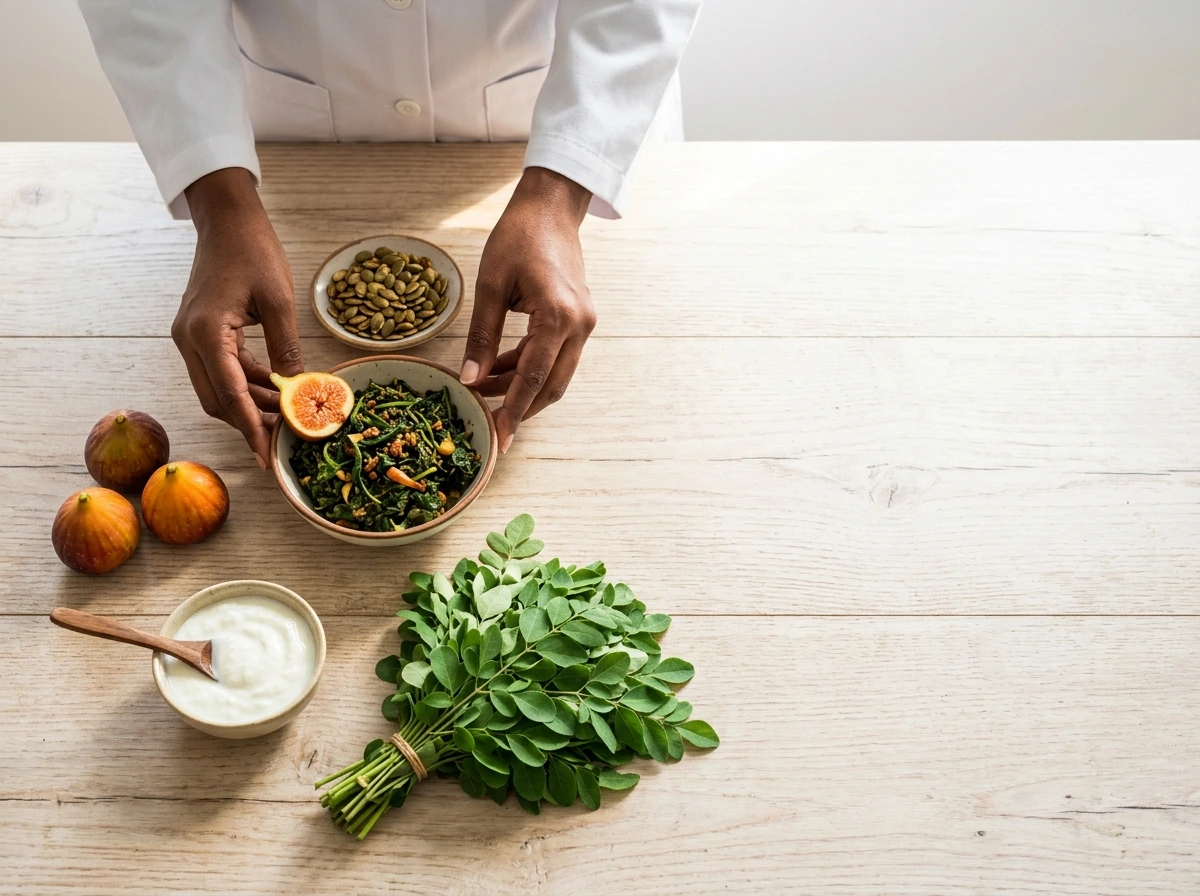
Food and Thyroid — Do You Know?
Nutrition will not cure a thyroid disorder, and no food replaces prescribed thyroid medication. What good nutrition does is give the gland the raw materials it needs, help your medication get absorbed properly, and ease the symptoms — constipation, anaemia, fatigue — that so often travel alongside thyroid disease.
This guide answers the questions patients most often ask, with an emphasis on foods actually eaten in Tamil Nadu households.
Which two nutrients are essential for making thyroid hormones?
The mineral iodine and the amino acid tyrosine. Without both, the thyroid hormones T3 and T4 cannot be made at all.
The names tell you why iodine matters: the 3 and 4 in T3 and T4 refer to the number of iodine atoms in each hormone molecule. Tyrosine forms the backbone those atoms attach to.
Include foods such as seafood, yoghurt, milk, nuts, cheese, eggs and banana, and use iodised salt in the diet.
Iodine needs balance rather than maximisation. Too little causes hypothyroidism and goitre; a sudden excess — typically from kelp tablets or high-dose supplements — can suppress hormone synthesis or provoke autoimmune thyroid disease in susceptible people. Iodised salt in normal cooking quantities is the sensible route.
Are zinc and selenium necessary for thyroid function?
Yes. They are co-factors for the conversion of T4 to T3 — the more biologically active thyroid hormone.
This step matters. The gland mostly secretes T4, which is comparatively inactive; it is the conversion to T3 in the liver, kidneys and other tissues that produces the hormone your cells actually respond to. Selenium-dependent enzymes carry out that conversion, and the thyroid holds more selenium per gram than any other organ in the body.
Zinc and selenium rich foods are corn, roasted peanuts, brown rice, pumpkin seeds, fish, beef, egg, milk and yoghurt.
What is a goitrogen?
Anything that can produce thyroid enlargement.
Do not consume raw or fermented cruciferous vegetables — broccoli, cabbage, brussels sprouts, cauliflower — which contain more goitrogenic compounds. These can be consumed if well cooked, in moderation, as cooking reduces goitrogenic compounds.
This is worth stating clearly, because a lot of patients eliminate these vegetables entirely and lose genuinely valuable nutrition for no reason. Goitrogens interfere with iodine uptake, but heat deactivates the enzyme responsible, and the effect is only clinically meaningful if your iodine intake is already low. Well-cooked cabbage or cauliflower in normal portions is not a problem for someone with adequate iodine.
Is soy safe for the thyroid?
Soy contains isoflavones that inhibit thyroid hormone synthesis.
Soy products include soy milk, tofu, soy sauce, and soy added as an ingredient in salad dressings and mayonnaise. Always read the label for pre-packed food items — soy appears in processed foods far more widely than most people realise, under names such as soy protein isolate, soy lecithin and hydrolysed vegetable protein.
Soy also interferes with absorption of thyroid medication, so keep it well away from your morning tablet.
How do coffee and alcohol affect the thyroid?
Coffee and alcohol do not directly affect the thyroid gland or its secretions. What they do is decrease absorption of thyroid hormone in the body — and are therefore not advised around the time you take your medication.
The practical rule is simple:
- Take your thyroid tablet first thing in the morning with plain water.
- Wait 30 to 60 minutes before coffee, tea or food.
- Keep calcium and iron supplements at least four hours apart from your tablet — these bind thyroxine in the gut and block it effectively.
Getting this routine right is one of the most common reasons a patient's TSH improves without any change in dose.
Why do people with thyroid problems get constipation?
Hypothyroidism is generally associated with a decrease in basal metabolic rate (BMR). Constipation is therefore a common symptom of low body temperature and hypothyroidism — the muscular contractions that move food through the intestine become weaker and less frequent.
Include high-fibre foods — fresh vegetables, fruits, berries, sprouted beans and lentils — and fermented foods such as fermented rice (pazhaya sadam), curd, yoghurt, buttermilk and fermented vegetables.
This is a natural remedy to get your system moving and boost immunity. Traditional South Indian staples serve this purpose well: ridge gourd (peerkangai), bottle gourd (surakai) and lady's finger (vendakkai) for fibre; sprouted green gram (pasi payiru) for both fibre and protein; and neer mor or homemade curd for gut bacteria.
Where digestive symptoms are severe or persist despite good thyroid control, they deserve separate assessment — see IBS symptoms, diagnosis and diet.
Are thyroid hormones related to iron metabolism?
Yes. Thyroid hormones are essential for healthy red blood cells in the body, and iron deficiency anaemia is common in hypothyroidism.
The relationship runs in both directions, which is what makes it clinically important. Thyroid hormone is needed for healthy red cell production — but iron is also needed by thyroid peroxidase, the enzyme that binds iodine to tyrosine. Low iron therefore impairs thyroid hormone production, and low thyroid hormone worsens anaemia. Each drives the other.
Incorporate iron-rich foods in the regular diet:
- Fresh figs
- Watermelon with seeds
- Red rice flakes (sivappu aval)
- Fresh sundakkai (turkey berry)
- Drumstick leaves (murungai keerai)
- Amaranth leaves (mulai keerai)
- Lentils
Pair these with a vitamin C source — lemon juice, nellikai (amla) or tomato — at the same meal. Plant-based iron is absorbed considerably better in the presence of vitamin C, and a squeeze of lemon over keerai is doing more than adding flavour.
Are environmental contaminants associated with thyroid dysfunction?
Yes. Environmental contaminants include dioxins, pesticides, BPA, mercury, lead and fluoride.
Unfortunately these are abundantly present in the environment, water, the food chain and cosmetics. A balanced diet with an adequate amount of good nutrients can offset the negative impact.
Practical steps that reduce exposure without requiring a change of lifestyle: wash produce thoroughly, prefer fresh whole foods over heavily packaged ones, and store and reheat food in glass or steel rather than plastic.
Will I lose or gain weight with thyroid dysfunction?
Hypothyroidism is generally associated with weight gain — BMR is decreased. In hyperthyroidism, BMR is elevated, so many patients experience some weight loss.
First consult with a medical practitioner to establish whether you have hypo- or hyperthyroidism. If it exists, follow up with medical and dietary management to reverse the abnormal state.
One caution worth adding: severe calorie restriction is counterproductive in hypothyroidism. The body responds to it by lowering metabolic rate further, which deepens the fatigue and stalls the weight loss it was meant to achieve. A balanced diet with adequate protein and steady energy works considerably better than aggressive dieting.
Thyroid Care at THANC
Thyroid conditions at THANC are managed through the thyroid and parathyroid surgery service.
Diet is a support to treatment, never a substitute for it. If you have unexplained fatigue, weight change, a neck swelling, hoarseness or difficulty swallowing, the first step is a proper diagnosis — thyroid function testing, examination of the neck, and where a lump is present, nodule evaluation.
Book a consultation to have your thyroid assessed.
Frequently Asked Questions
What foods should I avoid with a thyroid problem?
Avoid raw or fermented cruciferous vegetables such as cabbage, cauliflower, broccoli and brussels sprouts — though these are fine when well cooked and eaten in moderation. Limit soy products, which inhibit hormone synthesis and block medication absorption. Keep coffee, tea, calcium and iron well separated in time from your thyroid tablet.
Can I drink coffee if I take thyroid medication?
Yes, but not immediately after your tablet. Coffee significantly reduces absorption of thyroxine. Take your medication with plain water first thing in the morning and wait 30 to 60 minutes before any coffee, tea or food.
Which foods are good for the thyroid?
Foods providing iodine and tyrosine — seafood, milk, yoghurt, cheese, eggs, nuts and banana, with iodised salt in cooking. For the T4 to T3 conversion, include zinc and selenium sources: corn, roasted peanuts, brown rice, pumpkin seeds, fish and eggs. Add iron-rich foods such as murungai keerai, mulai keerai, sundakkai, red rice flakes, figs and lentils.
Do I need to stop eating cabbage and cauliflower completely?
No. Cooking substantially reduces the goitrogenic compounds in cruciferous vegetables, and moderate portions of well-cooked cabbage or cauliflower are fine for most people with adequate iodine intake. It is raw and fermented forms, in large quantities, that are worth avoiding.
Can diet cure a thyroid problem?
No. Diet supports thyroid function and helps manage symptoms such as constipation and anaemia, but it cannot replace thyroxine in hypothyroidism or the medical and surgical treatments used for hyperthyroidism. Treat nutrition as a complement to prescribed treatment, not an alternative.
Why is iron important if I have hypothyroidism?
Iron deficiency anaemia is common in hypothyroidism, and the relationship runs both ways — iron is required by the enzyme that attaches iodine to tyrosine, so low iron also impairs hormone production. Correcting iron often improves both the anaemia and the fatigue that persists despite adequate thyroxine.
Is iodised salt enough, or should I take an iodine supplement?
For most people iodised salt used normally in cooking, together with dairy, eggs and fish, provides adequate iodine. High-dose iodine supplements such as kelp tablets are not advisable without medical guidance — excess iodine can suppress thyroid hormone production or trigger autoimmune thyroid disease in susceptible individuals.
Learn more about Thyroid & Parathyroid Surgery
View treatments, doctors & FAQs
Concerned about this condition?
Our specialists can help. Book a consultation today.
Book Consultation
MBBS, MS (ENT), DNB (ENT), MCh (Head & Neck), FICRS, FEB – ORL HNS, ASOHNS
Clinical Director & Senior Consultant Surgeon