
In this article
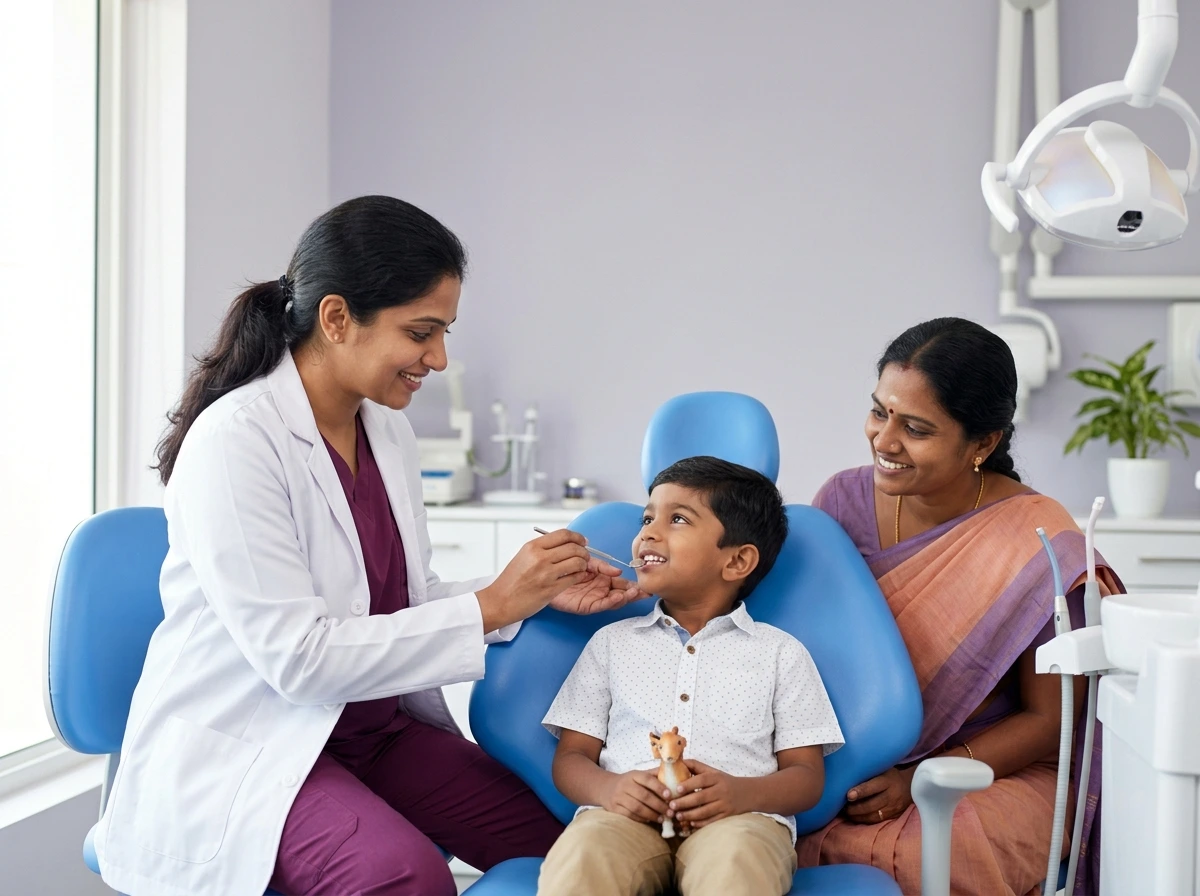
Why Children's Dental Health Matters Early
Most parents track their child's height, weight, and vaccinations carefully, while dental care waits until something hurts. It is an easy assumption to make — baby teeth fall out anyway, so problems in them seem temporary and self-correcting.
They are not. Baby teeth hold space for the permanent teeth developing in the jaw beneath them, and losing one early lets neighbouring teeth drift into the gap, leaving the adult tooth without room to come through properly. Decayed baby teeth also cause real pain, disturb sleep, affect eating and speech, and can become infected. Children with untreated dental pain miss school and struggle to concentrate.
The good news is that the most common childhood dental problems are largely preventable, and the habits that prevent them are simple enough to build into an ordinary day. What follows are the problems we see most often, what causes each, and what actually helps.
Tooth Decay (Dental Caries)
Tooth decay is the single most common dental problem affecting children worldwide. It begins when bacteria in the mouth feed on sugars from food and drink and produce acid, which dissolves the tooth's enamel. Over time this creates the small holes we call cavities.
Two factors drive it: sugary and acidic food and drink, and incomplete brushing. The frequency of sugar exposure matters more than the total amount — a chocolate eaten in one sitting is less damaging than the same chocolate nibbled over two hours, because each exposure restarts the acid attack. Sipping juice or sweetened milk slowly through the day is one of the most damaging patterns.
Early decay is easy to miss. Look for chalky white spots along the gum line, which are the first visible sign, and later for brown or black discolouration or visible holes. By the time a child complains of pain, decay is usually well advanced.
Prevention and care:
- Brush twice daily with a fluoride toothpaste, and supervise or do it yourself until your child is around seven or eight. Younger children lack the coordination to brush effectively, however willing they are.
- Begin cleaning as soon as the first tooth appears, wiping it with a clean damp cloth if a brush is not yet practical.
- Reduce the frequency of sugary snacks and drinks rather than only the quantity. Keep them to mealtimes.
- Never put a child to bed with a bottle of milk or juice. Milk pools around the teeth for hours while saliva flow is low, and this pattern causes severe early decay in front teeth.
- Start flossing once teeth touch each other, since a brush cannot clean those contact points.
- Take your child for routine check-ups so decay is found and filled while it is small.
Gum Disease (Gingivitis)
Gum disease is less common in children than decay, but it does occur and it is frequently overlooked. Gingivitis develops when plaque accumulates along the gum line, causing inflammation, redness, and bleeding.
The clearest sign is bleeding when brushing. Many parents — and children — interpret this as brushing too hard and respond by brushing that area more gently, which allows more plaque to build up and makes the inflammation worse. In reality, healthy gums do not bleed during normal brushing.
Gingivitis at this stage is fully reversible with proper cleaning. Left alone, it can progress to affect the supporting tissue around the teeth.
Prevention and care:
- Teach thorough but gentle brushing that includes the gum line, not just the tooth surfaces.
- Introduce flossing as soon as teeth are in contact, since plaque between teeth is what a brush leaves behind.
- Do not stop brushing an area because it bleeds — keep cleaning it gently and the bleeding usually settles within a week or two.
- Have persistent bleeding, swelling, or bad breath assessed rather than waiting.
Malocclusion (Misaligned Teeth)
Malocclusion means the teeth or jaws do not meet as they should — crowded or crooked teeth, an overbite, an underbite, or teeth that do not come together properly when biting. It is often inherited, but prolonged thumb sucking, extended pacifier use, and habitual mouth breathing all contribute.
Beyond appearance, significant malocclusion can make chewing harder, affect speech, cause uneven tooth wear, and make teeth more difficult to clean, which raises the risk of decay and gum problems.
Prevention and care:
- An orthodontic assessment around age seven is valuable. By this stage enough permanent teeth have appeared to reveal how the bite is developing, while enough growth remains to guide it.
- Early intervention can create space, correct a crossbite, or guide jaw growth in ways that reduce or avoid more complex treatment later.
- Address contributing habits, particularly persistent thumb sucking and mouth breathing.
- Persistent mouth breathing needs investigation in its own right, since it usually indicates a blocked nasal airway. Our guides on mouth breathing in children and enlarged adenoids explain why, and how it affects facial and dental development.
Where a jaw discrepancy is severe and growth is complete, surgical correction may be discussed — our guide on corrective jaw surgery covers this, though it applies to older patients rather than young children.
Dental Trauma
Children run, climb, play sports, and fall. Chipped, cracked, displaced, and knocked-out teeth are common, particularly between the ages of seven and eleven.
Prevention: a properly fitted mouthguard for contact sports, cycling, and skating is the most effective single measure, and it protects the lips and tongue as well as the teeth.
If a tooth is knocked out, act immediately — the first 30 to 60 minutes matter enormously.
For a permanent (adult) tooth:
- Pick it up by the crown, the chewing part. Do not touch the root.
- If dirty, rinse briefly with milk or saline. Do not scrub it, and do not use soap or antiseptic.
- If you can, place it gently back into the socket the right way round and have the child bite softly on a clean cloth to hold it.
- If reimplanting is not possible, keep it in milk, or in the child's own saliva held inside their cheek if they are old enough not to swallow it. Do not store it in plain water — water damages the root cells.
- Get to a dentist immediately. The chance of saving the tooth falls sharply with every passing minute.
For a baby tooth, do not attempt to put it back — reimplanting it can damage the permanent tooth developing above. Still see a dentist promptly to check for other injury.
For a chipped or loosened tooth, keep the fragment if you find it, and have the tooth assessed even if your child is not in pain. Damage to the pulp can develop silently and show up weeks later as a darkening tooth.
Thumb Sucking and Pacifier Habits
Thumb sucking and pacifier use are normal self-soothing behaviours in babies and toddlers, and most children stop naturally. The concern is only with prolonged habits, which can push the front teeth outward, create an open bite where the front teeth do not meet, and affect the developing shape of the palate.
The general guidance is to encourage stopping by around age three, and certainly before the permanent front teeth arrive at about six. Before three, the habit rarely causes lasting change.
What helps:
- Use positive reinforcement rather than punishment. Praise and small rewards for periods without the habit work far better than scolding, which tends to increase the anxiety driving it.
- Identify the triggers. Most children suck their thumb when tired, bored, or anxious, so addressing the underlying need is more effective than blocking the behaviour.
- Offer an alternative comfort — a favourite toy at bedtime, or a cuddle.
- Involve the child. Older children often respond well to a chart tracking their own progress.
- If the habit persists past age five or six despite these measures, ask your dentist. A habit-breaking appliance can be fitted, and knowing what the habit is doing to their teeth motivates some children directly.
When to Take Your Child to a Dentist
Take your child for a first dental visit by their first birthday, or within six months of the first tooth appearing, whichever comes first. Early visits are short and mainly about prevention, advice, and getting your child comfortable with the setting before any treatment is ever needed. That familiarity matters — it is a significant factor in whether they grow into an adult who avoids the dentist, as our guide on dental anxiety explains.
After that, routine check-ups roughly every six months allow decay to be caught while it is still small.
Book an appointment sooner if you notice:
- White, brown, or black spots on any tooth
- Toothache, or your child avoiding chewing on one side
- Bleeding, swollen, or receding gums
- Persistent bad breath despite good brushing
- Difficulty chewing, or complaints that the bite feels wrong
- A tooth that looks darker than its neighbours, especially after an injury
Seek same-day or emergency care for a knocked-out permanent tooth, facial swelling, fever alongside dental pain, or a dental injury involving the gums or jaw. Facial swelling with fever suggests a spreading infection, which in children can progress quickly — our guide on deep neck space infections explains why this is urgent.
Expert Care at THANC Hospital
At THANC Hospital, our Dentistry team includes specialists in paediatric dentistry who treat children with the patience and time that first visits require. Under the guidance of Prof. Dr. M. Veerabahu, we focus on prevention and early detection. Where problems such as mouth breathing or enlarged adenoids are affecting dental development, we work alongside Dr. A. Sudha, our Senior ENT Consultant, whose practice includes paediatric ENT — so your child's airway and teeth are assessed together rather than in isolation. Book an Appointment for your child's check-up.
Frequently Asked Questions
When should my child first see a dentist?
By their first birthday, or within six months of the first tooth appearing. Early visits are brief and focused on prevention and advice, and they let your child get used to the environment before any treatment is needed — which makes future visits considerably easier.
Do cavities in baby teeth really need to be filled?
Yes. Baby teeth hold space for the permanent teeth beneath them, and losing one early allows neighbouring teeth to drift into the gap, leaving the adult tooth without room. Decayed baby teeth also cause genuine pain and can become infected, and that infection sits close to the developing permanent tooth.
What should I do if my child's tooth is knocked out?
For a permanent tooth, handle it by the crown only, rinse it briefly in milk if dirty, and either place it back into the socket or store it in milk — never plain water. See a dentist immediately, as the chance of saving it drops rapidly with time. For a baby tooth, do not reimplant it, but still see a dentist to check for other injury.
At what age should thumb sucking stop?
Most children stop on their own. Aim to have the habit ended by around age three, and certainly before the permanent front teeth arrive at about six. Positive reinforcement works far better than scolding. If it continues past five or six, ask your dentist about a habit-breaking appliance.
When should my child be assessed for braces?
An orthodontic assessment around age seven is generally recommended. Enough permanent teeth have appeared by then to show how the bite is developing, while enough growth remains for treatment to guide it. Early assessment does not mean early braces — often it simply establishes what to monitor.
How do I get my child to brush properly?
Supervise or do the brushing yourself until around age seven or eight, as younger children do not have the coordination to clean effectively. Make it routine rather than negotiable, use a timer or song to reach two minutes, and let them choose their own brush. Brushing your own teeth alongside them helps considerably.
Learn more about Dentistry
View treatments, doctors & FAQs
Concerned about this condition?
Our specialists can help. Book a consultation today.
Book Consultation