
In this article
Jaw Clicking & Popping — What Could It Mean?
Hearing a sudden sound from your face when you eat or speak can feel alarming. You might wonder if something is broken or if your joint is wearing out. It is completely normal to feel anxious when you experience jaw clicking or popping. However, these sounds are incredibly common and often do not point to a severe medical emergency.
The joint responsible for these sounds is the temporomandibular joint (TMJ). You have two of these joints, located just in front of your ears on either side of your face. They connect your lower jawbone to your skull, acting as a complex sliding hinge. This unique joint allows you to talk, chew, swallow, and yawn comfortably every single day.
Inside this joint, a small, soft cartilage disc sits between the bones. This disc acts as a important shock absorber and keeps your jaw movements smooth. When this disc slips out of its normal position or the surrounding muscles become too tight, you may hear a distinct noise. The sound occurs when the jawbone snaps back over the displaced disc as you open or close your mouth.
The causes of this symptom range from simple, everyday habits to more complex joint disorders. Research indicates that temporomandibular disorders affect roughly 20 to 30 percent of the adult population in India. Women between the ages of 20 and 40 experience these issues much more frequently than men. For many people, the sound happens because of temporary muscle tension or a minor alignment issue.
While a painless sound might just be a harmless quirk of your anatomy, adding pain or restricted movement changes the situation. Understanding what happens inside your joint is the first step toward finding relief. You do not have to live with constant discomfort or the fear that your jaw might lock. By learning about the potential triggers, you can take control of your oral health and seek the right help when necessary.
Common Causes of Jaw Clicking and Popping
Many different factors can make your jaw produce sounds. Doctors usually look at the most benign and common reasons first before investigating serious conditions. Identifying the exact trigger helps your care team choose the most effective treatment.
The most frequent culprit is bruxism (unconscious teeth grinding or clenching). Many people clench their teeth during the day or grind them at night due to stress. In India, fast-paced urban lifestyles and high-pressure jobs contribute heavily to this problem. Studies show that nearly 60 percent of information technology professionals in cities like Bangalore and Chennai report signs of teeth grinding. This constant pressure exhausts the jaw muscles and forces the joint out of its natural position, leading to TMJ clicking.
Another highly common cause is myofascial pain syndrome (chronic muscle pain). The muscles that control your jaw are incredibly strong relative to their size. When these muscles become tight and inflamed, they pull unevenly on the joint structures. This uneven pull causes the cartilage disc to slide out of place, creating a loud sound when it pops back into position.
Less common but important causes include:
- Osteoarthritis: This condition involves the gradual wear and tear of the joint cartilage over time, leading to bone-on-bone friction.
- Rheumatoid arthritis: An autoimmune disease where the body attacks its own joint tissues, causing severe inflammation and structural damage.
- Internal derangement: A physical issue where the disc inside the joint becomes permanently displaced, torn, or damaged.
- Facial trauma: A direct blow to the face from a vehicle accident, sports injury, or fall can dislocate the joint completely.
- Malocclusion (misaligned bite): When your upper and lower teeth do not fit together correctly, your jaw has to work harder to chew. You can learn more about how bite issues affect your health in this guide on surgical and non-surgical correction for underbites and overbites.
Certain cultural and dietary habits in India also play a significant role in joint health. Chewing tough foods like sugarcane, hard chikki, or raw betel nut (paan) places immense strain on the joint. Over time, this heavy chewing overworks the ligaments and leads to joint instability.
In rare instances, jaw popping could indicate something more serious. If a tumor or a cyst develops in the jawbone, it can push the joint out of alignment. While these growths are uncommon, they require immediate medical evaluation. You should never ignore sounds that occur alongside swelling, numbness, or a sudden change in your facial structure.
When to See a Doctor
Not every joint sound requires a trip to the hospital. If your jaw clicks once in a while and you feel no pain, you can usually manage it with simple observation. However, certain warning signs mean you need a professional evaluation to prevent long-term damage.
You should schedule an appointment with a specialist if you experience any of these clear red-flag symptoms:
- Pain that radiates from your jaw into your neck, shoulders, or ears.
- Frequent headaches, especially right after you wake up in the morning.
- A sudden change in how your upper and lower teeth fit together.
- Swelling on one or both sides of your face.
- A grating or crunching sound (called crepitus) when you move your mouth.
- Ringing in your ears, dizziness, or sudden hearing difficulties.
Timeframes matter when dealing with joint issues. If you have painless clicking, you can wait a few days and try resting your jaw. If the sound persists for more than a week, or if it begins to hurt, you should see a doctor within the next seven days. Early intervention prevents minor muscle tension from turning into permanent joint damage.
Some situations require urgent medical attention. You must go to the emergency room immediately if you experience the following warning signs:
- Your jaw locks in an open position, and you cannot close your mouth.
- Your jaw locks in a closed position, preventing you from eating or speaking.
- You suffer a direct physical blow to the face and suspect a bone fracture.
- You develop sudden, severe swelling that makes breathing or swallowing difficult.
Ignoring a locked joint can cause severe damage to the surrounding ligaments and nerves. Emergency doctors can safely guide the joint back into place and provide immediate pain relief. Prompt emergency care so that your joint retains its normal function.
What to Expect at Your Appointment
Visiting a specialist for jaw issues involves a thorough evaluation of your oral health, daily habits, and medical history. The doctor will focus on finding the exact root cause of your symptoms rather than just treating the sound. This thorough approach supports long-lasting relief.
Your appointment will begin with a detailed conversation about your symptoms. The doctor will ask you several specific questions to understand your condition:
- When did you first notice the jaw clicking?
- Does the sound happen every time you eat, or only with certain foods?
- Do you wake up with a sore jaw or a dull headache?
- Have you ever experienced a facial injury or a car accident?
- Do you chew your food primarily on one side of your mouth?
- Are you currently experiencing high levels of stress at work or home?
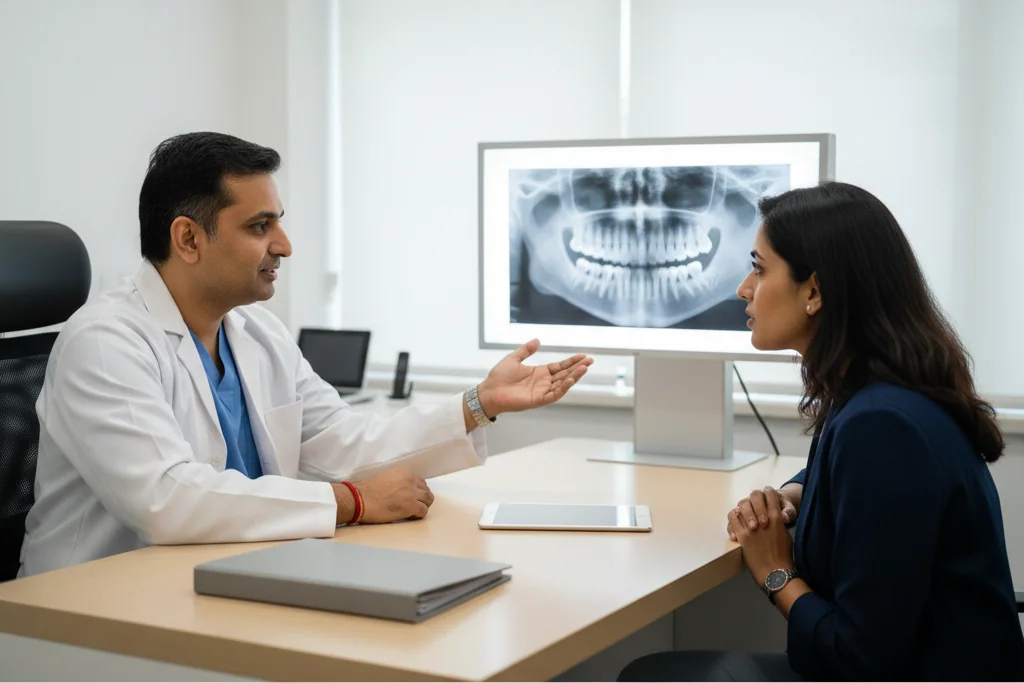
After taking your history, the doctor will perform a physical examination. They will gently press on the muscles of your face, neck, and head to check for tenderness or spasms. The doctor will place their fingers in front of your ears and ask you to open and close your mouth. This allows them to feel the joint movement and listen to the exact timing of the sounds.
During the physical exam, the doctor will also measure your jaw mobility. They will check how wide you can comfortably open your mouth and observe if your jaw pulls to one side. Furthermore, they will examine your teeth for signs of severe grinding, such as worn enamel or chipped edges.
To get a clear picture of your bones and tissues, the doctor may order specific imaging tests:
- Panoramic X-ray (OPG): This broad X-ray shows your entire mouth, including the teeth, jawbone, and joints. It helps rule out dental infections or obvious bone abnormalities.
- Magnetic Resonance Imaging (MRI): This scan provides detailed images of soft tissues. It allows the doctor to see if the cartilage disc has slipped out of place or torn.
- Computed Tomography (CT) scan: A CT scan offers a highly detailed, three-dimensional view of the bones, which helps identify arthritis or subtle fractures.
Depending on the findings, your care team might involve experts from different fields. You can explore the full range of diagnostic and treatment services on the Oral & Maxillofacial Surgery speciality page.
Treatment Options Based on the Cause
Once your doctor identifies the cause of your symptoms, they will create a customized treatment plan. Medical professionals always prefer to start with the most conservative, non-invasive treatments before considering surgery. The goal is to restore normal function and eliminate pain safely.
For most patients, conservative medical treatment provides excellent relief. If bruxism causes your symptoms, your doctor will likely prescribe a custom-made occlusal splint (night guard). You wear this hard acrylic device over your teeth while you sleep. It prevents your upper and lower teeth from grinding together, which relieves the pressure on your joint and allows the muscles to relax.
If muscle tension is the primary issue, your doctor may recommend specific medications. Short-term use of muscle relaxants can stop severe spasms in your facial muscles. Non-steroidal anti-inflammatory drugs (NSAIDs) help reduce swelling and pain inside the joint capsule. In some cases, doctors use targeted injections of pain-relieving medicine directly into the tight facial muscles to break the cycle of pain.
Physical therapy also plays a important role in recovery. A physical therapist can teach you specific exercises to stretch and strengthen your jaw muscles safely. They might also use ultrasound therapy or gentle massage to improve blood flow and speed up the healing process.
When conservative treatments do not resolve the issue, or if you have severe internal joint damage, surgery may become necessary. Modern surgical options range from simple, minimally invasive procedures to thorough joint reconstruction:
- Arthrocentesis: The surgeon inserts small needles into the joint space and flushes it with sterile fluid. This washes out inflammatory chemicals and helps unstick a trapped cartilage disc.
- Arthroscopy: The surgeon makes a tiny incision in front of the ear and inserts a small camera. They can then remove scar tissue or reposition the disc using miniature instruments.
- Open joint surgery: For severe arthritis or tumors, the surgeon must open the joint completely to repair or replace the damaged bone.
- Corrective jaw surgery: If a severe bite misalignment causes your joint problems, you might need surgery to realign your upper and lower jaws. You can read more about the different types of corrective jaw surgery and who needs it.
Recovering from jaw procedures requires patience and strict adherence to your doctor's instructions. If you undergo a major realignment, understanding the healing timeline is vital. You can find detailed information about the week-by-week recovery process for orthognathic surgery to help you prepare.
Home Care and First Aid
You can take several immediate steps at home to manage discomfort and prevent your symptoms from worsening. Good home care often resolves minor joint strain within a few weeks. These simple lifestyle adjustments protect your joint from unnecessary stress.
What you can do right now:
- Switch to a soft diet immediately. Eat foods like idli, upma, yogurt, mashed potatoes, and well-cooked lentils.
- Cut your food into very small, bite-sized pieces so you do not have to open your mouth wide.
- Apply moist heat to the sides of your face for 15 to 20 minutes, two or three times a day. Heat relaxes tight muscles and improves blood circulation.
- If you experience sudden, sharp pain after an injury, apply an ice pack wrapped in a towel for 10 minutes to reduce swelling.
- Practice gentle jaw rest. Keep your teeth slightly apart and rest your tongue lightly on the roof of your mouth behind your upper teeth.
What to avoid:
- Do not eat hard, crunchy, or chewy foods. Avoid raw carrots, tough meats, chewing gum, and hard Indian sweets like chikki.
- Stop chewing on non-food items like pens, pencils, or your fingernails.
- Avoid opening your mouth extremely wide. When you feel a yawn coming, place your fist under your chin to limit how far your jaw drops.
- Do not rest your chin on your hand while sitting at a desk, as this pushes the joint out of alignment.
- Avoid sleeping on your stomach, which forces your neck and jaw into an unnatural angle.
When home care isn't enough: Home remedies only manage mild symptoms and temporary muscle fatigue. If you diligently follow a soft diet and use heat therapy for two weeks without seeing any improvement, you must seek professional help. Continuing to rely on home care while your joint deteriorates can lead to permanent cartilage damage.
Why See a Specialist at THANC Hospital?
At THANC Hospital, our dedicated specialists possess extensive expertise in diagnosing the exact underlying cause of complex temporomandibular joint disorders. You will receive focused care guided by the deep clinical experience of Dr. M. Veerabahu, so your treatment plan is both effective and minimally invasive. If you are experiencing persistent facial pain or joint sounds, you can easily Book an Appointment to start your journey toward a comfortable, pain-free life.
Frequently Asked Questions
Why does my jaw click but it doesn't hurt?
A painless click usually happens when the small cartilage disc inside your joint temporarily slips out of place and pops back in when you open your mouth. This minor displacement is very common and often results from slight muscle tension or everyday wear. As long as you do not experience pain or restricted movement, this sound does not typically require medical treatment.
Can stress cause my jaw to pop?
Yes, stress is one of the leading causes of joint sounds and facial pain. When you feel stressed, you may unconsciously clench your jaw or grind your teeth, especially while you sleep. This constant pressure exhausts your facial muscles and pulls the joint out of its proper alignment, leading to noticeable popping noises.
Will TMJ clicking go away on its own?
In many cases, minor clicking caused by temporary muscle strain or a brief period of stress will resolve on its own within a few weeks. Resting your mouth, eating a soft diet, and applying warm compresses can speed up this natural healing process. However, if the sound persists for months or becomes painful, you will need a professional evaluation to prevent further damage.
Is it safe to crack my jaw on purpose?
No, you should never intentionally force your jaw to crack or pop. Forcing the joint to make a sound stretches the delicate ligaments that hold the cartilage disc in place. Over time, this habit creates permanent joint instability and can lead to chronic pain or a locked jaw.
Do I need surgery for a clicking jaw?
Most patients never need surgery for joint sounds. Doctors successfully treat the vast majority of cases using conservative methods like custom mouthguards, physical therapy, and muscle-relaxing medications. Surgery is only considered a last resort for severe cases involving advanced arthritis, tumors, or joints that remain permanently locked.
Can braces fix my popping jaw?
If a severe bite misalignment causes your joint issues, orthodontic treatment like braces can help align your teeth and reduce the strain on your muscles. However, braces are not a guaranteed cure for all joint problems. Your doctor must perform a thorough evaluation to determine if your specific bite issue is the actual root cause of the popping sound.
Learn more about Oral & Maxillofacial Surgery
View treatments, doctors & FAQs
Concerned about this condition?
Our specialists can help. Book a consultation today.
Book Consultation