
In this article
Jaw Pain — What Could It Mean?
Jaw pain can disrupt your entire day and severely impact your quality of life. It makes eating your favorite meals impossible, turns talking into a chore, and even makes sleeping difficult. Chronic pain in this area also takes a heavy psychological toll, causing frustration and anxiety. When you experience discomfort in your face or jaw, you naturally want to know exactly what is wrong and how to fix it quickly.
You might feel a dull, continuous ache, a sharp stabbing sensation that comes and goes, or a stiff, tight feeling that prevents you from opening your mouth fully. Sometimes, you might only experience a jaw ache one side of your face. This specific, localized symptom often points to a direct issue on that side, such as a dental infection, an impacted tooth, or a joint strain.
The jaw pain causes range from very common, easily treatable issues to much more complex medical conditions. Most of the time, the pain stems from your teeth, your gums, or the complex network of muscles that control your chewing. However, the pain can also originate directly from the temporomandibular joint—the important hinge connecting your lower jaw to your skull.
In rare but important cases, jaw discomfort can signal a serious health emergency, such as a heart attack, or an underlying pathology like a cyst or tumor. Understanding the root cause is the absolute first step toward finding lasting relief. You do not have to live with chronic facial pain, and a specialist can help you navigate the symptoms to find the right cure.
Common Causes of Jaw Pain
Dental Problems
Dental issues are the most frequent and direct culprits behind facial discomfort. If you have a jaw ache one side, a bad tooth is usually the very first thing a dental specialist or oral surgeon will look for.
- Tooth Decay and Cavities: Deep decay eats through the hard enamel and irritates the sensitive nerve inside your tooth. This intense nerve pain often radiates down deep into your jawbone, making it hard to pinpoint exactly which tooth hurts.
- Dental Abscess: An untreated cavity can easily lead to a severe bacterial infection. This infection creates a painful pocket of pus (an abscess) at the root tip of the tooth. An abscess causes intense, throbbing jaw pain, localized swelling, and sometimes a bad taste in your mouth.
- Impacted Wisdom Teeth: Your third molars (wisdom teeth) often lack enough space in the jaw to grow properly. They can become trapped or impacted under the gums. They might grow sideways, pushing aggressively against your other teeth. This pressure causes severe, radiating pain at the very back of your jaw.
- Gum Disease: Advanced gum disease (periodontitis) destroys the bone that supports your teeth. As the bone recedes, teeth become loose, leading to widespread aching and sensitivity in the lower face.
Temporomandibular Joint (TMJ) Disorders
Your temporomandibular joint (TMJ) acts like a complex sliding hinge that connects your jawbone to your skull. You have one joint on each side of your face, located just in front of your ears. Inside this joint sits a small, soft disc of cartilage that absorbs shocks and keeps the movement smooth. TMJ disorders occur when this disc slips out of place, or when the joint and surrounding muscles face severe injury or strain.
Studies published in the Indian Journal of Dental Research show that TMJ disorders are highly prevalent in India, affecting between 20% and 60% of the population. Symptoms often include a loud clicking, popping, or grating sound when you eat or yawn. You might also experience your jaw locking in an open or closed position, making it terrifying to move your mouth.
Bruxism (Teeth Grinding and Clenching)
Bruxism refers to the unconscious, forceful grinding or clenching of your teeth. Many people do this aggressively while they sleep, but it can also happen during the day when you feel stressed, angry, or intensely focused.
The constant, heavy pressure severely fatigues your jaw muscles and damages the delicate joint structures. Stress plays a massive role in triggering this condition. A recent study among IT professionals in Bangalore revealed that 59% of the participants experienced daytime teeth grinding, which researchers directly linked to high workplace stress and long hours. Over time, bruxism wears down your tooth enamel, causes teeth to crack, and leads to chronic, daily facial pain.
Oral Submucous Fibrosis (OSMF)
Oral Submucous Fibrosis (OSMF) is a chronic, progressive condition that severely restricts your ability to open your mouth. This condition represents a major health crisis in India due to the widespread, daily consumption of areca nut, gutkha, and pan masala.
Recent data shows the prevalence of OSMF in India has spiked to over 6.4% in certain regions where chewing these products is common. The harsh chemicals in these chewing products cause abnormal, rigid collagen bands to form inside the cheeks, lips, and throat. These bands make the soft tissues rigid and leathery. Patients initially experience a severe burning sensation when eating even mildly spicy food. As the disease progresses, it leads to a stiff jaw, chronic pain, and an inability to open the mouth wider than a few millimeters.
Sinus Infections
Your maxillary sinuses are large, air-filled cavities that sit just above your upper teeth and behind your cheekbones. When you develop a sinus infection (sinusitis), these cavities fill with thick fluid and become highly inflamed. The pressure from the congested sinuses pushes down heavily on the roots of your upper teeth. This pressure often feels exactly like a widespread toothache or a dull, heavy ache in your upper jaw, especially when you bend over.
Trigeminal Neuralgia
The trigeminal nerve is a major nerve that carries sensation from your face directly to your brain. Trigeminal neuralgia is a chronic, debilitating pain condition that affects this specific nerve. Even mild, everyday stimulation of your face—such as brushing your teeth, washing your face, putting on makeup, or feeling a light breeze—can trigger a jolt of excruciating pain. Patients often describe this sensation as a sudden electric shock or a burning flash on one side of the jaw or face.
Jaw Cysts and Tumors
Though less common, abnormal growths can develop deep in the jawbone or in the soft tissues of the mouth. Conditions like ameloblastoma (a rare, non-cancerous but aggressive tumor that begins in the jaw) or other odontogenic (tooth-related) tumors can expand silently over time. As these cysts or tumors grow larger, they destroy surrounding healthy bone, displace your teeth, and eventually cause significant jaw pain, facial asymmetry, and visible swelling.
Heart Attack
It might surprise you, but jaw pain can sometimes serve as a major warning sign of a heart attack. The nerves that supply the heart and the nerves that supply the jaw run very close together as they enter the brain. The brain can easily confuse these pain signals, causing you to feel the pain of a failing heart in your lower left jaw. This phenomenon is called referred pain. If your jaw discomfort comes on suddenly along with chest pressure, sweating, or shortness of breath, it is an absolute medical emergency.
When to See a Doctor
Most minor jaw strains, such as those caused by chewing a tough piece of meat or yawning too widely, resolve on their own within a few days. However, you must pay close attention to warning signs that indicate a much more serious underlying problem. Ignoring these critical signs can lead to permanent joint damage, severe spreading infections, or worsening of a dangerous condition.
You should schedule an appointment with an oral and maxillofacial surgeon within a week if you experience:
- Persistent, dull pain that lasts more than a few days without any sign of improvement.
- A loud clicking, popping, or grating sound that actively causes pain when you open or close your mouth.
- Difficulty chewing your normal food, swallowing, or speaking clearly.
- A noticeable, progressive decrease in how wide you can open your mouth (normal opening is about 35 to 45 millimeters, or three fingers wide).
- A recurring jaw ache one side that is severe enough to wake you up from a deep sleep.
Go to the emergency room immediately if you experience:
- Sudden, crushing pain in your lower left jaw accompanied by chest pain, heavy sweating, nausea, or shortness of breath (signs of a heart attack).
- Rapid, hot swelling in your lower face, jaw, or neck that makes it difficult to swallow your saliva or breathe normally (signs of a spreading space infection).
- A high fever alongside severe facial swelling and a foul taste in your mouth.
- A jaw that becomes completely locked open (dislocation) or locked closed, preventing you from moving it at all.
- Severe facial trauma, such as a heavy blow to the face from a fall or accident, resulting in heavy bleeding, numbness, or misaligned teeth.
What to Expect at Your Appointment
When you visit a specialist for facial pain, they will conduct a thorough, step-by-step investigation to pinpoint the exact cause. The doctor will focus heavily on your medical history, your daily habits, and a detailed physical examination of your head and neck.
Your doctor will start by asking you several specific questions. They will want to know exactly when the pain started, how long it lasts, and what specific actions make it feel better or worse. They will ask if you experience a jaw ache one side or if the pain moves around your face. The doctor will also ask about your lifestyle, including your daily stress levels, your sleep quality, and whether you have a history of chewing tobacco, gutkha, or pan masala.
Next, the specialist will perform a thorough physical examination. They will press gently on the various muscles of your face, neck, and shoulders to check for tight bands and tenderness. They will place their fingers directly in front of your ears and ask you to open and close your mouth to feel how the joint moves and to detect any clicking. The doctor will use a small ruler to measure exactly how wide you can open your mouth. They will also inspect your teeth closely for signs of severe wear from grinding, cracked enamel, or deep decay.
To see exactly what is happening beneath the gums and skin, your doctor will likely order specific imaging tests.
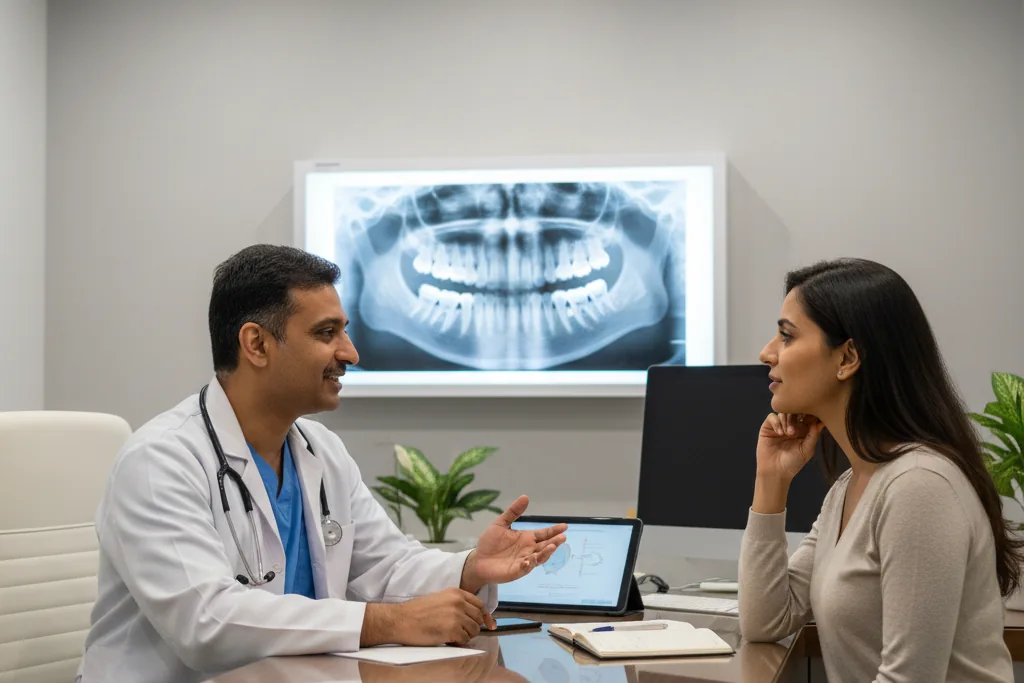
- OPG (Orthopantomogram): This is a specialized panoramic X-ray that provides a wide, flat view of your entire mouth. It shows all your upper and lower teeth, the entire jawbone, and the basic structure of the joints in one single image.
- CBCT (Cone Beam Computed Tomography): This advanced 3D scan gives a highly detailed, three-dimensional view of your facial bone structure. It helps the surgeon identify hidden cysts, complex tumors, impacted teeth, or subtle bone fractures that a regular X-ray might miss.
- MRI (Magnetic Resonance Imaging): If the doctor suspects a problem with the soft cartilage disc inside your TMJ, they may order an MRI. Unlike X-rays, an MRI allows the doctor to view the soft tissues, muscles, and the joint disc clearly to see if it has slipped out of place.
Treatment Options Based on the Cause
Your specific treatment plan will depend entirely on the exact jaw pain causes identified during your diagnostic consultation. Treatments range from simple lifestyle modifications and medications to advanced surgical procedures.
Dental Treatments
If a bad tooth or gum infection causes your pain, your dentist or oral surgeon will treat the source of the infection directly.
- Fillings or Root Canals: These procedures remove the decayed tissue, clean out the infected nerve, and save the natural tooth.
- Tooth Extraction: If a tooth is severely damaged beyond repair, or if you have painfully impacted wisdom teeth, the surgeon will carefully extract them under local anesthesia.
- Antibiotics: Your doctor will prescribe a course of antibiotics to clear up any severe bacterial abscesses or space infections before or after your dental work.
TMJ and Bruxism Management
For joint disorders and chronic teeth grinding, doctors almost always start with conservative, non-invasive treatments.
- Mouthguards (Splints): The doctor will create a custom-fitted hard plastic guard that you wear over your teeth at night. This splint prevents your upper and lower teeth from grinding together and relieves heavy pressure on the jaw joint.
- Medications: Prescription muscle relaxants can help stop severe, painful muscle spasms. Anti-inflammatory drugs (NSAIDs) help reduce joint swelling and manage daily pain.
- Stress Management: Since psychological stress directly drives bruxism, engaging in counseling, meditation, or targeted physical therapy can significantly reduce your grinding symptoms.
- Arthrocentesis: For a very stiff and painful joint that does not respond to medication, the surgeon can perform a minimally invasive procedure called arthrocentesis. They insert small needles directly into the joint space to wash out inflammatory fluids and inject lubricating medications like hyaluronic acid or steroids.
Treatment for Oral Submucous Fibrosis (OSMF)
Treating OSMF requires immediate, strict lifestyle changes combined with medical intervention to stop the disease from progressing.
- Habit Cessation: You must completely and permanently stop chewing areca nut, gutkha, pan masala, and all forms of smokeless tobacco.
- Injections: Doctors often inject a combination of corticosteroids and hyaluronidase directly into the stiff fibrous bands inside your mouth. This helps reduce chronic inflammation and slowly improves tissue flexibility.
- Surgical Release: In severe, advanced cases where you cannot open your mouth enough to eat solid food, an oral surgeon will surgically cut the tight fibrous bands. They will then reconstruct the inside of your cheeks using skin grafts or local tissue flaps to restore your mouth opening.
Advanced Surgical Options
When conservative methods fail completely, or when dealing with major structural issues, surgery becomes the necessary path to relief.
- Orthognathic Surgery: If severely misaligned jaws cause your joint pain and chewing difficulties, you may need corrective jaw surgery to realign the bones. You can learn more about the recovery process in our guide on orthognathic surgery recovery week by week.
- Bite Correction: Fixing an improper bite relieves chronic joint strain. Read more about your options in our article on underbite and overbite surgical and non-surgical correction.
- Total Joint Replacement: In extreme cases of severe arthritis, ankylosis (joint fusion), or joint destruction, the surgeon can completely remove the damaged bone and replace the TMJ with a custom-made artificial joint.
- Cyst and Tumor Removal: If a destructive cyst or a tumor like an ameloblastoma causes the pain, the surgeon will carefully remove the growth. They will then reconstruct the missing jawbone using bone grafts to restore your facial appearance and function. Learn more about these procedures in our post on corrective jaw surgery types and who needs it.
Home Care and First Aid
While you wait for your scheduled appointment with the specialist, you can take several practical steps at home to manage your discomfort. These home remedies focus heavily on resting the overworked joint and reducing muscle inflammation.
What you can do right now:
- Eat a Soft Diet: Switch immediately to foods that require minimal to no chewing. In India, options like soft khichdi, idli, well-cooked dal, yogurt, smoothies, and mashed potatoes are excellent choices that provide nutrition without straining your jaw.
- Apply Contrast Therapy: Apply an ice pack wrapped in a thin towel to the side of your face for 15 minutes to numb sharp, acute pain. Later in the day, apply a warm, moist towel to the same area to increase blood flow and relax tight, aching muscles.
- Practice Gentle Massage: Use your index and middle fingertips to gently rub the muscles directly in front of your ears and along the sides of your lower jaw. Use a slow, circular motion to release muscle tension.
- Improve Your Posture: Constantly looking down at your phone or laptop (often called text neck) severely strains your neck and jaw muscles. Make a conscious effort to keep your head up, your shoulders back, and your spine straight throughout the day.
What to avoid completely:
- Hard and Chewy Foods: Completely avoid eating sugarcane, tough meats, hard nuts, sticky chikki, raw carrots, and thick, hard rotis.
- Chewing Gum: Chewing gum forces your jaw muscles to work continuously without any rest, rapidly worsening the muscle strain and joint pain.
- Wide Yawning: Support your chin firmly with your hand when you feel a yawn coming. This prevents your mouth from opening too wide and overstretching the joint ligaments.
- Resting on Your Chin: Do not rest your chin on your hand while sitting at a desk or watching television. This common habit pushes the jaw joint out of its natural alignment and creates constant, uneven pressure.
Home care is only a temporary solution to help you manage the pain. If your discomfort persists for more than a few days despite following these measures, home care is no longer enough. You must seek professional medical evaluation to prevent long-term damage.
Why See a Specialist at THANC Hospital?
Finding the exact cause of complex facial pain requires specialized knowledge and extensive clinical experience. At THANC Hospital in Kilpauk, Chennai, our Oral and Maxillofacial Surgery department excels in diagnosing and treating the true root causes of jaw discomfort, rather than just masking the symptoms with painkillers.
Dr. M. Veerabahu has decades of focused expertise in managing everything from severe TMJ disorders and complex facial trauma to intricate jaw cysts, tumors, and orthognathic corrections. Whether you require conservative management for stress-induced bruxism or advanced surgical intervention like a total joint replacement, you will receive patient-focused care tailored to your specific needs.
Explore our Oral & Maxillofacial Surgery services, learn more about Dr. M. Veerabahu's expertise, or Book an Appointment today to start your journey toward a comfortable, pain-free life.
Frequently Asked Questions
Why do I have a jaw ache one side but my teeth are fine?
If your dentist has thoroughly checked your mouth and ruled out cavities and gum disease, a one-sided jaw ache usually points directly to a temporomandibular joint (TMJ) disorder or a severe muscle strain. You might be unconsciously grinding your teeth at night, or you may have a habit of chewing your food exclusively on only one side of your mouth. Nerve issues, like trigeminal neuralgia, can also cause severe, localized pain on just one side of the face without any dental issues being present.
Can stress really cause my jaw to hurt?
Yes, psychological stress is one of the leading jaw pain causes worldwide. When you feel anxious, overwhelmed, or stressed, you often unconsciously clench your jaw muscles or grind your teeth together (a condition known as bruxism). This constant, heavy muscle tension severely fatigues your facial muscles and inflames the delicate jaw joint, leading to chronic daily pain, stiff muscles, and frequent morning headaches.
How do I know if my jaw pain is from a heart attack?
Jaw pain related to a heart attack usually comes on very suddenly and is almost always located in the lower left jaw. Unlike typical dental or muscle pain, it will not hurt more when you press on your face, move your mouth, or chew food. You must seek emergency medical help immediately if this sudden jaw pain occurs alongside chest pressure, shortness of breath, dizziness, heavy sweating, or pain radiating down your left arm.
Will I need surgery for a clicking jaw?
Most people who experience a clicking or popping sound in their jaw do not require any form of surgery. If the clicking does not cause you any pain and does not stop you from opening your mouth fully, it may not need medical treatment at all. When treatment is necessary because of pain or locking, doctors usually start with custom mouthguards, physical therapy, and anti-inflammatory medications before ever considering surgical options.
Can chewing pan masala cause permanent jaw stiffness?
Yes, it absolutely can. Chewing pan masala, gutkha, and areca nut directly leads to a severe condition called Oral Submucous Fibrosis (OSMF). The harsh chemicals in these products cause rigid, unyielding scar tissue to form inside your mouth, permanently restricting your ability to open your jaws if left untreated. Quitting the chewing habit immediately and seeking prompt medical treatment is important to stop the progression of the disease.
What is the best sleeping position for jaw pain?
Sleeping flat on your back is generally the best position if you suffer from facial or joint pain. This position keeps all external pressure off your face and allows your head, neck, and jaw to rest in a natural, neutral alignment. Sleeping on your stomach or on your side pushes your jawbone to the side against the pillow, which strains the joint ligaments and often worsens the pain by morning.
Learn more about Oral & Maxillofacial Surgery
View treatments, doctors & FAQs
Concerned about this condition?
Our specialists can help. Book a consultation today.
Book Consultation