
In this article

What is Throat Cancer?
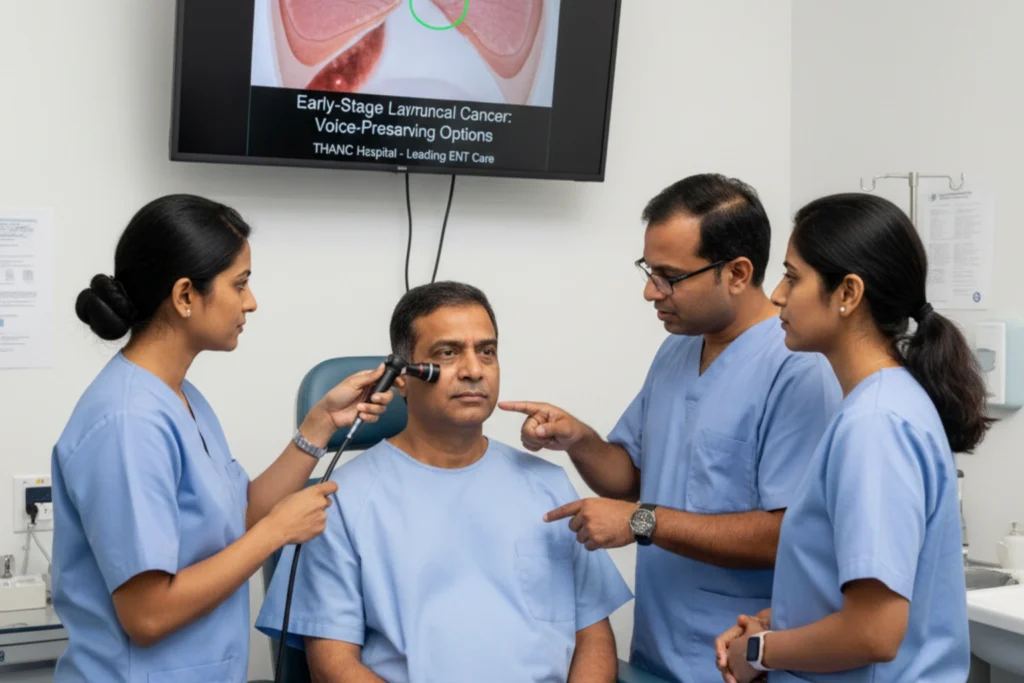
Throat cancer refers to the abnormal and uncontrolled growth of cells in your throat or voice box. Your throat, medically known as the pharynx, is a muscular tube that starts behind your nose and ends in your neck. Your voice box, or larynx, sits just below the throat and contains the vocal cords that allow you to speak. When cancer develops in these areas, it can severely impact your ability to breathe, swallow, and communicate.
Doctors generally divide this disease into two main categories: pharyngeal cancer and laryngeal cancer. Pharyngeal cancer affects the muscular tube of the throat. Laryngeal cancer specifically affects the voice box. These cancers usually begin in the flat, thin squamous cells that line the inside of your throat.
In India, head and neck cancers are a major public health concern. They account for nearly 30% of all cancer cases across the country. Every year, India reports approximately 80,000 new cases of throat cancer. Laryngeal cancer alone contributes to 3% to 6% of all cancers in Indian men. The incidence rates are particularly high in certain regions, with the northeastern states reporting some of the highest numbers in the country.
Historically, this disease primarily affected older men who had a long history of heavy smoking and alcohol use. However, the demographic is shifting. Doctors now see a rising number of cases in younger adults and women across India. This change highlights the urgent need for better public awareness, early detection, and prompt medical care. Understanding the disease is the first step toward protecting your health and seeking the right medical support.
Causes and Risk Factors
Cancer begins when the cells in your throat develop changes, or mutations, in their DNA. These mutations instruct the cells to grow rapidly and continue living long after healthy cells would naturally die. The accumulating abnormal cells form a tumor that can invade nearby tissues and spread to other parts of the body. While doctors do not always know what triggers these initial DNA changes, several specific risk factors significantly increase your chances of developing the disease.
In India, lifestyle habits and environmental exposures play a massive role in throat cancer development. The most common risk factors include:
- Tobacco use: This is the leading cause of throat cancer in India. Smoking cigarettes, bidis, or cigars exposes your throat to thousands of toxic chemicals. Chewing tobacco products like gutka, khaini, and paan directly bathes the throat lining in cancer-causing substances.
- Excessive alcohol consumption: Heavy drinking damages the protective lining of your throat. When you combine alcohol consumption with tobacco use, your risk of developing cancer multiplies dramatically.
- Human Papillomavirus (HPV): HPV is a common sexually transmitted virus. HPV-related throat cancer is rising rapidly among young Indians. The virus can embed in the throat lining and cause cellular changes that lead to cancer over time.
- Areca nut (Supari): Chewing supari, even when it does not contain tobacco, is a recognized risk factor for head and neck cancers.
- Dietary factors: A diet lacking in fresh fruits and vegetables deprives your body of essential protective antioxidants. Some Indian studies suggest that consuming a diet very high in spicy foods or non-vegetarian items may also contribute to the risk.
- Indoor air pollution: In many rural parts of India, cooking with biomass fuels like wood or cow dung in poorly ventilated spaces creates harmful smoke. Long-term exposure to this indoor air pollution increases the risk of respiratory diseases and throat cancer.
- Occupational hazards: Working in industries that expose you to asbestos, wood dust, or certain chemical fumes can increase your chances of developing the disease.

Signs and Symptoms
Patients often ignore the early warning signs of throat cancer because they mimic common, harmless conditions like a cold or a seasonal allergy. However, paying attention to your body and catching the disease early makes a massive difference in your recovery. The earlier you notice the signs, the more effective your medical care will be.
The early warning signs you might notice first include:
- A persistent sore throat that does not improve with standard medications or warm liquids.
- Hoarseness or a noticeable, raspy change in your voice.
- A constant need to clear your throat, even when you are not sick.
- A persistent cough that lingers for weeks.
- You can learn more about similar early warnings in our guide to oral cancer early signs and symptoms.
As the tumor grows and the disease progresses, the symptoms become much more serious and disruptive to your daily life. These advanced symptoms include:
- Difficulty swallowing (dysphagia) or sharp pain when you try to swallow food and liquids.
- A constant feeling that a lump or piece of food is permanently stuck in your throat.
- Unexplained weight loss because eating becomes too painful or difficult.
- Ear pain, which occurs because the nerves in your throat share pathways with the nerves in your ears.
- A visible, hard lump or swelling in your neck that does not go away.
- Coughing up blood or noticing blood-tinged saliva.
- Breathing difficulties or noisy, high-pitched breathing in advanced stages.
- If you notice sores in your mouth that accompany these symptoms, read about non-healing mouth ulcers and cancer warning signs.
See a doctor if: You should book an appointment with a specialist immediately if any of these symptoms last for more than three weeks. Do not wait for the symptoms to become unbearable or for a lump to grow larger. Early evaluation can save your life, prevent the need for extensive surgery, and help preserve your natural voice.
How is Throat Cancer Diagnosed?
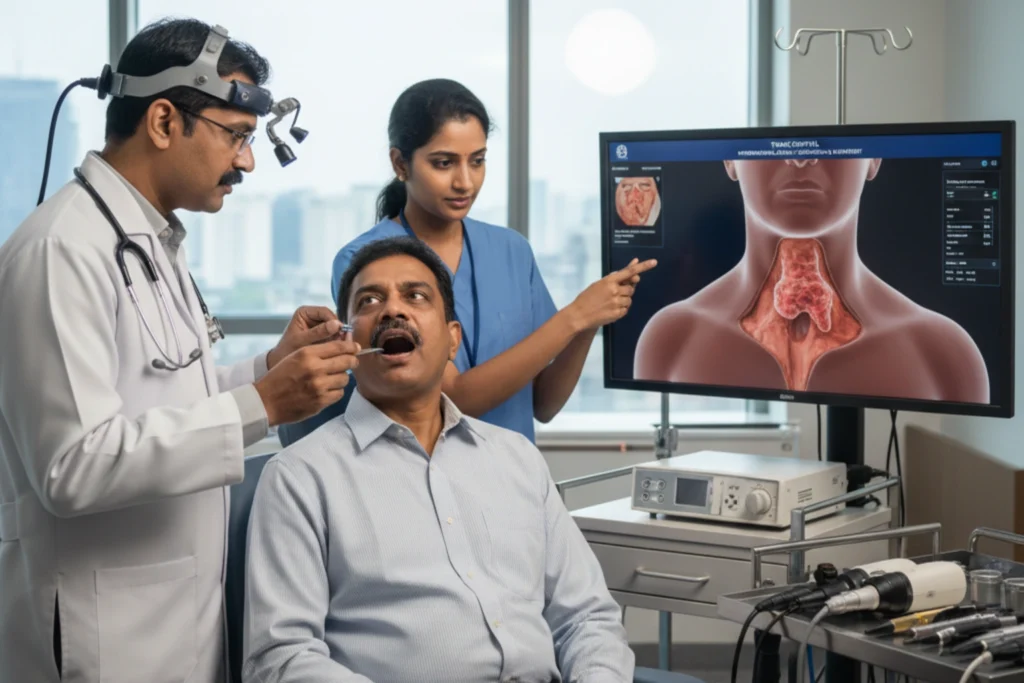
When you visit the hospital with concerns about your throat, your doctor will start by taking a detailed medical history. They will ask about your specific symptoms, how long you have had them, and your lifestyle habits, including tobacco and alcohol use. After gathering this information, the doctor will perform a thorough physical examination.
During the clinical examination, the doctor will gently feel your neck to check for swollen lymph nodes or unusual, hard lumps. They will also examine the inside of your mouth, tongue, and throat using a bright light and a small mirror. If you have concerns about other areas of your mouth, you can review our resources on tongue cancer diagnosis and surgery.
To get a much closer look at your throat and voice box, the doctor will perform a videolaryngoscopy. During this simple, routine outpatient procedure, the doctor inserts a thin, flexible tube with a tiny camera through your nose or mouth. This camera allows the medical team to view your throat and vocal cords on a high-definition screen in real-time. The procedure is quick and only causes mild discomfort.
If the doctor sees any suspicious tissue or abnormal growths during the scope, they will recommend a biopsy. A biopsy involves removing a small sample of the abnormal tissue so a pathologist can examine it under a microscope. This laboratory analysis is the only way to definitively confirm the presence of cancer cells.
Once cancer is confirmed, your medical team needs to determine the extent of the disease. Understanding the specific laryngeal cancer stages helps your doctor create the most effective and treatment plan. Staging involves advanced imaging tests available at THANC Hospital:
- CT scans provide detailed, cross-sectional images of your neck and chest to see the tumor's size.
- MRI scans offer highly clear pictures of the soft tissues in your throat and surrounding areas.
- PET scans help doctors see if the cancer has spread to your lymph nodes or other distant parts of your body.
Your doctor will explain the laryngeal cancer stages to you, which range from stage I (early, localized cancer) to stage IV (advanced cancer that has spread). At THANC Hospital, our team gives you remain comfortable and fully informed throughout the entire diagnostic evaluation.
Treatment Options
Your throat cancer treatment plan depends on several important factors. These include the exact location of the tumor, the specific stage of the cancer, your overall health, and your personal treatment goals. The primary objective of any treatment plan is to cure the cancer while preserving your ability to speak, breathe, and swallow normally.
Doctors usually consider conservative or medical management first, especially for early-stage cancers.
- Radiation therapy: This treatment uses high-energy beams, such as X-rays, to target and destroy cancer cells. For small, early-stage tumors, radiation therapy alone may be enough to eliminate the disease while saving your voice box.
- Chemotherapy: This involves using powerful medications to kill cancer cells throughout your body. Doctors frequently combine chemotherapy with radiation therapy to treat more advanced cancers effectively.
- Targeted therapy: These specialized drugs specifically attack the unique vulnerabilities present in cancer cells, stopping them from growing and dividing.
- Immunotherapy: This innovative treatment helps your body's own immune system recognize and fight the cancer cells more effectively.
When conservative measures are not enough, or if the tumor is large, surgical options become necessary. The type of surgery depends entirely on the tumor's size and location.
- Partial Laryngectomy: If the tumor is small and localized, the surgeon removes only the affected part of your voice box. This approach helps preserve your natural voice and normal breathing.
- Total Laryngectomy: For advanced cancers, the surgeon may need to remove your entire voice box to ensure all cancer is gone. After this procedure, you will breathe through a new, permanent opening in your neck called a stoma.
At THANC Hospital, we offer advanced throat cancer treatment options focused on organ preservation and faster recovery.
- Transoral Laser Microsurgery (TLM): The surgeon uses a precise laser directed through an endoscope to cut out the tumor. This minimally invasive approach leaves no external scars and protects healthy surrounding tissue.
- Transoral Robotic Surgery (TORS): This highly advanced technique allows the surgeon to remove tumors through the mouth using flexible robotic arms. TORS provides 3D visualization and extreme precision, leading to faster recovery times and better swallowing outcomes.
- Microvascular Reconstructive Surgery: When extensive surgery is unavoidable, our surgical team takes healthy tissue from another part of your body to rebuild your throat. This complex reconstruction helps you regain the ability to swallow and speak.
Living with Throat Cancer / Recovery and Outlook
Recovering from throat cancer requires time, patience, and a dedicated support system. Your journey does not end when the medical treatments finish; rehabilitation is a critical part of returning to your normal life.
Immediately after surgery or radiation, you may experience swelling, pain, and difficulty swallowing. You might need a temporary feeding tube to ensure you get enough nutrition and hydration while your throat heals. If you had a tracheostomy (a temporary breathing tube in your neck), your medical team will teach you and your family exactly how to care for it safely at home.
Rehabilitation is a major focus during your recovery phase. If your treatment affected your voice box, you will work closely with a specialized speech therapist. They will teach you new ways to speak, either by using a voice prosthesis, an electrolarynx device, or specific esophageal speech techniques. Swallowing therapists will also guide you through exercises to help you safely transition back to eating solid foods without choking.
You will need regular follow-up care for several years after your treatment ends. These appointments include physical exams, videolaryngoscopy, and imaging tests to monitor your healing and ensure the cancer has not returned. You must never skip these follow-up visits, as early detection of any recurrence is vital for long-term survival.
To improve your outlook and protect your body, you must make permanent lifestyle modifications. You must quit all forms of tobacco immediately and stop consuming alcohol. Eating a balanced diet rich in fresh fruits, vegetables, and lean proteins will help your tissues heal and boost your immune system.
Why Choose THANC Hospital for Throat Cancer?
At THANC Hospital, our Head & Neck Surgery department provides patient-centered care for all head and neck conditions under the expert guidance of Dr. Vidhyadharan S. As a pioneer in the field, Dr. Vidhyadharan led India's first TORS-assisted Total Laryngectomy and specializes in complex organ-preservation protocols. Our multidisciplinary team uses advanced surgical techniques and your rehabilitation plans to ensure you receive the most effective treatment while maintaining your quality of life. To discuss your symptoms or treatment options, please Book an Appointment with our specialists today.
Frequently Asked Questions
Can throat cancer be cured completely?
Yes, throat cancer is highly curable when doctors detect and treat it in its early stages. The success rate depends heavily on the tumor's location and how far it has spread. Even in advanced stages, modern treatments can successfully eliminate the cancer and extend your life.
Will I lose my voice if I have throat cancer surgery?
Not necessarily. Many early-stage cancers can be treated with radiation or minimally invasive laser surgery that preserves your natural voice. If the surgeon must remove your entire voice box, speech therapists will help you learn new ways to communicate using specialized devices.
How long does it take to recover from throat cancer treatment?
Recovery time varies based on the specific type of treatment you receive. Minimally invasive surgeries may require only a few weeks of recovery, while extensive surgery combined with radiation can take several months. Your medical team will guide you through a your rehabilitation plan to help you regain your strength safely.
Is chewing tobacco worse than smoking for throat cancer?
Both chewing tobacco and smoking are extremely dangerous and serve as primary causes of throat cancer in India. Chewing tobacco directly exposes the tissues of your mouth and throat to concentrated cancer-causing chemicals for long periods. Quitting all forms of tobacco is a key step you can take to protect your health.
What does a throat cancer lump feel like?
A cancerous lump in the neck usually feels hard, painless, and firmly attached to the surrounding tissue. Unlike swollen lymph nodes caused by a temporary infection, a cancer lump does not shrink or go away after a few weeks. If you notice any persistent swelling in your neck, you should have a doctor examine it immediately.
Can HPV cause throat cancer in men and women?
Yes, the Human Papillomavirus (HPV) can cause throat cancer in both men and women. The virus spreads through intimate skin-to-skin contact, including oral sex. HPV-related throat cancers are increasing rapidly among younger people, but they generally respond very well to medical treatment.
Learn more about Head & Neck Surgery
View treatments, doctors & FAQs
Concerned about this condition?
Our specialists can help. Book a consultation today.
Book Consultation