
Sleep Apnea Surgery — DISE-Guided Multilevel Airway Care
Experienced sleep team • DISE-guided planning • Multilevel solutions
About Sleep Apnea Surgery at THANC
Obstructive sleep apnea (OSA) is a chronic disorder characterised by recurrent episodes of upper airway collapse during sleep, leading to partial or complete cessation of breathing. This results in decreased oxygen saturation and fragmented sleep, impacting overall health and quality of life. The severity of OSA is often graded by the Apnea-Hypopnea Index (AHI), with an AHI of 5 to less than 15 events per hour indicating mild OSA, 15 to 30 indicating moderate OSA, and greater than 30 indicating severe OSA. While AHI is a primary diagnostic measure, other factors like oxygen desaturation index (ODI) and daytime symptoms are also crucial in assessing the physiological impact of OSA. Surgical intervention for OSA is typically considered when patients have moderate to severe disease and are unable to tolerate or adhere to CPAP therapy, or when significant anatomical obstructions are identified.
At THANC Hospital, our dedicated sleep and airway team, led by Dr. Vidhyadharan Sivakumar, approaches sleep apnea surgery with a deeply individualised methodology. We understand that OSA is a multi-level problem, and a 'one-size-fits-all' surgical solution is rarely effective. Our comprehensive evaluation includes a detailed clinical examination, polysomnography, and crucially, drug-induced sleep endoscopy (DISE) to dynamically visualise the exact sites and patterns of airway collapse during simulated sleep. This precise diagnostic information allows us to construct a tailored surgical plan, often combining procedures affecting the nasal airway, palate, tonsils, and tongue base, to achieve optimal and lasting improvement in your breathing and sleep quality.
References
- 1. Drug-Induced Sleep Endoscopy: Clinical Application and Surgical Outcomes - PMC — PubMed Central (PMC)
- 2. Obstructive Sleep Apnea - StatPearls - NCBI Bookshelf - NIH — National Center for Biotechnology Information (NCBI)
- 3. Referral of adults with obstructive sleep apnea for surgical consultation: an American Academy of Sleep Medicine clinical practice guideline - PMC — PubMed Central (PMC)
- 4. The perioperative implications of the patient with Obstructive Sleep Apnea (OSA) – a narrative review - PMC — PubMed Central (PMC)
- 5. Sleep apnea multi-level surgery trial: long-term observational outcomes - PubMed — PubMed
Who Needs Sleep Apnea Surgery?
You may be a candidate if you experience any of the following:
- Moderate to severe obstructive sleep apnea with CPAP intolerance
- Snoring and daytime sleepiness impacting work and driving safety
- Clear, surgically correctable upper airway obstruction
- Enlarged tonsils, palate or tongue base contributing to airway collapse
- Nasal airway block driving CPAP mask failure
- Selected paediatric cases with severe adenotonsillar obstruction and OSA
What to Expect
A clear step-by-step view of your treatment journey at THANC.
- 1
Sleep Evaluation
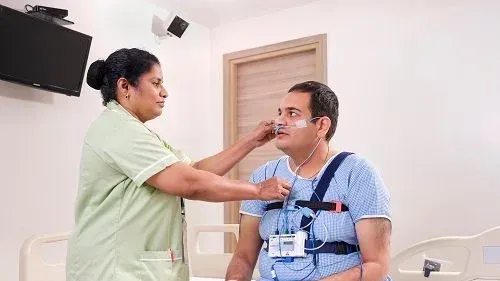
Your journey begins with a thorough sleep physician review and a comprehensive polysomnography (sleep study) to objectively measure the severity of your sleep apnea, including the Apnea-Hypopnea Index (AHI) and oxygen desaturation events. A detailed upper airway examination is then performed to identify potential anatomical obstructions. Where indicated, drug-induced sleep endoscopy (DISE) provides dynamic visualisation of the upper airway collapse patterns under controlled sleep conditions, offering crucial insights for surgical planning.
- 2
Tailored Surgical Plan
Based on the findings from your clinical examination, polysomnography, and DISE, our senior consultants will formulate a highly individualised surgical plan. This plan may involve a combination of procedures targeting specific areas of obstruction, such as nasal airway surgery (e.g., septoplasty, turbinate reduction) for improved airflow, palatal procedures (e.g., uvulopalatopharyngoplasty or palatal stiffening), tonsillectomy, or tongue-base reduction and hyoid suspension to address lower airway collapse. The aim is to create a stable, open airway during sleep.
- 3
The Procedure & Hospital Stay
Your surgery will be performed under general anaesthesia by our experienced senior surgeons. The duration varies depending on the complexity and number of procedures involved in your tailored plan. Most patients typically require a hospital stay of one to two nights. During this period, our dedicated nursing team will provide close monitoring of your airway and manage any post-operative pain to ensure your comfort and safety as initial swelling subsides.
- 4
Recovery & Sleep Study Review
Initial airway recovery, particularly from palatal and tonsil procedures, can take approximately two to three weeks, during which a soft diet and pain management are essential. A follow-up clinical review is scheduled around six weeks post-surgery to assess symptom improvement and overall recovery. A repeat polysomnography is typically conducted around three months after surgery to objectively confirm the functional improvement in your sleep apnea severity and guide any further management decisions with your sleep physician.
Why Choose THANC Hospital for Sleep Apnea Surgery?
At THANC Hospital, we are committed to providing highly specialised and patient-centric care for obstructive sleep apnea. Our approach to sleep apnea surgery is built upon a foundation of detailed diagnostic evaluation and customised treatment planning, ensuring that you receive the most appropriate and effective intervention for your specific condition. We prioritise patient safety and optimal outcomes through senior-led surgical expertise and transparent communication throughout your treatment journey.
- Senior consultants perform all procedures without independent trainees.
- DISE-guided planning ensures precise identification of collapse sites.
- Multilevel surgical solutions are tailored to your unique airway anatomy.
- Rigid nasal endoscopy with navigation enhances nasal airway procedures.
- Transparent written estimates detail all anticipated costs clearly.
- Our rates are consistently lower than prevailing Chennai market rates.
Frequently Asked Questions
When is surgery considered a suitable treatment for obstructive sleep apnea?
What is Drug-Induced Sleep Endoscopy (DISE) and why is it important?
How effective is multilevel sleep apnea surgery?
What are the potential risks or complications associated with sleep apnea surgery?
How long is the recovery period after sleep apnea surgery?
Will I still need to use CPAP after undergoing sleep apnea surgery?
When should I contact the hospital after my sleep apnea surgery?
Are there specific dietary restrictions after sleep apnea surgery?
Surgeons Who Perform Sleep Apnea Surgery


Related Sleep Apnea & Snoring Surgery
Related Reading
Patient guides and educational articles on related topics.
Medically reviewed by Dr. Vidhyadharan Sivakumar on 12 April 2026
MBBS, MS (ENT), DNB (ENT), MCh (Head & Neck), FEB – ORL HNS, Fellowship in Robotic Head & Neck Surgery (Adelaide), Mini-Fellowship in Sleep Surgery (Singapore)
Book a Consultation
Meet our sleep and airway team to plan a tailored, multilevel sleep apnea solution built around your anatomy.
Book a Consultation
Meet our senior surgeons to discuss Sleep Apnea Surgery for your case.
Book Appointment+91 73977 68795Part of the Sleep & Snoring Clinic Department
Explore our full range of services in this speciality.
Visit Sleep & Snoring ClinicSleep Apnea Surgery at THANC
- Senior consultants perform all procedures without independent trainees.
- DISE-guided planning ensures precise identification of collapse sites.
- Multilevel surgical solutions are tailored to your unique airway anatomy.
- Rigid nasal endoscopy with navigation enhances nasal airway procedures.