
Turbinate Reduction in Chennai — Relief From Chronic Nasal Block
Minimally invasive • Preserves normal function • Lasting airway relief
About Turbinate Reduction at THANC
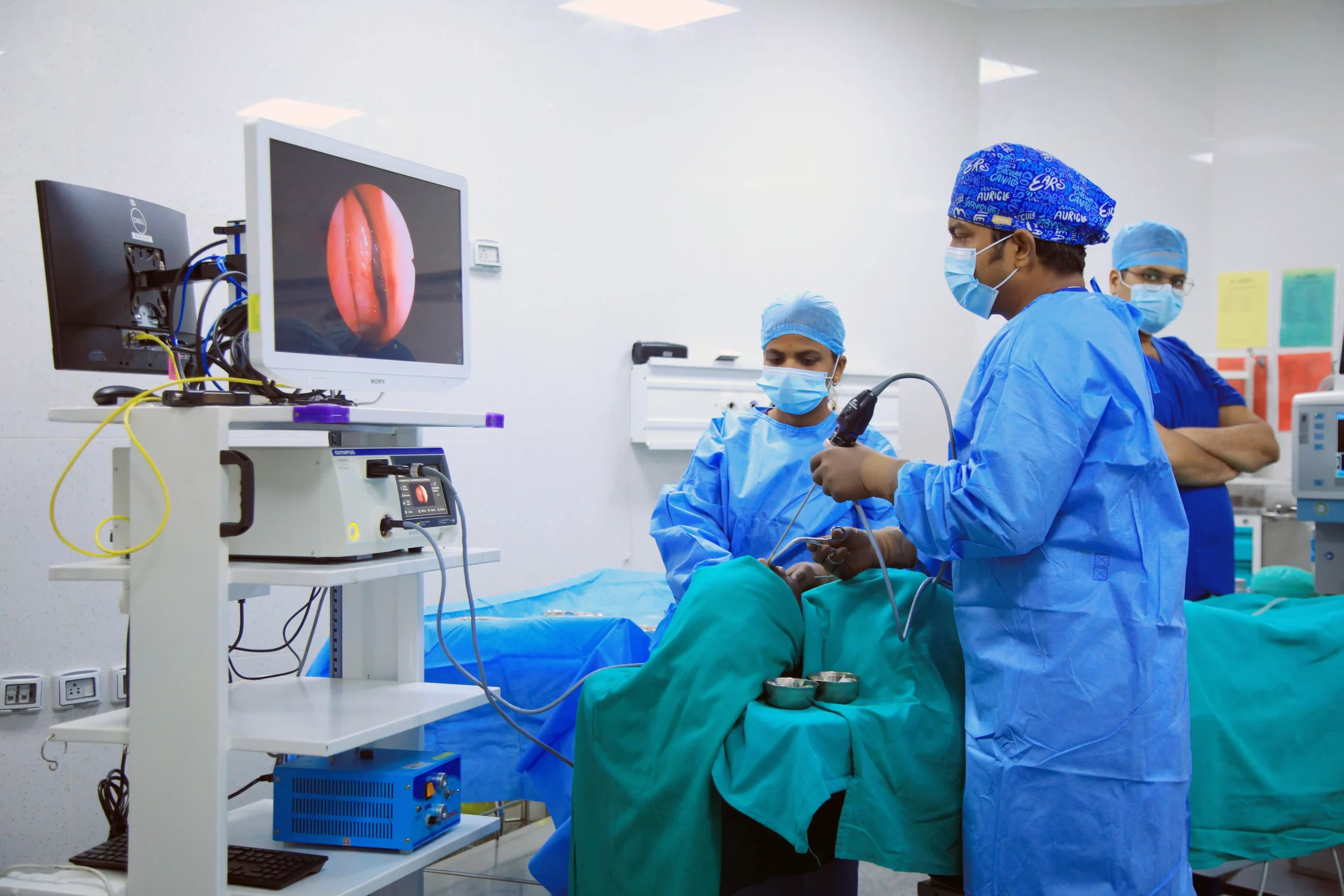
Turbinate reduction is a focused procedure to shrink the enlarged inferior turbinates that cause long-standing nasal blockage, mouth breathing and disturbed sleep. At THANC, our rhinology team uses endoscopic and radiofrequency techniques that reduce turbinate bulk while preserving the mucosal lining that warms, filters and humidifies the air you breathe. The surgery is typically done as a day-care procedure and often combined with septoplasty or sinus surgery when the airway problem has more than one cause.
Who Needs Turbinate Reduction?
You may be a candidate if you experience any of the following:
- Chronic nasal blockage not relieved by sprays or antihistamines
- Enlarged inferior turbinates on nasal endoscopy
- Mouth breathing, snoring or disturbed sleep from nasal obstruction
- Persistent congestion after allergic rhinitis treatment
- Patients also needing septoplasty where both issues contribute to blockage
- Failure of long-term medical therapy for chronic rhinitis
What to Expect
A clear step-by-step view of your treatment journey at THANC.
- 1
Rhinology Assessment
A detailed history, nasal endoscopy and — when needed — a CT scan of the sinuses map the exact source of blockage so we treat what is truly causing your symptoms, not everything at once.
- 2
The Procedure
Performed under general or local anaesthesia depending on extent. We use radiofrequency, submucosal resection or endoscopic techniques to reduce turbinate bulk while keeping the lining intact. No external incision is made.
- 3
Same-Day Recovery
Most patients go home the same day. There is mild nasal congestion and light discharge for a few days, controlled with saline washes and simple oral medication. No nasal packing is usually needed.
- 4
Healing & Follow-up
Airway improvement is noticeable within 1 to 2 weeks and continues to improve as the lining settles. A short endoscopic clean-up at clinic helps remove any crusts and confirm good healing.
The THANC Rhinology Advantage
THANC's rhinology team plans every nose and sinus case with rigid endoscopy and, where needed, image-guided navigation. Most procedures are day-care, with a clear recovery roadmap and a personalised estimate prepared after your consultation — at rates consistently lower than prevailing market rates in Chennai.
- Dedicated rhinology team led by senior ENT consultants
- Rigid nasal endoscopy and image-guided navigation in-house
- Day-care discharge for most nose and sinus procedures
- Low-packing techniques focused on patient comfort
- Post-op nasal rinse and follow-up protocol to protect the result
- Transparent, written estimate after consultation — no hidden charges
Frequently Asked Questions
Is turbinate reduction the same as septoplasty?
Will my sense of smell be affected?
How soon can I return to work after turbinate reduction?
Is the relief permanent?
Will THANC provide a personalised estimate for my case?
Surgeons Who Perform Turbinate Reduction

Related Nose & Sinus Procedures
Related Reading
Patient guides and educational articles on related topics.
Book a Consultation
Meet our rhinology team to understand the exact cause of your nasal block and plan focused, minimally invasive treatment.
Book a Consultation
Meet our senior surgeons to discuss Turbinate Reduction for your case.
Book Appointment+91 73977 68795Part of the Rhinology Department
Explore our full range of services in this speciality.
Visit RhinologyTurbinate Reduction at THANC
- Dedicated rhinology team led by senior ENT consultants
- Rigid nasal endoscopy and image-guided navigation in-house
- Day-care discharge for most nose and sinus procedures
- Low-packing techniques focused on patient comfort