
In this article

What is a Pituitary Tumor?
To understand this condition, you first need to know about the pituitary gland. This small, pea-sized organ sits in a bony hollow at the base of your brain, directly behind the bridge of your nose. Doctors often call it the "master gland" because it controls the hormone production of your entire body. It sends signals to your thyroid gland, adrenal glands, and reproductive organs to keep your body functioning smoothly.
A pituitary tumor is an abnormal growth of cells that develops within this master gland. The vast majority of these growths are benign, which means they are not cancer. Medical professionals usually refer to a benign tumor in this area as a pituitary adenoma. Because they are benign, these tumors do not spread to other organs or parts of your body. However, as they grow larger, they can cause significant health problems by pressing against nearby brain structures or by disrupting your body's delicate hormone balance.
Doctors classify these tumors into two main categories based on their physical size. Microadenomas are small tumors that measure less than one centimeter across. Macroadenomas are larger tumors that measure one centimeter or more. Larger tumors carry a higher risk of pressing on your optic nerves and causing physical symptoms.
Pituitary tumors are quite common. Medical data shows that they account for 10% to 15% of all primary brain tumors. In India, these tumors frequently affect adults between the ages of 30 and 60, though they can occur at any age. Research from Indian medical centers indicates a slight female preponderance, especially for tumors that affect reproductive hormones. Many people actually live with small, silent pituitary tumors without ever knowing it. Doctors often discover these silent tumors by accident when a patient undergoes a brain scan for an unrelated reason, such as a head injury or a migraine investigation.
Because the pituitary gland controls so many vital functions, a tumor here can create a wide ripple effect throughout your body. Some tumors actively produce excess hormones, flooding your system. Doctors call these "functioning tumors." Other tumors do not produce any hormones at all, and doctors call these "non-functioning tumors." Both types require careful medical evaluation to protect your long-term health, hormone balance, and vision.
Causes and Risk Factors
The exact cause of most pituitary tumors remains unknown to medical science. Researchers believe that spontaneous changes in a person's DNA trigger the cells in the pituitary gland to multiply out of control. These genetic mutations usually happen randomly during a person's lifetime. You do not typically inherit these spontaneous mutations from your parents, and you cannot pass them on to your children.
In a very small percentage of cases, pituitary tumors do run in families. Certain inherited genetic syndromes significantly increase the risk of developing a pituitary adenoma. These rare genetic conditions include:
- Multiple Endocrine Neoplasia type 1 (MEN1): A genetic disorder that causes tumors to form in multiple endocrine glands, including the pituitary, parathyroid, and pancreas.
- Carney complex: A rare genetic condition that causes various types of tumors, patchy skin coloring, and tumors in the pituitary gland.
- McCune-Albright syndrome: A genetic disease that affects bones, skin pigmentation, and hormone-producing tissues.
- Familial isolated pituitary adenoma (FIPA): A rare condition where pituitary tumors occur in multiple family members without the presence of other syndrome features.
Indian patients often ask their doctors if their diet, lifestyle, or tobacco use caused their brain tumor. Current medical research shows no direct link between tobacco use, specific Indian dietary habits, or occupational hazards and the development of pituitary tumors. Researchers continue to study environmental factors and stress, but they have not found concrete evidence linking them to tumor growth.
However, the Indian healthcare context presents a unique risk factor regarding disease progression and complications. In many parts of India, especially in rural or semi-urban areas, patients lack immediate access to advanced imaging facilities like MRI scanners. Furthermore, patients often dismiss early symptoms like fatigue, headaches, or irregular periods, attributing them to stress or climate changes. This delay in seeking specialized care means that Indian patients frequently present with much larger macroadenomas by the time they finally receive a proper diagnosis. A delayed diagnosis allows the tumor to grow larger, which increases the risk of permanent vision damage and makes surgical treatment much more complex.
Signs and Symptoms
The signs you experience depend entirely on the type of tumor you have, its size, and whether it produces hormones. Symptoms occur for two main reasons. First, a large tumor can physically press against your brain and optic nerves. Second, a functioning tumor can flood your body with too many hormones. Recognizing early pituitary tumor symptoms can help you get treatment before permanent nerve damage occurs.
When a non-functioning pituitary adenoma grows large, it creates a "mass effect" inside your skull. The tumor pushes upward against the optic chiasm, which is the crossing point of your optic nerves. This physical pressure causes specific warning signs:
- Frequent, severe headaches that do not respond to normal pain medications.
- Loss of peripheral vision, which might cause you to bump into doorways or objects on your sides.
- Blurred vision or sudden double vision.
- Unexplained extreme fatigue and physical weakness.
- Nausea and vomiting in severe cases.
Functioning tumors cause entirely different symptoms based on the specific hormone they overproduce. The most common functioning tumor is a prolactinoma, which makes too much prolactin. In women, this causes irregular menstrual periods, a complete loss of periods, and milky discharge from the breasts even when not pregnant. In men, excess prolactin causes erectile dysfunction, lowered sex drive, and decreased body and facial hair.
Some tumors produce excess growth hormone. In children, this causes gigantism, leading to rapid and excessive height. In adults, it causes a condition called acromegaly. Symptoms of acromegaly include:
- Enlarged hands and feet (you might notice your rings or shoes no longer fit).
- Changes in facial features, such as a protruding jaw, enlarged nose, or thickened lips.
- Severe joint pain and excessive sweating.
- Widely spaced teeth due to jawbone growth.
Tumors that produce adrenocorticotropic hormone (ACTH) cause Cushing's disease. This condition forces your adrenal glands to make too much cortisol, the body's stress hormone. You might notice rapid weight gain around your midsection, a rounded face, thinning skin that bruises easily, and purple stretch marks on your abdomen. Rarely, a tumor produces thyroid-stimulating hormone (TSH), causing an overactive thyroid. This leads to a rapid heartbeat, sudden weight loss, excessive sweating, and extreme nervousness.
You should see a doctor immediately if you experience sudden vision changes, a severe headache accompanied by vomiting, or unexplained changes in your facial features and body weight. These symptoms require prompt medical evaluation by a specialist.
How is a Pituitary Tumor Diagnosed?
Diagnosing a pituitary tumor requires a full team approach. When you visit the hospital, you will likely consult with an endocrinologist (a hormone specialist) and a skull base surgeon. The doctor will start by taking a detailed medical history. They will ask about your specific symptoms, your family medical history, and any recent changes in your vision, weight, or energy levels. The doctor will also perform a thorough physical examination to look for visible signs of hormone imbalance, such as skin changes or enlarged extremities.
To check how well your pituitary gland is working, your doctor will order specific blood and urine tests. These tests measure the exact levels of various hormones circulating in your body, such as prolactin, growth hormone, cortisol, and thyroid hormones. Sometimes, your doctor will perform dynamic hormone testing. For example, your doctor might give you a sugary drink and then measure your growth hormone levels over a few hours. A normal pituitary gland will stop producing growth hormone after a sugar load, but a tumor will continue to pump it out.
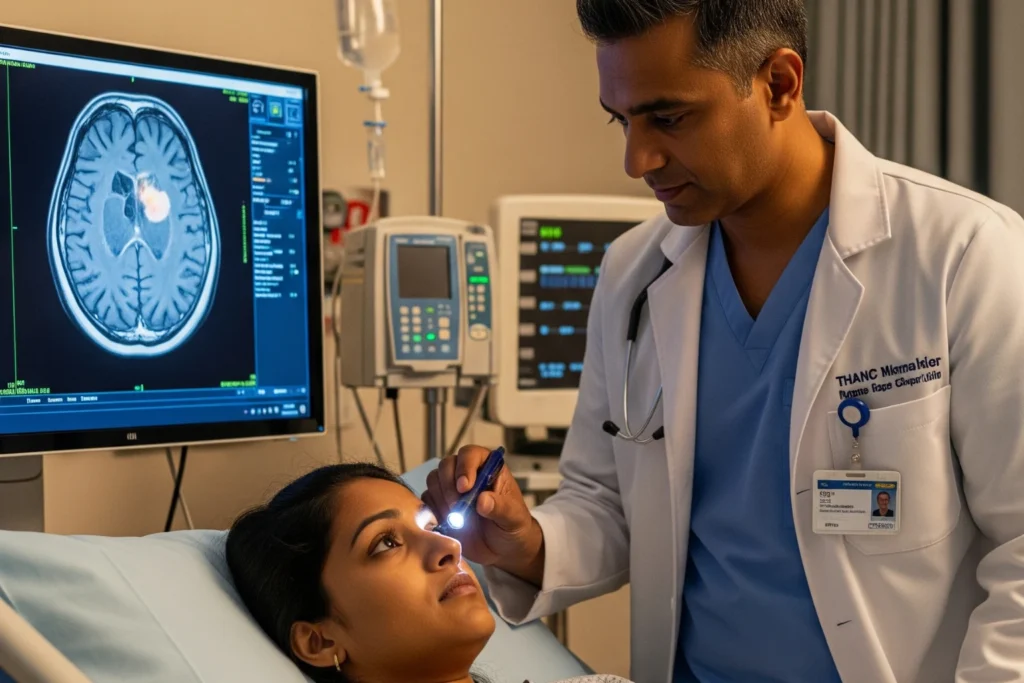
If your blood tests suggest a hormone problem, or if you report vision changes, your doctor will order advanced imaging tests. A Magnetic Resonance Imaging (MRI) scan of the brain is the most accurate way to detect a pituitary adenoma. The MRI machine uses powerful magnets and radio waves to create highly detailed pictures of your pituitary gland and the surrounding brain tissue. The technician will usually inject a special contrast dye into your vein to make the tumor show up clearly on the scan. In some cases, your doctor might also order a Computed Tomography (CT) scan to look at the bony structures around the tumor.
Because pituitary tumors sit directly below the optic nerves, your doctor will likely send you to an eye specialist for a visual field test. This test carefully checks your peripheral vision to see if the tumor is pressing on your optic nerves. You will look into a specialized machine and press a button every time you see a flash of light in your side vision.
At THANC Hospital, our specialists use a highly coordinated approach to diagnose your condition quickly and accurately. We combine advanced imaging techniques with thorough endocrine evaluations. This thorough diagnostic process so we understand the exact size, type, and physical impact of your tumor before we plan your targeted treatment.
Treatment Options
Your treatment plan depends heavily on the type of tumor, its size, how far it has grown, and your overall health. Because every patient presents a unique case, a multidisciplinary team of specialists will work together to create a personalized plan for you. The main goals of treatment are to safely remove or shrink the tumor, restore your normal hormone levels, and protect your vision from permanent damage.
If you have a small, non-functioning pituitary adenoma that does not cause any symptoms, you might not need immediate medical treatment. Your doctor may recommend a strategy called watchful waiting. During this observation period, you will undergo regular MRI scans and blood tests to monitor the tumor's size. If the tumor begins to grow or cause physical problems, your medical team will initiate active treatment.
For some functioning tumors, medications serve as the highly effective first line of treatment. Doctors often treat prolactinomas with specific drugs called dopamine agonists. These medications can successfully shrink the tumor and stop it from producing excess prolactin, often eliminating the need for surgery. For tumors that produce growth hormone, your doctor might prescribe somatostatin analogs to lower hormone levels and reduce the tumor size. You will take these medications as daily pills or periodic injections, and they often work very well to control the disease.
If your tumor presses on your optic nerves, or if medications fail to control the hormone levels, your doctor will recommend surgery. The most common and effective surgical method is the Endoscopic Endonasal Approach (EEA). During this minimally invasive procedure, an ENT skull base surgeon and a neurosurgeon work together. The surgeon inserts a thin, lighted tube called an endoscope through your nostril. The surgeon navigates through your nasal passages and opens the sphenoid sinus to reach the pituitary gland. This advanced technique allows the surgeon to remove the tumor without making any cuts on your face or opening your skull. You can learn more about this specialized technique on our Skull Base Surgery page.
Endoscopic surgery offers many significant benefits over traditional open brain surgery. Patients experience less pain, have no visible facial scarring, and enjoy a much faster recovery time. The high-definition camera gives the surgeon a clear, magnified view of the tumor and the surrounding delicate nerves. For more detailed information on how we manage these complex growths, you can read our guide on /blog/skull-base-tumors-symptoms-endoscopic-surgery.
If a tumor cannot be completely removed with surgery, or if it aggressively grows back, your doctor might recommend radiation therapy. This treatment uses high-energy X-rays to destroy the remaining tumor cells. Doctors often use a highly precise form of radiation called stereotactic radiosurgery. This technique delivers a large, targeted dose of radiation directly to the tumor while sparing the healthy brain tissue surrounding it.
Living with a Pituitary Tumor / Recovery and Outlook
Recovering from pituitary tumor surgery requires patience, rest, and careful medical follow-up. After an endoscopic procedure, you will typically stay in the hospital for two to three days. You might experience a mild headache, nasal congestion, and sinus pressure as your body begins to heal. Your care team will instruct you not to blow your nose, bend over, or lift heavy objects for several weeks. These strict precautions help your surgical site heal properly and prevent dangerous pressure build-up in your head.
A rare but serious complication after skull base surgery is a cerebrospinal fluid (CSF) leak. This happens if the fluid that surrounds and protects your brain leaks through the healing surgical site and drips out of your nose. If you notice a constant, clear, watery drip from your nose, or if you develop a sudden severe headache, you must contact your doctor immediately. You can find more detailed information about this condition and how we treat it in our article about /blog/csf-leak-nose-clear-fluid-dripping-repair.
Sometimes, the tumor itself or the surgical removal damages the normal, healthy parts of your pituitary gland. If this happens, your body might stop producing enough essential hormones. Your endocrinologist will prescribe hormone replacement therapy to keep your body functioning properly. You might need to take daily thyroid hormone pills, steroids, or sex hormones for the rest of your life. Taking your medications exactly as prescribed is vital for maintaining your long-term health, mood, and energy levels. Dealing with hormone fluctuations after surgery can affect your emotions, and it is completely normal to feel easily tired during the first few months of recovery.
Living with a pituitary adenoma requires lifelong medical monitoring. You will need regular follow-up appointments, routine blood tests, and periodic MRI scans to ensure the tumor does not return. Adopting a healthy lifestyle can significantly help you manage your recovery. Eat a balanced diet rich in whole grains, fresh vegetables, and lean proteins to support your immune system. Engage in light, doctor-approved exercise to maintain your physical strength and manage your weight. Always communicate openly with your medical team about any new symptoms or concerns you experience.
Why Choose THANC Hospital for Pituitary Tumors?
Treating complex skull base tumors requires highly specialized surgical skills and a deeply collaborative approach. At THANC Hospital in Kilpauk, Chennai, we offer patient-centered care for individuals with pituitary disorders. Our clinical director, Dr. Vidhyadharan S, specializes in Head & Neck Surgical Oncology and Skull Base Surgery. He specializes in minimally invasive endoscopic techniques that safely remove complex tumors while preserving your vital neurological function and overall quality of life.
We believe in a strong team-based approach to your healthcare. Dr. Vidhyadharan works closely with experienced neurosurgeons, endocrinologists, and radiologists to design a treatment plan tailored specifically to your unique medical needs. Our surgical team uses advanced navigation systems and high-definition endoscopy to ensure precise tumor removal with minimal recovery time. If you are experiencing symptoms or need an expert evaluation, please Book an Appointment with our specialists today to discuss your treatment options.
Frequently Asked Questions
Is a pituitary tumor considered brain cancer?
No. The vast majority of pituitary tumors are benign adenomas, meaning they are not cancer. They do not spread to other organs in your body, but they can cause serious health issues by pressing on nearby nerves or disrupting your normal hormone levels.
Can a pituitary adenoma be cured with medication alone?
Yes, in some specific cases. Doctors often successfully treat prolactinomas (tumors that secrete excess prolactin) using specific medications that shrink the tumor and normalize hormone levels. However, other types of functioning and non-functioning tumors usually require surgical removal.
Will I lose my vision if I have a pituitary tumor?
Vision loss is a serious risk if a large tumor presses upward against your optic nerves. Fortunately, if doctors diagnose and treat the tumor early, they can often prevent permanent vision damage and even restore lost peripheral vision shortly after surgery.
How long does it take to recover from endoscopic pituitary surgery?
Most patients spend two to three days recovering in the hospital after endoscopic surgery. You can generally return to light daily activities within a few weeks, but you must strictly avoid heavy lifting and strenuous exercise for at least four to six weeks.
Do pituitary tumors grow back after surgery?
While surgery successfully removes the tumor in most cases, there is a small chance it could grow back over time. This is exactly why your doctor will schedule regular follow-up MRI scans and hormone tests to monitor your health for years after your treatment.
Can stress cause a pituitary tumor to form?
No medical evidence links emotional or physical stress to the development of pituitary tumors. These tumors usually form due to random genetic mutations within the gland's cells, though high stress levels can certainly make managing your physical symptoms feel much more difficult.
Learn more about Skull Base Surgery
View treatments, doctors & FAQs
Concerned about this condition?
Our specialists can help. Book a consultation today.
Book Consultation
MBBS, MS (ENT), DNB (ENT), MCh (Head & Neck), FICRS, FEB – ORL HNS, ASOHNS
Clinical Director & Senior Consultant Surgeon