
In this article
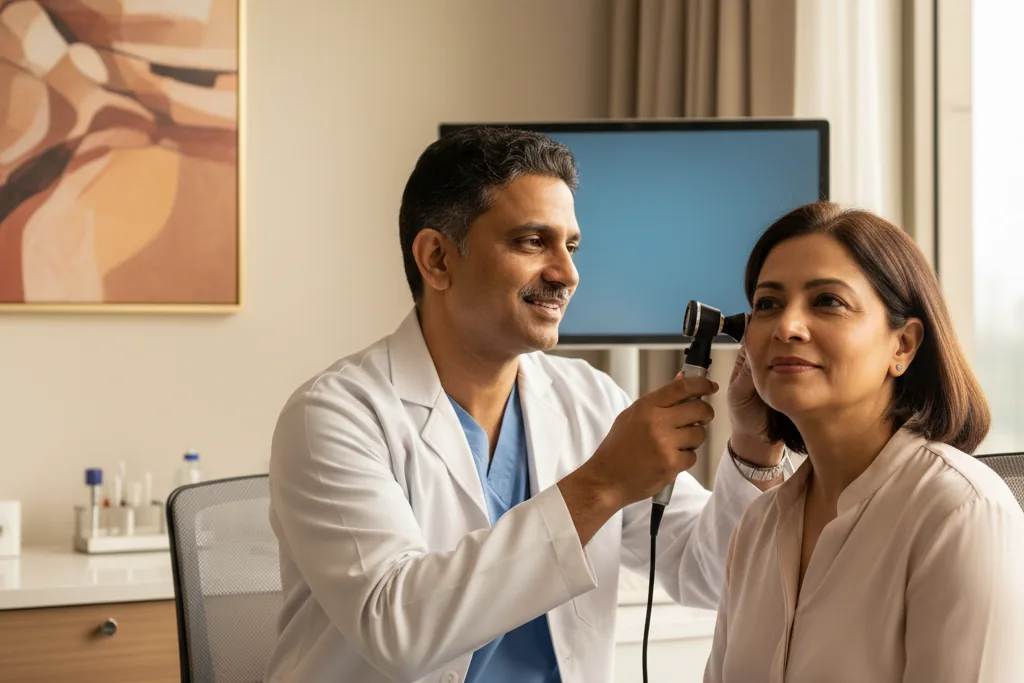
Hearing Aid Guide — What You Need to Know
The World Health Organization estimates that approximately 63 million people in India suffer from significant hearing impairment. Despite this high number, many people wait years before seeking help. This delay often happens due to social stigma, lack of awareness, or confusion about the available treatment options. Untreated hearing loss affects your ability to communicate, isolates you from loved ones, and increases the risk of cognitive decline as you age. In large Indian families where multiple conversations happen at once, struggling to hear can quickly lead to feeling left out of important family moments.
This guide matters because taking the first step toward better hearing can feel overwhelming. You might not know where to start, what devices are available, or how to select the right one for your specific needs. Education is the most powerful tool you have when navigating your healthcare journey. By understanding your options, you can make informed decisions that significantly improve your quality of life.
This guide is for:
- Older adults experiencing age-related hearing changes.
- Younger individuals dealing with noise-induced hearing damage from urban environments, loud traffic, or occupational hazards.
- Caregivers and family members helping a loved one navigate their hearing rehabilitation.
- Parents looking for information after reading about [/blog/newborn-hearing-screening-why-every-baby-needs-it](newborn hearing screening).
Understanding Hearing Aids
A hearing aid is a small electronic device that you wear in or behind your ear. It makes some sounds louder so that a person with hearing loss can listen, communicate, and participate more fully in daily activities. A hearing aid can help people hear more in both quiet and noisy situations. However, only a small percentage of people in India who would benefit from a hearing aid actually use one.
Every hearing aid consists of three basic parts: a microphone, an amplifier, and a receiver (speaker). The microphone receives sound from the environment and converts the sound waves into electrical signals. These signals go to the amplifier, which increases their power. Finally, the receiver sends these amplified sounds into your ear. Modern devices also include a highly advanced computer chip that processes the sound, distinguishing between background noise and human speech.
Understanding why you need these devices requires looking at how hearing loss affects the brain. When you have sensorineural hearing loss (damage to the inner ear or the nerve pathways to the brain), your brain stops receiving certain sound frequencies. Over time, the part of your brain responsible for processing sound can weaken. This condition is known as auditory deprivation. Wearing a hearing device stimulates the auditory nerve and keeps the hearing centers of your brain active and healthy.
It is also important to understand that hearing devices do not cure hearing loss. Unlike glasses that can restore vision to 20/20, hearing devices cannot restore normal hearing. Instead, they maximize your remaining hearing ability. They help you catch the high-pitched consonant sounds that make speech clear, reducing the mental fatigue that comes from constantly straining to understand conversations. Sometimes, hearing loss is accompanied by a ringing sensation in the ears. If you experience this, you can learn more about managing it in our guide on [/blog/tinnitus-ringing-ears-causes-treatment](tinnitus causes and treatment).
Step-by-Step Guide
The journey to better hearing involves several important steps. Following a structured approach gives you get the right device for your specific medical and lifestyle needs.
-
Get a Professional Hearing Assessment The first step in choosing hearing aid devices is a thorough evaluation by an audiologist. The specialist will look inside your ears to check for earwax blockage or infection. Then, you will undergo a pure-tone audiometry test in a soundproof booth. This test determines the exact frequencies and volumes you can and cannot hear. The audiologist will also perform speech testing to see how well you understand words at different volumes.
-
Learn About Different Hearing Aid Types Your audiologist will explain the various hearing aid types available. The right choice depends on your degree of hearing loss, ear anatomy, and manual dexterity. Comparing hearing aid types can feel overwhelming, but the main styles include:
- Behind-The-Ear (BTE): These devices rest behind the ear and connect to a custom earpiece inside the ear canal via a clear tube. They are durable, easy to handle, and suitable for almost all degrees of hearing loss. They are often the best choice for children.
- Receiver-In-Canal (RIC): Similar to BTEs, but the speaker sits directly inside the ear canal, connected to the main unit by a tiny wire. This design leaves the ear canal partially open, providing a very natural sound quality.
- In-The-Ear (ITE): These custom-made devices fill the outer portion of the ear. They are larger than other custom styles, making them easier to insert and adjust. They can accommodate larger batteries and more features, like volume control wheels.
- In-The-Canal (ITC): These sit in the lower portion of the outer ear bowl. They are less visible than ITEs but still large enough to include features like directional microphones.
- Completely-In-the-Canal (CIC): These tiny devices fit deeply inside the ear canal and are nearly invisible. They use very small batteries and are best for mild to moderate hearing loss.
- Invisible-In-the-Canal (IIC): These are the smallest custom devices available. They sit deep in the ear canal, past the second bend, making them completely invisible from the outside.
-
Evaluate Your Lifestyle Needs When choosing hearing aid technology, you must consider your daily activities. If you spend most of your time at home in quiet environments, basic technology might serve you perfectly well. However, if you frequently attend social gatherings, work in a busy office, or navigate noisy Indian city streets, you will need advanced noise-reduction features. Discuss your typical week with your audiologist so they can match the technology level to your lifestyle.
-
Consider Additional Features Modern devices offer many features that enhance the listening experience. Another important factor in choosing hearing aid models is deciding which of these add-ons will benefit your daily life:
- Rechargeable batteries: These eliminate the need to buy and change tiny batteries every few days.
- Bluetooth connectivity: This allows you to stream phone calls, music, and television audio directly into your ears.
- Directional microphones: These help you focus on the person speaking in front of you while reducing background noise from behind.
- Telecoils: These connect to public sound systems in places like theaters, places of worship, and airports.
- The Fitting and Programming Session Once you select your device, the audiologist will program it based on your specific hearing test results. They will use a technique called real-ear measurement (REM). During REM, the audiologist places a tiny microphone in your ear canal alongside the hearing device. This supports the device delivers the exact amount of amplification your prescription requires. They will also teach you how to insert, remove, clean, and store your new devices.
What to Expect
Adjusting to new hearing devices takes time, patience, and practice. Unlike putting on a pair of glasses, your brain needs time to relearn how to process sounds it has not heard in years. Understanding the acclimatization timeline helps you stay committed to the process.
During the first week, everything will sound different. Your own voice might sound loud or hollow, similar to how you sound when talking into a barrel. This is called the occlusion effect. You will also hear background noises that you forgot existed, such as the hum of the ceiling fan, the ticking of a clock, or the rustling of your clothes. These sounds might seem overwhelmingly loud at first. This happens because your brain has forgotten how to filter out unimportant background noise.
In the second to fourth weeks, your brain will start to adapt. The background noises will fade into the background where they belong. Your own voice will begin to sound more natural. You will notice that conversations require less effort, and you do not have to ask people to repeat themselves as often. During this phase, you should start wearing your devices in slightly more challenging environments, like the grocery store or a quiet cafe.
By the second or third month, wearing the devices will become a natural part of your daily routine. You will likely forget you are wearing them most of the time. However, you might still face challenges in very noisy environments with poor acoustics. This is completely normal. Even people with perfect hearing struggle in loud, echoing rooms.
Common challenges during the adjustment period include physical discomfort and feedback. Your ear canal might feel slightly tender during the first few days as it gets used to having an object inside it. If the device causes actual pain or creates a sore spot, you must return to your audiologist for a physical adjustment. You might also experience occasional whistling, known as feedback, when you hug someone or put on a hat. If the whistling happens constantly, your audiologist needs to adjust the fit or the programming.
Tips for Better Outcomes
Achieving the best possible results requires more than just wearing the devices. You must actively participate in your hearing rehabilitation and take good care of your equipment.
Proper maintenance is important, especially in India. The hot and humid climate in cities like Chennai can damage the delicate electronic components inside your devices. Moisture, dust, and earwax are the biggest enemies of hearing technology.
- Wipe your devices every night with a clean, dry cloth.
- Use a small brush to gently remove any visible earwax from the microphone ports and the speaker area.
- Store your devices in a dehumidifier or a dry box every night. This draws out the moisture accumulated from sweat and humidity during the day.
- Open the battery doors at night if your devices use disposable batteries. This allows air to circulate and preserves battery life.
Establish a consistent wearing schedule. You should wear your devices for all your waking hours, aiming for at least 10 to 12 hours a day. Do not just wear them when you think you need them. Your brain needs constant auditory stimulation to adapt to the new sounds. If you only wear them occasionally, your brain will never fully adjust, and the devices will always sound unnatural.
Practice active communication strategies. Hearing devices are aids, not cures. You still need to use good communication habits.
- Face the person you are speaking with so you can see their facial expressions and lip movements.
- Ensure the room is well-lit.
- Turn down the television or radio when having a conversation.
- Ask your family members to get your attention before they start speaking to you.
- Do not try to have conversations from different rooms.
Protect your devices from damage.
- Never wear your devices in the shower, swimming pool, or heavy rain during the monsoon season.
- Remove them before applying hairspray, perfume, or shaving lotion, as the chemicals can clog the microphones.
- Keep them out of reach of children and pets. Dogs are particularly attracted to the scent of earwax and will chew on the devices if left unattended.
- Store them in a protective case whenever they are not in your ears. Never put them loose in your pocket or purse.
If you are a parent managing a child's hearing health, consistent use is even more critical for their language development. You can read more about how hearing impacts development in our article on [/blog/speech-delay-children-hearing-problem](speech delay in children).
When to Seek Medical Help
While audiologists manage the fitting and programming of your devices, certain symptoms require immediate medical attention from an Ear, Nose, and Throat (ENT) specialist. You must know the difference between a simple device issue and a medical emergency.
Seek immediate medical help if you experience sudden sensorineural hearing loss. If your hearing drops dramatically in one or both ears over a period of a few hours or days, this is a medical emergency. Do not assume your device is simply broken. Prompt medical treatment with steroids can sometimes reverse sudden hearing loss, but the window for successful treatment is very short.
You should also consult an ENT doctor if you develop any of the following symptoms:
- Active fluid drainage, pus, or bleeding from your ear canal.
- Severe ear pain that does not go away when you remove the device.
- A feeling of fullness or pressure in your ear that persists.
- Sudden onset of severe dizziness or a spinning sensation.
- Asymmetrical hearing loss, where hearing is significantly worse in one ear than the other.
If your self-management of the devices isn't working, return to your audiologist. Do not try to repair the devices yourself. If the volume seems too low even after changing the wax filter, or if the device sounds distorted or crackly, it needs professional servicing. If the custom earpiece feels loose or falls out when you chew, the audiologist needs to take a new impression of your ear.
Expert Care at THANC Hospital
The Audiology & Speech Language Pathology department at THANC Hospital provides full hearing evaluations and your rehabilitation plans. Dr. A. Sudha uses advanced diagnostic tools to accurately assess your hearing profile and guide you through the entire process of selecting and fitting the ideal device. To start your journey toward better hearing, you can easily Book an Appointment with our specialized team.
Frequently Asked Questions
How long do hearing aids last?
Most modern devices last between five to seven years with proper care and maintenance. The lifespan depends on how well you clean them, the humidity of your environment, and how often you use them. Over time, the internal electronic components naturally degrade, and your hearing prescription may change enough to require new technology.
Can I just buy a hearing aid online without a test?
You should avoid buying over-the-counter devices online without a professional assessment. A proper hearing test supports the device is programmed exactly to your specific hearing loss frequencies. Without professional fitting, an incorrectly programmed device can either provide no benefit or deliver sounds too loudly, which can cause further damage to your ears.
Will wearing a hearing aid restore my hearing to normal?
No, these devices cannot cure hearing loss or restore your hearing to normal levels. They are designed to amplify specific sounds you are missing and make communication much easier. While they significantly improve your ability to hear and understand speech, they do not repair the damaged hair cells in your inner ear.
Why do my hearing aids whistle sometimes?
Occasional whistling, known as feedback, happens when amplified sound leaks out of your ear canal and re-enters the microphone. This can occur when you hug someone, put on a hat, or chew food. However, if the whistling happens constantly, it usually means the device is not sitting correctly in your ear, or you have a buildup of earwax blocking the sound.
How many hours a day should I wear my hearing aids?
You should wear your devices for all your waking hours, which typically means 10 to 12 hours a day. Consistent daily use is the only way your brain can adapt to processing the new sounds. You should only remove them when sleeping, showering, swimming, or applying hair products.
Is it necessary to wear two devices if I have hearing loss in both ears?
Yes, if you have hearing loss in both ears, wearing two devices is highly recommended. Your brain relies on input from both ears to determine where sounds are coming from and to separate speech from background noise. Wearing only one device when you need two forces your brain to work much harder and provides an unbalanced listening experience.
Learn more about Audiology & Speech Language Pathology
View treatments, doctors & FAQs
Concerned about this condition?
Our specialists can help. Book a consultation today.
Book Consultation