
In this article
What is Goiter?
A goiter is an abnormal enlargement of the thyroid gland. Your thyroid is a small, butterfly-shaped organ located at the base of your neck, resting just below your Adam's apple. This vital gland produces hormones that control your metabolism, which is the process your body uses to transform the food you eat into energy. Thyroid hormones regulate almost every major system in your body, including your heart rate, body temperature, digestion, and even your mood. When this gland grows too large, it creates a highly visible thyroid swelling in neck.
Having an enlarged thyroid does not automatically mean your gland is malfunctioning. A goiter can occur in a thyroid gland that produces too much hormone, a condition known as hyperthyroidism. It can also occur in a gland that produces too little hormone, known as hypothyroidism. In many cases, the gland continues to produce the exact correct amount of hormone, which doctors call euthyroidism. The swelling simply indicates that the physical tissue of the gland is growing abnormally due to an underlying trigger.
Thyroid disorders are incredibly common in India, affecting an estimated 42 million people nationwide. Goiter is one of the most frequent physical signs that prompt patients to seek medical care. While anyone at any age can develop this condition, it is significantly more common in women than in men. Women are about four to five times more likely to experience thyroid issues during their lifetime. Your risk also increases as you age, particularly after menopause, or during periods of significant hormonal fluctuation such as pregnancy.
Understanding the nature of your thyroid enlargement is the first step toward recovery. Whether your swelling is barely noticeable or large enough to cause discomfort, modern medicine offers highly effective solutions. With proper medical evaluation, you can identify the root cause of the enlargement and find a treatment plan that restores your health and comfort.
Causes and Risk Factors
Why does the thyroid gland enlarge? The gland grows in response to various stressors, deficiencies, or immune system errors. Understanding the specific cause is essential for determining the correct approach to care.
Here are the most common causes of an enlarged thyroid:
- Iodine deficiency: Your thyroid requires the mineral iodine to manufacture its hormones. When your diet lacks this essential nutrient, the gland works extra hard to capture whatever iodine is available, causing the tissue to swell. Historically, this was the leading cause of thyroid enlargement worldwide.
- Hashimoto's thyroiditis: This is an autoimmune condition where your immune system mistakenly attacks your own thyroid tissue. The ongoing damage causes the gland to underproduce hormones. In response, your brain releases more Thyroid Stimulating Hormone (TSH) to force the thyroid to work harder, leading to significant enlargement.
- Graves' disease: This is another autoimmune disorder, but it has the opposite effect. Your immune system produces an antibody that mimics TSH, overstimulating the thyroid to produce massive amounts of hormone. This constant, unnatural stimulation causes the gland to swell rapidly.
- Multinodular goiter: In this condition, multiple distinct lumps called nodules develop within both sides of your thyroid gland. These nodules can be solid tissue or filled with fluid. As these nodules multiply and grow, they result in an overall enlargement of the entire gland.
- Solitary thyroid nodules: Sometimes, a single, isolated nodule grows in one specific part of the gland. Most of these solitary nodules are non-cancerous (benign), but they can still grow large enough to cause a noticeable lump in your neck.
- Thyroid cancer: While relatively rare compared to benign nodules, cancer can cause swelling in the thyroid gland. A rapidly growing, hard lump requires immediate medical evaluation to rule out malignancy.
- Pregnancy: During pregnancy, your body produces a hormone called Human Chorionic Gonadotropin (HCG). High levels of HCG can mildly stimulate the thyroid, causing it to enlarge slightly during your gestational period.
- Certain medications: Long-term use of specific prescription drugs, such as lithium (used for psychiatric conditions) or amiodarone (used for heart rhythm disorders), can interfere with thyroid function and trigger gland enlargement.
India-specific risk factors play a major role in how this condition develops:
- Geography and Soil: Historically, the sub-Himalayan belt was known as the "goiter belt" because the soil in this region is severely depleted of iodine. Consequently, the crops grown there lack this vital mineral. Today, despite the success of the National Iodine Deficiency Disorders Control Programme, cases still occur across all regions of India due to varying dietary habits.
- Dietary habits: Certain foods contain natural substances called goitrogens, which can interfere with your thyroid's ability to process iodine. Common Indian vegetables like cabbage, cauliflower, broccoli, and radish contain high levels of these compounds. However, you would need to eat massive quantities of these vegetables raw to cause a problem. Normal cooking processes easily destroy goitrogens, making these foods perfectly safe.
- Tobacco use: Smoking or chewing tobacco exposes your body to thiocyanate, a toxic chemical that directly blocks your thyroid from absorbing iodine. Given the high rates of tobacco consumption in many parts of India, this remains a significant, preventable risk factor.
- Family history: Genetics play a powerful role in thyroid health. If your parents or siblings have a history of autoimmune thyroid disease or nodules, your personal risk of developing an enlarged thyroid increases substantially.
Signs and Symptoms
Not all enlarged thyroids cause immediate symptoms. Small goiters might only be discovered accidentally during a routine physical exam or when you undergo an imaging test for a completely different health issue. However, as the gland continues to grow, you will eventually start to notice physical changes in your neck and throat.
Early warning signs patients usually notice first:
- A visible thyroid swelling in neck, which might become particularly obvious when you tilt your head back to shave or apply makeup.
- A persistent feeling of tightness, fullness, or pressure in the lower front of your throat.
- Mild hoarseness or a scratchy quality to your voice that does not go away.
- An occasional, dry cough that occurs without any signs of a cold or respiratory infection.
When symptoms progress and become serious:
As the goiter grows larger, it runs out of room in your lower neck. It begins to press against the critical surrounding structures, including your windpipe (trachea) and your swallowing tube (esophagus). This physical compression leads to much more severe and uncomfortable symptoms.
- Difficulty swallowing (dysphagia): You might feel like solid food or large pills are getting stuck in your throat.
- Difficulty breathing (dyspnea): This breathing trouble often worsens when you lie flat on your back or when you engage in physical exertion.
- A high-pitched, squeaking sound when you breathe in, known medically as stridor.
- Significant, noticeable changes in your voice due to the enlarged gland pressing directly against your vocal cords.
Hormonal symptoms to watch for:
If your goiter is linked to an overactive or underactive thyroid, you will experience additional symptoms related to your metabolism.
- Overactive thyroid (hyperthyroidism) symptoms include unexplained weight loss despite a normal appetite, a rapid or pounding heartbeat, excessive sweating, severe anxiety, heat intolerance, and hand tremors.
- Underactive thyroid (hypothyroidism) symptoms include unexplained weight gain, extreme daily fatigue, dry and flaky skin, chronic constipation, heavy menstrual periods, and feeling cold even in warm weather.
See a doctor immediately if...
You should seek prompt medical attention if you experience the sudden, rapid growth of a lump in your neck. Severe difficulty breathing or a sudden inability to swallow food requires urgent emergency care. Do not ignore a persistent change in your voice or a neck lump that feels rock-hard and fixed firmly in place, as these can be warning signs of a more serious condition.
How is Goiter Diagnosed?
Proper diagnosis is the critical first step toward effective goiter treatment. The medical evaluation process helps your doctor determine the exact size of the gland, the underlying cause of the enlargement, and whether the condition is disrupting your hormone levels.
Clinical examination:
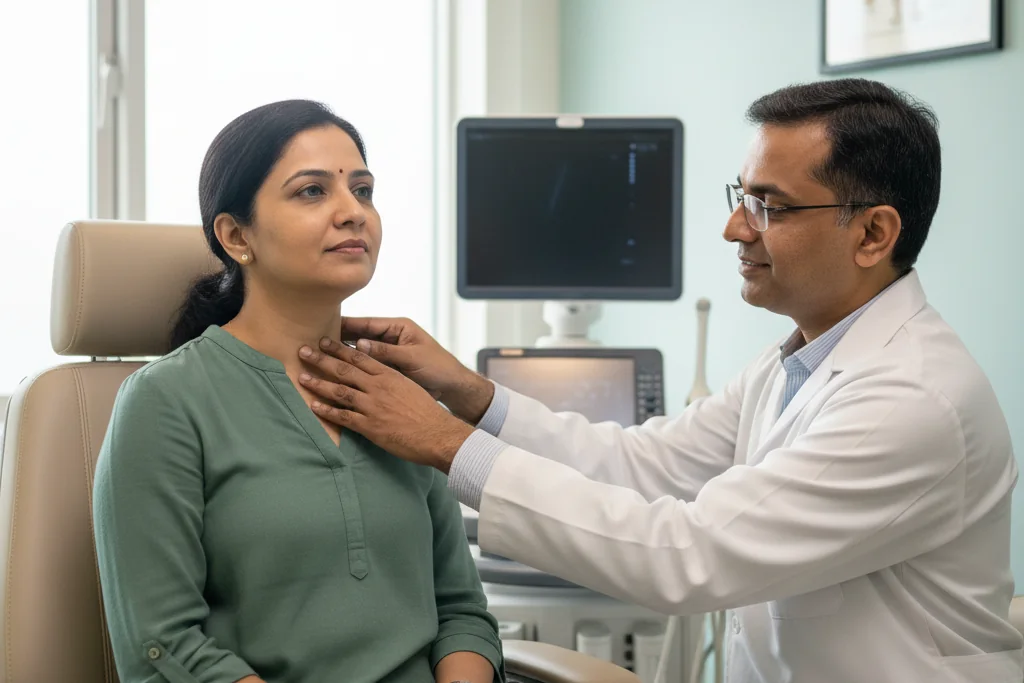
Your doctor will start by taking a detailed medical history. They will ask about your symptoms, your family history of thyroid disease, and your daily dietary habits. During the physical exam, the doctor will gently feel (palpate) your neck while asking you to swallow a sip of water. The thyroid gland naturally moves up and down when you swallow. This movement helps the doctor feel the gland's size, its overall shape, and the presence of any distinct lumps or nodules.
Tests and imaging available at THANC Hospital:
To get a complete and accurate picture of your thyroid health, our specialists use several advanced diagnostic tools.
- Thyroid Function Tests: These are simple, routine blood tests that measure the levels of TSH, T3, and T4 in your bloodstream. The pituitary gland in your brain produces TSH to communicate with your thyroid. If your TSH is high, it usually means your thyroid is underactive. If your TSH is low, your thyroid is likely overactive.
- Ultrasound of the neck: This painless, non-invasive imaging test uses high-frequency sound waves to create a highly detailed picture of your thyroid gland. It helps us measure the exact dimensions of the goiter and check for hidden nodules. The ultrasound also reveals whether the nodules are solid tissue or simply harmless fluid-filled cysts.
- Fine Needle Aspiration Cytology (FNAC): If the ultrasound reveals suspicious-looking nodules, we may perform this targeted biopsy. The doctor uses a very thin, hollow needle to extract a tiny sample of cells directly from the thyroid nodule. A specialized pathologist then examines these cells under a microscope to check for cancer. You can learn more about this specific procedure in our thyroid nodule evaluation guide.
- Radioactive Iodine Scan: This specialized test involves swallowing a small, perfectly safe amount of radioactive iodine. A special camera then takes pictures of your neck to see exactly how much iodine your thyroid absorbs. This test helps doctors identify which specific areas of the gland are overactive.
- CT or MRI scans: If your goiter has grown very large, or if it extends downward into your chest cavity (a condition called a substernal goiter), standard ultrasounds cannot see it clearly. CT or MRI scans provide detailed, cross-sectional images that help the surgical team plan the safest possible treatment approach.
What to expect during your evaluation:
The diagnostic process is generally straightforward, comfortable, and entirely outpatient-based. Blood tests and neck ultrasounds take only a few minutes to complete. If your doctor recommends an FNAC, they will perform it right in the clinic using a local numbing spray or gel, which gives you feel minimal discomfort. Once all the test results are ready, your doctor will sit down with you to review the findings and design a care plan.
Treatment Options
The right goiter treatment depends entirely on the size of the enlargement, the severity of your symptoms, and the specific underlying cause. Not every enlarged thyroid requires immediate medical intervention or surgery.
Conservative and medical management:
If your goiter is small, non-cancerous, and not causing any breathing or swallowing difficulties, your doctor might recommend a strategy called "watchful waiting." This means you will not take any medication, but you will attend regular check-ups and undergo annual ultrasounds to monitor the gland for any signs of growth.
- Thyroid hormone replacement: If your goiter is caused by an underactive thyroid (such as in Hashimoto's thyroiditis), your doctor will prescribe a daily pill of synthetic thyroid hormone called levothyroxine. This medication restores your hormone levels to normal and slows the release of TSH from your brain. As the TSH levels drop, the thyroid gland often shrinks back to a normal size.
- Anti-thyroid medications: If you have an overactive thyroid (such as in Graves' disease), your doctor will prescribe medications like methimazole. These drugs actively block your thyroid from producing excess hormones, which relieves your symptoms and can help reduce the swelling.
- Radioactive iodine therapy: For a persistently overactive goiter, your doctor might recommend radioactive iodine treatment. You take this treatment as a single oral capsule. Your overactive thyroid cells absorb the radioactive iodine, which safely destroys them from the inside out. This effectively shrinks the goiter, but it often leaves you with an underactive thyroid, meaning you will likely need lifelong hormone replacement pills afterward.
Surgical options when needed:
Surgery is often the most definitive goiter treatment for large glands that cause severe compression symptoms in your neck. It is also the primary treatment when doctors suspect thyroid cancer, when medical treatments fail to control hyperthyroidism, or when the swelling causes significant cosmetic distress.
- Total Thyroidectomy: This major surgical procedure involves carefully removing the entire thyroid gland. Doctors usually recommend a total thyroidectomy for massive multinodular goiters, Graves' disease that does not respond to medication, or confirmed thyroid cancer.
- Partial Thyroidectomy (Hemithyroidectomy): If the swelling or the problematic nodules are strictly confined to one half (one lobe) of the gland, the surgeon may only remove that specific side. This approach leaves the healthy half of the gland intact, allowing it to continue producing natural hormones for your body. You can read more about the different types of surgery and the recovery process in our thorough thyroidectomy guide.
Advanced techniques available at THANC Hospital:
At THANC Hospital, we prioritize your safety, your voice, and your long-term quality of life during thyroid surgery. The human neck contains incredibly delicate structures, including the recurrent laryngeal nerve (which controls your vocal cords and your ability to speak) and the parathyroid glands (four tiny glands that control your body's calcium levels).
- Our surgical team uses advanced intraoperative nerve monitoring technology during every procedure. This equipment helps the surgeon identify and protect your delicate vocal cord nerves, drastically minimizing the risk of permanent voice changes.
- Our surgeons meticulously identify and preserve the tiny parathyroid glands to prevent dangerous calcium imbalances after your operation. For more detailed information on parathyroid health, please see our post on hyperparathyroidism.
- Depending on your specific anatomy and the size of the goiter, our team may use minimally invasive surgical approaches. These techniques ensure the smallest possible incision, usually hidden in a natural neck crease, which promotes faster healing and excellent cosmetic results.
Living with Goiter / Recovery and Outlook
Your daily life after treatment will depend heavily on the specific type of intervention you received. Fortunately, with proper, ongoing medical care, the long-term outlook for patients with this condition is excellent. Most patients go on to live completely normal, healthy, and active lives.
What to expect after treatment:
If you and your doctor choose watchful waiting or medical management, your routine will simply involve taking your prescribed medications at the same time every day and attending your scheduled follow-up appointments.
If you undergo surgery, you will typically spend one to two days recovering in the hospital. Immediately after waking up, your neck will feel sore, and you might experience a mild sore throat from the breathing tube used during general anesthesia. Your medical team will provide pain relief medication to keep you comfortable. Most patients can return to their normal, light daily activities within a week or two, though you must avoid heavy lifting and strenuous exercise until your surgeon clears you.
Follow-up care:
Long-term monitoring is an essential part of your recovery journey. If your surgeon removed your entire thyroid gland, or if you received radioactive iodine therapy, your body will no longer be able to produce its own thyroid hormones. You will need to take a daily thyroid hormone replacement pill for the rest of your life. Your doctor will perform regular blood tests to ensure your hormone dosage is perfectly balanced. Taking too little hormone will leave you feeling sluggish and depressed, while taking too much can negatively affect your heart rhythm and bone density.
Lifestyle modifications:
Living well with a thyroid condition involves making a few simple, sustainable lifestyle adjustments to support your overall health.
- Maintain a balanced, nutrient-rich diet that includes adequate amounts of iodine. In India, simply using standard iodized table salt in your daily cooking is usually sufficient to meet your body's needs.
- Ensure you get enough selenium and zinc in your diet, as these minerals help your body process thyroid hormones efficiently. Good sources include nuts, seeds, and legumes.
- Avoid consuming massive quantities of raw goitrogenic vegetables like cabbage and cauliflower. Always cook these vegetables thoroughly, as the heat neutralizes the goitrogens and makes them perfectly safe to eat.
- Quit smoking or chewing tobacco immediately. Tobacco chemicals directly interfere with thyroid function, worsen autoimmune eye diseases associated with thyroid issues, and delay your healing after surgery.
- Manage your daily stress through practices like yoga, meditation, or regular walking. Chronic, unmanaged stress can trigger inflammation and worsen autoimmune thyroid conditions like Hashimoto's and Graves' disease.
Why Choose THANC Hospital for Goiter?
When dealing with a complex thyroid swelling in neck, securing expert, specialized care is important for a safe and effective outcome. Dr. Vidhyadharan S has deep, focused expertise in Head & Neck Surgical Oncology and Thyroid & Parathyroid Surgery to every single patient case. Our multidisciplinary hospital team uses advanced diagnostic imaging and highly precise surgical techniques, including continuous intraoperative nerve monitoring, to protect your voice and preserve your parathyroid glands. We are deeply committed to providing compassionate, complete care that is specifically tailored to your unique condition and lifestyle. To discuss your symptoms with our dedicated specialists, please Book an Appointment today. You can also learn more about our specialized treatments by visiting our Thyroid & Parathyroid Surgery department page.
Frequently Asked Questions
Can a goiter go away on its own?
A goiter rarely disappears completely on its own without some form of medical intervention. If the swelling is caused by a temporary hormonal fluctuation, such as during pregnancy, it might reduce in size naturally after delivery. However, most enlarged thyroids require proper medical diagnosis and a specific treatment plan to manage the underlying cause effectively.
Is a goiter always a sign of thyroid cancer?
No, the vast majority of goiters are completely benign and non-cancerous. They are most commonly caused by simple iodine deficiency, autoimmune conditions like Hashimoto's, or harmless fluid-filled nodules. However, because a very small percentage can contain cancer cells, it is absolutely vital to have any new neck swelling evaluated by a medical professional.
What foods should I avoid if I have a goiter?
You should avoid eating excessively large amounts of raw goitrogenic foods, such as cabbage, cauliflower, broccoli, and cassava. These specific raw foods contain compounds that can interfere with how your thyroid absorbs and uses iodine. Cooking these vegetables thoroughly neutralizes the goitrogens, making them completely safe to include in your regular balanced diet.
Will I need to take medication forever after goiter surgery?
If you undergo a total thyroidectomy to remove your entire thyroid gland, you will absolutely need to take a daily thyroid hormone replacement pill for the rest of your life. If the surgeon only removes half of your thyroid, the remaining healthy half can often produce enough hormones on its own, meaning you might not need daily medication.
How long does it take to recover from goiter surgery?
Most patients recover quite quickly from thyroid surgery and can safely go home within one to two days after the procedure. You can usually resume your light, everyday activities within a few days and return to a desk job within one to two weeks. You must avoid strenuous exercise and heavy lifting for a few weeks to allow your neck incision to heal perfectly.
Learn more about Thyroid & Parathyroid Surgery
View treatments, doctors & FAQs
Concerned about this condition?
Our specialists can help. Book a consultation today.
Book Consultation
MBBS, MS (ENT), DNB (ENT), MCh (Head & Neck), FICRS, FEB – ORL HNS, ASOHNS
Clinical Director & Senior Consultant Surgeon